
Exploring Homes for Sale Logan Circle, DC: A 2026 Buyer’s Breakdown
The median list price for properties in Logan Circle currently sits around $700,000 as of mid-2026. This Northwest Washington, DC neighborhood centers around the District’s only fully residential traffic circle. Buyers looking at Homes for Sale Logan Circle, DC, will find a market split between modern condo developments and large historic rowhouses.
Tracking active real estate listings requires keeping an eye on the local Multiple listing service through Internet Data Exchange programs. A real estate broker with an active license can provide consumers with accurate property information, offering comprehensive details rather than just a basic thumbnail image online. Inventory moves at a steady pace, and well-priced units often go under contract within a few weeks.
The local market attracts a wide range of buyers looking for proximity to downtown employment centers. Buyers reviewing listing data online should note that property photos and descriptions fall under MLS copyright protections. Working with an agent ensures you receive the most current updates before a property leaves the market.
Local Real Estate Trends and Pricing
Overall median listing prices in Logan Circle hover around $700,000, but average home values vary widely by property type. Condos typically list between $500,000 and $800,000, depending on square footage, floor level, and building amenities. Buyers searching for detached or semi-detached single-family space face a different pricing tier entirely.
Historic rowhouses in the neighborhood start around $1,000,000 and frequently exceed $1,500,000 for updated layouts. Condos make up the bulk of the active listings, meaning buyers focused on larger homes face tighter inventory. Real estate agents use fresh MLS data to help buyers understand what recent sales mean for their initial offers.
Time on market depends on the exact listing price and interior condition. Turnkey properties near 14th Street often see multiple offers within the first weekend of showings. Buyers should prepare their financing early so they can sign a contract without delay when the right property surfaces.
Architectural Styles and Property Types
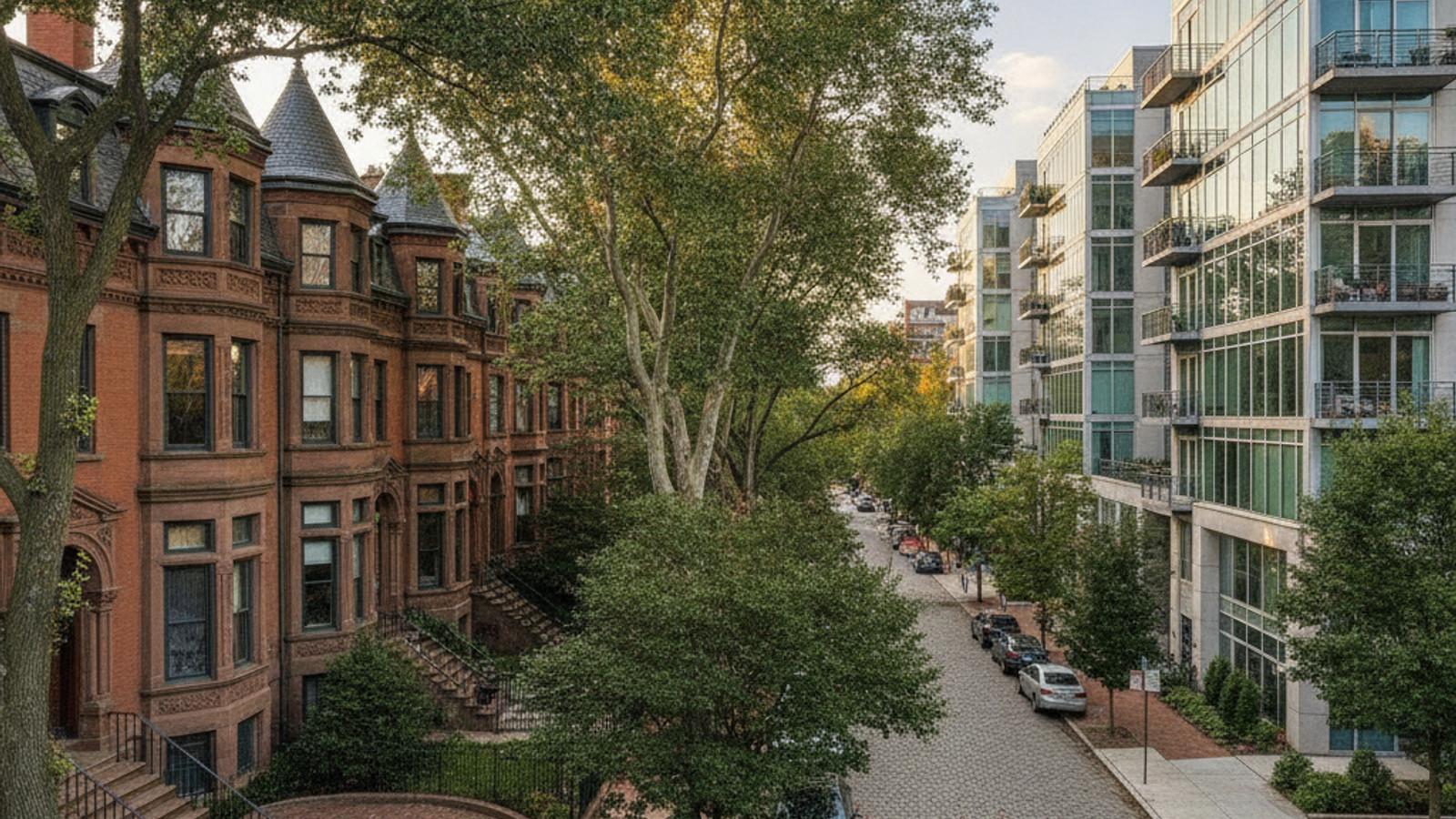
The local housing inventory features a sharp contrast between 19th-century architecture and new construction. The streets radiating from the central roundabout feature blocks of Victorian brownstones with ornate brickwork and tall windows. Many of these historic structures have been preserved, while others offer opportunities for buyers who want to restore original details.
Buyers who prefer modern aesthetics can focus on the mid-rise condo buildings built over the last two decades. These newer developments often feature open floor plans, floor-to-ceiling windows, and rooftop amenities. The choice between a historic rowhouse and a boutique condo often comes down to maintenance preferences and budget.
Property type directly dictates monthly carrying costs. Buyers looking at condos should factor in monthly HOA fees, which generally range from $400 to $800 in this part of Washington, DC. Older brownstones avoid HOA dues but require a separate budget for maintaining historic facades and aging systems.
The Process of Buying Historic Properties
Purchasing a 19th-century property involves different inspections than buying new construction. Older brick facades require periodic tuckpointing to prevent moisture intrusion during heavy rain. Buyers should hire an inspector familiar with historic masonry and aging plumbing systems.
Renovating these older homes often requires approval from local historic preservation boards. Exterior changes to the front facade must adhere to specific design guidelines to maintain the block’s architectural character. Interior renovations generally offer more flexibility, allowing owners to modernize kitchens and bathrooms.
Financing a historic home might involve specialized loan products if the property needs extensive rehabilitation. Buyers planning major updates should secure contractor estimates during the contingency period. Understanding these renovation costs upfront prevents budget surprises after closing.
Reviewing Condo Association Documents
Purchasing a condo requires a careful review of the building’s financial health and governing rules. Buyers receive a resale package containing the association’s budget, meeting minutes, and current reserve funds. This information reveals whether the building has enough money saved for future roof repairs or elevator replacements.
Association rules dictate everything from pet size limits to short-term rental restrictions. Buyers planning to lease their unit in the future must verify the building’s rental cap percentage. Some boutique buildings limit the number of units that can be rented out at any given time.
Special assessments occur when an association lacks the funds for major repairs and bills the owners directly. Reviewing the meeting minutes helps buyers spot discussions about upcoming assessments before signing a contract. A well-managed building protects the long-term value of the individual units.
Shopping and Dining Along the 14th Street Corridor
The 14th Street corridor serves as the primary commercial artery for the western side of the neighborhood. This stretch holds one of the highest concentrations of retail and dining in the Northwest quadrant. Proximity to these businesses is a major factor in the purchase decision for many local buyers.
Grocery access is straightforward, with several full-service supermarkets located within a few blocks of the residential streets. Retail options range from independent shops to national brands, operating alongside local art galleries. Buyers evaluating specific streets should walk the commercial blocks to understand the daily noise levels and foot traffic.
The immediate area offers several distinct commercial amenities. Buyers will find everything from daily necessities to high-end dining within a few blocks:
- Grocery Stores: A flagship Whole Foods Market sits on P Street, while a Trader Joe’s operates nearby on 14th Street.
- Dining Options: The restaurant density is high, featuring established local staples like Le Diplomate alongside casual cafes.
- Retail and Culture: Boutique clothing stores, home goods shops, and independent art galleries line the main thoroughfares.
Evaluating Parking and Vehicle Storage
Street parking in this section of Northwest Washington, DC requires a residential permit and patience. The high density of multi-unit buildings means that curb space fills up quickly during the evening hours. Buyers bringing a vehicle should prioritize listings that include off-street parking.
Many newer condo buildings feature subterranean garages with deeded parking spaces. These assigned spots carry a premium and can add thousands of dollars to the final purchase price. Historic rowhouses sometimes offer rear parking pads accessible via the neighborhood’s network of public alleys.
Buyers looking at Homes for Sale Logan Circle, DC, should confirm parking details before writing an offer. A dedicated spot not only provides daily convenience but also increases the resale value of the property. Those without vehicles can often rent out their deeded spaces to other residents in the building.
Commute Times and Public Transit Options
Logan Circle holds a Walk Score between 96 and 98, classifying the area as a walker’s paradise. Residents can reach the downtown core on foot in under 20 minutes from the southern edge of the neighborhood. This high level of pedestrian access means many residents do not rely on a personal vehicle for daily errands.
Metro access requires a short walk, as there is no station directly within the neighborhood boundaries. The Mt. Vernon Sq/7th St-Convention Center station sits to the southeast, serving the Green and Yellow lines. The Dupont Circle station lies to the west, providing access to the Red Line.
Surface transit fills the gaps between Metro stations. Several major bus routes run along 14th Street and 11th Street, connecting riders to U Street and the National Mall. These routes provide direct access to employment centers without the need for a train transfer.
Parks, Schools, and Neighborhood Infrastructure
The neighborhood takes its name from the historic Logan Circle park, a landscaped roundabout at the intersection of Rhode Island Avenue, Vermont Avenue, 13th Street, and P Street. This central green space provides open lawns, large shade trees, and paved walking paths. It remains the only major traffic circle in Washington, DC that is entirely residential along its perimeter.
Public education options in the immediate area include Garrison Elementary, located at 1200 S Street NW. This facility serves grades pre-kindergarten through fifth grade and operates under a community school model. Buyers should always verify specific school district boundaries with their real estate agent or the local district office before submitting an offer.
Additional recreational facilities sit just outside the main residential blocks. Local parks offer playgrounds, dog runs, and athletic fields within a short walk. The proximity to these open spaces adds tangible value to the surrounding real estate.
Frequently Asked Questions
The median list price sits near $700,000 as of mid-2026. Condos generally list between $500,000 and $800,000, while historic rowhouses start closer to $1,000,000. Buyers will find that exact pricing depends on the square footage and whether the property has dedicated parking.
The active inventory consists mainly of modern condos and Victorian brownstones. Many of the larger 19th-century rowhouses have been converted into multi-unit boutique buildings. Single-family detached homes are rare in this section of the city.
Yes, the area earns a Walk Score of up to 98, making it one of the most pedestrian-friendly areas in the city. Residents can easily reach grocery stores, retail shops, and the downtown business district on foot. The flat terrain and wide sidewalks make walking a practical alternative to driving.
The neighborhood does not have its own dedicated Metro stop. Residents typically use the Mt. Vernon Sq/7th St-Convention Center station for the Green and Yellow lines, or Dupont Circle for the Red Line. Both stations require a 10-to-15-minute walk from the center of the neighborhood.