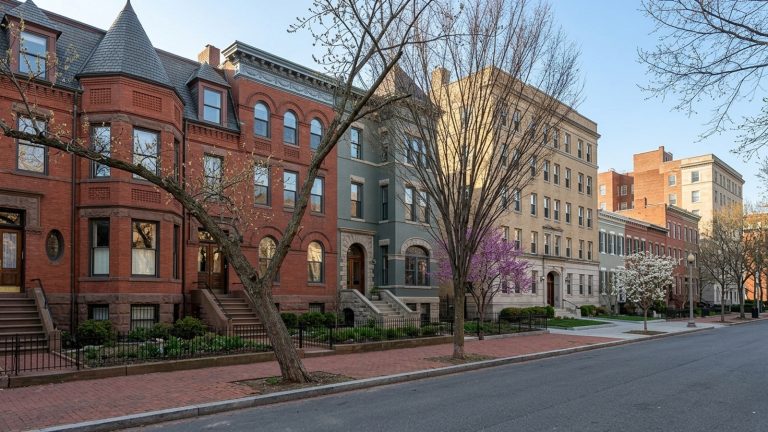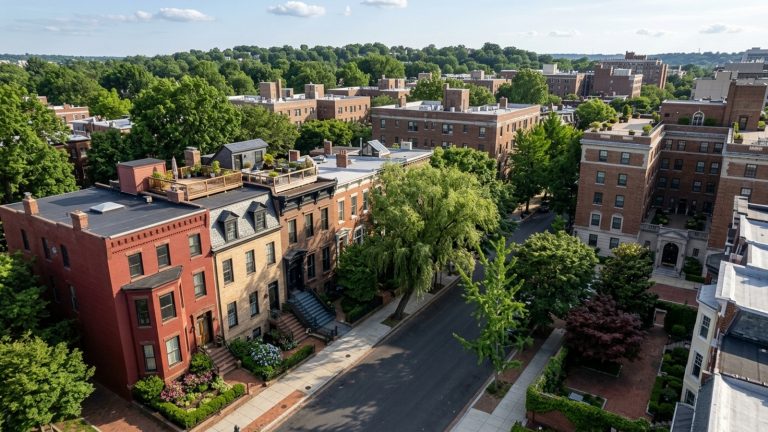

Building a custom home in a dense, historic neighborhood isn’t like buying a lot in the suburbs and calling a builder. In this part of the District, you’re dealing with strict zoning, almost no vacant land, and labor rates that reflect every constraint the city can throw at you. The Dupont Circle, DC housing market currently holds about 107 available homes, and finding a vacant, buildable lot among them is genuinely rare.
The median sale price for an existing home here sits around $489,664 – a number pulled down by the high volume of smaller condos in the mix. Single-family rowhouses command more, which is exactly why some buyers start asking whether a custom build or major infill renovation makes more sense. Before you go down that road, you need a clear picture of what site preparation, permits, and materials cost in 2026.
Average Construction Costs in Dupont Circle, DC
Citywide baselines for a custom home in Washington, DC, start around $614,000, and once you fold in land acquisition, excavation, and permit fees, a 2,500-square-foot home can run anywhere from $500,000 to $1.2 million. This neighborhood is a premium historic district. Expect your number to land at or above the high end of those citywide ranges – not somewhere in the comfortable middle.
Your final cost depends on two things above all else: the condition of the site and the level of finish you choose. Dense urban construction almost always requires specialized equipment and careful staging, and those logistics show up directly in your general contractor fees.
Comparing Dupont Circle to the Rest of DC
Citywide construction averages include less dense neighborhoods where a standard lot build is straightforward. Here, you’re looking at alleyway access, shared-wall agreements, and the careful preservation of historic facades – complications that translate directly into more time on site preparation and structural reinforcement than a suburban lot would ever demand.
The Washington Metro Area Factor
Labor and materials across the broader Washington Metro Area carry a premium over national averages to begin with. Add the requirement to find contractors who understand historic district regulations, and your baseline cost climbs further. Narrow streets also limit delivery truck and equipment size, so supply chain logistics for urban infill sites require more coordination than most buyers anticipate.
Cost Per Square Foot for Construction
Custom builds in DC range from $320 to over $1,100 per square foot depending on finishes and project scope. You’ll see lower-tier figures cited at $189 to $333 per square foot, but those don’t apply in a high-density, premium area. If your project sits in ZIP codes 20036 or 20009, budget for top-tier rates on both labor and materials.
Mid-2025 data for the 20036 ZIP code shows single-family homes valued around $990,000 and condos at $357,000. Those are existing home values, not construction costs, but they tell you something real about the baseline investment required to own property here.
Baseline Per-Square-Foot Rates
Basic construction might sit near $320 per square foot – assuming no major site complications, which is a big assumption in this neighborhood. Luxury finishes, complex site work, and historic preservation compliance routinely push past $900 per square foot. Plan for the upper end.
Calculating Total Construction Costs
The math is straightforward enough: a 2,000-square-foot home at $500 per square foot is $1 million in hard construction costs before you’ve added land, architectural plans, or municipal fees. Get a detailed, line-item bid from a local contractor before you finalize a construction loan. A ballpark figure won’t protect you here.
Cost by House Size and Budget Targets
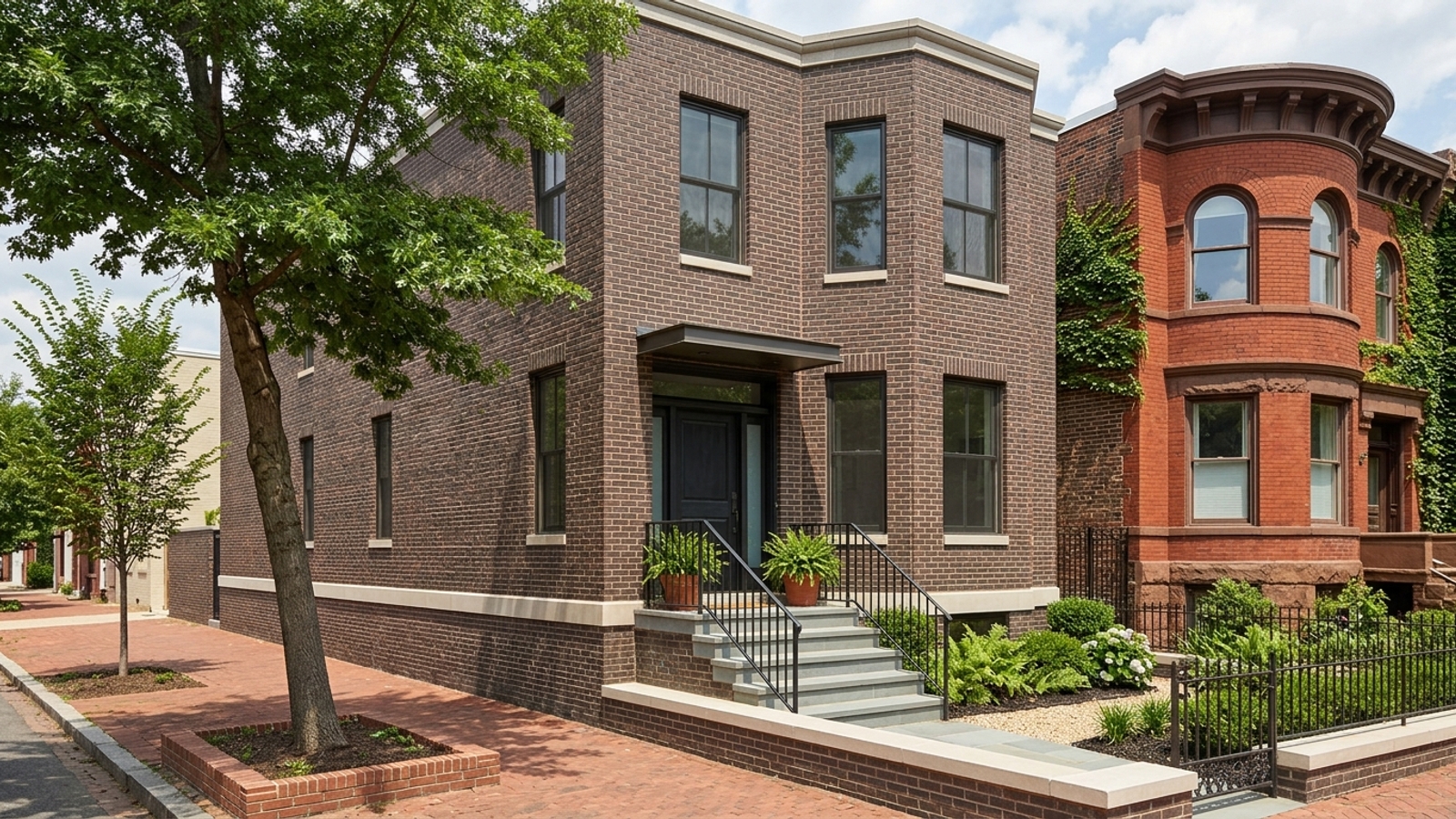
Your proposed footprint drives the budget, but in Dupont Circle, lot lines make that decision partly for you. Most new projects are small infill builds, rowhouse additions, or carriage houses – not large single-family estates. A 3,000-square-foot home from the ground up is unusual unless a developer manages to combine multiple adjacent lots.
A larger footprint also triggers higher permit fees and longer review times. Buyers who focus on smaller, efficient designs tend to move through the approval process with considerably less friction.
Small Homes and Rowhouse Infills
A 1,200 to 1,500-square-foot infill project is the most common approach for buyers who want new construction in the city center. Don’t expect the per-square-foot cost to drop just because the home is small – mobilization, design, and permit expenses stay relatively fixed regardless of size. The upside is that a compact footprint lets you put your budget toward high-end interior finishes rather than raw square footage.
What $200,000 to $500,000 Can Build
Using value-conscious construction estimates of $150 to $287 per square foot, a $200,000 budget might cover a very small structure under 1,300 square feet or a mid-size renovation. A $500,000 budget gives you more room for a modest custom build, but land costs will move fast against those funds. Buyers with budgets under half a million dollars often find better value in purchasing and updating an existing condo.
Where the Money Goes During Construction
A custom build draws from multiple buckets simultaneously: land, hard materials, labor, and administrative fees. In a historic district, soft costs – architectural planning, legal reviews – consume a larger share of the budget than they would in a standard suburban development. Site preparation alone can devour a significant portion of your funds when you’re working around century-old infrastructure.
You also have to carry the property during construction. Property taxes and interest on the construction loan add up, and permitting delays can stretch that holding period by several months without warning.
Land and Site Preparation
Buildable lots citywide range from $200,000 to $1.5 million, and premium central neighborhoods sit at the top of that range. Vacant lots here are scarce – often small alleyway gaps between existing buildings rather than conventional open parcels. Clearing a tear-down or preparing one of those alleyway gaps means careful demolition work to avoid damaging the structures on either side.
Permits and Historic Preservation Fees
The DC Department of Buildings bases permit fees on the declared construction value of your project. For new construction, the fee is $0.03 per cubic foot plus a $0.002 per square foot green building fee. There’s also an alternative fee structure: $37 for the first $1,000 of project value and $18.50 for each additional $1,000 up to $1 million, with the filing fee making up 50% of the total permit cost.
Is It Cheaper to Build or Buy in Dupont Circle?
The median sale price for existing homes here sits around $489,664, with properties spending roughly 53 days on the market. That median reflects a large supply of studio and one-bedroom condos pulling the overall number down. Single-family rowhouses are a different conversation – they routinely sell for $1.5 million to over $2 million, which makes the buy-versus-build calculation genuinely complicated for larger properties.
With 61 homes recently sold and an average sale-to-list ratio of 98.25%, existing inventory moves. You’re weighing the immediate availability of those properties against a custom build timeline that can stretch well past two years.
Building Up Versus Building Out
Open land being as scarce as it is, many owners add a story to an existing rowhouse rather than starting from scratch. That avoids land acquisition costs, but it requires structural reinforcement to carry the new weight – and any exterior changes still need approval from the Historic Preservation Review Board.
When Buying an Existing Home Makes Sense
If you need a predictable timeline, existing inventory is where you should be looking. There’s currently about 5.4 months of supply on the market. Buying a historic rowhouse and doing targeted interior renovations is one of the more practical alternatives to full custom construction in this part of the city.
How to Build a House in DC, Step by Step
A construction project in the District requires patience and a realistic understanding of local zoning from the start. You’ll need to secure a viable site, clear architectural reviews, and schedule multiple municipal inspections – and you should have a team of local professionals in place early, before the delays start costing you money.
The timeline from land purchase to move-in can easily stretch past two years. The permitting process is usually the longest phase.
Securing Land and Approvals
Finding a vacant lot is the first real hurdle. Recent listings show almost no empty parcels available in this neighborhood. Once you’ve locked up a site or a tear-down, your design goes before the Historic Preservation Review Board, which reviews exterior materials, window placements, and overall massing to protect the character of the streetscape. There’s no shortcut through that process.
Working With a Local Builder
A general contractor with specific DC experience is worth more here than anywhere else. They know how to stage equipment on narrow streets, they understand the Department of Buildings permit process, and they have working relationships with the specialized trades you’ll need for historic masonry and urban site work. That local knowledge isn’t a luxury – it’s what keeps a complicated project from going sideways.
New-Build Homes and Communities in Dupont Circle
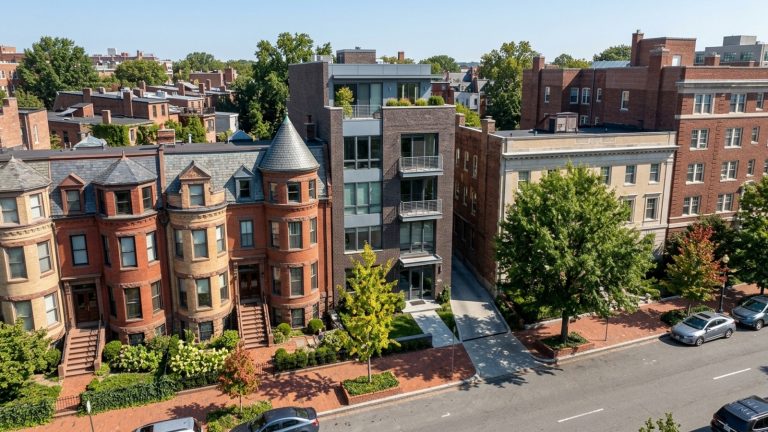
Single-family ground-up builds are rare, but developers are actively adding new housing through commercial conversions and boutique condo projects. For buyers who want brand-new construction without managing the build process themselves, these developments are worth a serious look. Recent years have brought several historic structures repurposed into modern living spaces with premium finishes.
Buying into one of these projects means no construction loan risk and no permit delays on your end.
Recent Condo and Infill Projects
1745 N St. NW combined two buildings into 68 units priced up to $2.999 million. The James offers nine contemporary units reaching $1.499 million. The Geneva is currently converting two former office towers into a 15-story, 532-unit apartment building. Smaller boutique options include the 4-unit 1719 T and the 9-unit Nobela Condominiums.
Frequently Asked Questions
How much does it cost to build a house in Dupont Circle, DC?
Citywide estimates for a custom-built home range from about $613,969 up to $763,969 when including land, excavation, and permits. Because this is a premium neighborhood, actual costs will likely fall at or above the high end of that range.
How much does it cost to build a 2,000 sq ft house in DC?
Citywide data shows that a 2,500-square-foot home costs between $500,000 and $1.2 million to build. A 2,000-square-foot home will come in somewhat below that total, depending on your chosen finishes and the cost of the lot.
Is $200K, $300K, or $500K enough to build a house in DC?
Based on value-conscious estimates of $150 to $287 per square foot, a $200,000 budget might cover a very small structure under 1,300 square feet or a mid-size renovation. A $500,000 budget gives you more room for a modest custom build, but acquiring land in a premium area will move quickly against those funds.
Is it cheaper to build or buy a house in Dupont Circle, DC?
Buying an existing home is generally cheaper and faster. The median sale price sits around $489,664, held down by a large supply of condos. Building requires purchasing scarce land first – and citywide, that alone can cost up to $1.5 million before construction begins.
Can I legally build my own house in DC?
Yes, provided you secure the proper land and follow all municipal zoning laws. Your plans must be approved by the DC Department of Buildings and, in this neighborhood, by the Historic Preservation Review Board.
What is the most expensive part of building a house in Dupont Circle?
Land acquisition. Buildable lots in DC range from $200,000 to $1.5 million, and in this neighborhood, vacant lots are scarce enough that they command premium prices the moment they surface.
How long does the step-by-step process take to get permits and build a custom home in Dupont Circle?
The process can take well over a year before a shovel goes in the ground – you need to secure land, draft plans, and pass reviews from both the Department of Buildings and the Historic Preservation Review Board. Construction itself adds several more months, particularly on tight urban infill lots.