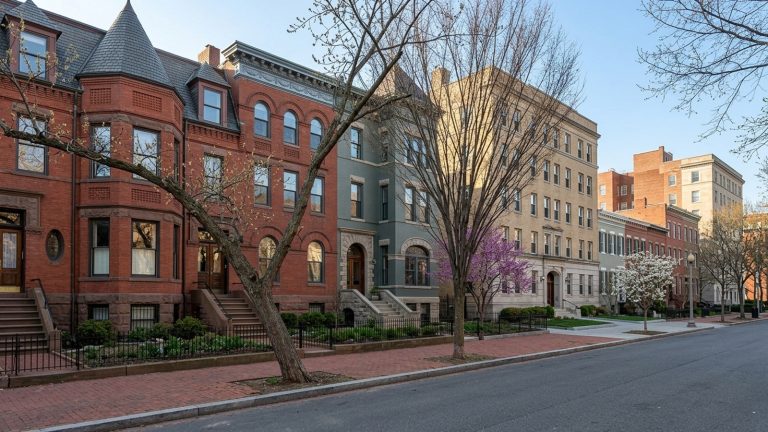
Selling a home in the District involves specific local taxes, association timelines, and market-driven negotiations that shape your final proceeds.
Key Takeaway
Budget for two kinds of seller costs in Dupont Circle. The fixed lines are DC’s deed transfer tax and your mortgage payoff. The negotiable ones are commission, buyer credits, and the gap between list and sale price. On a home at the $525,853 median, the negotiable side moves your net most in a market where buyers have time and choice, so set your price and credit plan before you list rather than after the inspection. If you’d rather have certainty than negotiating room, ask your settlement company for a net sheet at a realistic sale price and work back from it.
Who This Guide Is For
You own a home in Dupont Circle and want to know what you’ll pay at settlement and what you’ll keep before you set a price or accept an offer.
- Condo sellers: start with the condo costs below.
- Row house sellers: skip to the negotiable costs.
- Sellers with a mortgage: the payoff is your largest deduction after commission, so use the payoff section in the worked example.
- Sellers with an FHA buyer or a closing cost request: read the FHA approval and buyer credit sections together, because loan rules cap what you can contribute.
- Sellers who can carry the home for less than three months: read the carrying costs section before you choose a list price.
What Do Sellers Pay at Closing in Dupont Circle?
DC’s deed transfer tax is the only large seller cost fixed by law. Everything else moves. With 8.7 months of supply, a 66-day median time on market, and homes closing at 98.5% of list (all homes, 90 days ending 2026-09-30), buyers have time and choice. Your net gets decided by the costs you can trade off.
Those costs fall into three groups:
- lines fixed by DC law, your lender or the calendar
- condo documents and association charges
- negotiable lines: commission, buyer credits, the gap between list and sale price, and two-plus months of carrying costs
Fixed Seller Closing Costs in DC
These costs are set by DC law, your lender or the calendar. You can confirm the figures early, but you won’t negotiate most of them.
DC Deed Transfer Tax
For FY2026, the DC Deed Transfer Tax is 1.1% of the consideration or fair market value for residential property transfers under $400,000, and 1.45% on the entire amount if the transfer is $400,000 or more. Most Dupont condos sell above that threshold, so if you’re pricing near it, know exactly where the step sits before you choose a number.
The higher rate applies to the whole sale rather than only the portion above the line. A small price difference near the threshold therefore changes the tax on the entire amount. The tax comes off the top of your proceeds at settlement. Under the GCAAR Sales Contract Jurisdictional Addendum used in DC transactions, the seller customarily pays it. That custom is negotiable in the contract, which in a slow market can cut either way.
Recordation Tax
The DC Deed Recordation Tax uses the same FY2026 rates and threshold. Under the same addendum the buyer customarily pays it, but the contract can reassign it. When buyers have options, a request to split or credit this tax is common enough that you should price it in as a possible cost.
Mortgage Payoff
If you still have a mortgage, the payoff is your largest deduction after commission. It will be higher than your monthly statement balance because it includes per-diem interest through the exact day the servicer receives funds. Any home equity line of credit must also be paid and released at settlement. Order payoff statements for both, good through your expected settlement date, before you run your net sheet.
Recording and Settlement Fees
The DC Office of Tax and Revenue charges a flat recording fee of $150 to record any Deed of Trust, Mortgage, or Modification, and $25 for other documents such as deeds. Settlement company fees for the seller side aren’t standardized, so ask for the seller fee schedule.
Prorated Property Taxes
Property tax is split by the day at settlement. If your current half-year bill is paid, the proration may come back to you as a credit. An unpaid bill comes out of proceeds. Confirm which half is paid so you know which way the proration goes.
Tax Withholding at Settlement
Part of the proceeds must be held back at settlement in certain situations. Under FIRPTA, the standard federal withholding rate on a disposition of a U.S. real property interest by a foreign person is 15% of the sale price. Reduced rates of 10% or 0% are available in limited circumstances. DC may also have withholding rules for nonresident sellers, so confirm your status with a tax professional.
Withholding can tie up a large share of proceeds even if little tax is ultimately owed. If it applies to you, arrange it weeks ahead rather than at the closing table.
Condo Seller Costs in Dupont Circle
Most Dupont sellers are condo sellers: 40 of the 48 sales in the 90 days ending 2026-09-30 were condos. A unit sale adds documents and association charges that cost money, time or both.
Condo Resale Certificate
DC Code § 42-1904.11 requires the unit owner to obtain the condominium instruments and resale certificate from the association and furnish them to the purchaser. The deadline is on or before the 10th business day after the purchaser signs the contract. The statute doesn’t specify a fee, so the association sets the price.
The buyer has two separate cancellation rights:
- Late documents: if the documents aren’t furnished within the 10-business-day deadline, the purchaser may cancel by written notice before receiving them.
- Review period: the purchaser has 3 business days after receiving the documents to cancel in writing and return them. If the documents were furnished before the purchaser signed, the 3 days run from signing.
Neither right survives conveyance.
Until that period passes, the deal isn’t firm, and a package that reveals a pending assessment can give the buyer an exit. Ask your condo management company for the resale certificate fee and its turnaround time before you go under contract.
Condo Fees and Transfer Charges
You’ll owe your regular condo fees through the day of settlement, plus any transfer, move-out or elevator-reservation charges the association sets.
A special assessment approved while you’re under contract can land on you unless the contract says otherwise. Ask the association whether one is pending, proposed or recently voted.
FHA Approval and Buyer Financing
FHA approval isn’t a line item, but it sets the size of your buyer pool and how much credit buyers can ask for. If the building isn’t FHA-approved, FHA buyers can’t finance a purchase there.
Building approvals lapse, and an owner usually finds out only when a buyer’s lender denies the loan. Check your building’s status on HUD’s online Condominiums search page before you list.
Negotiable Seller Costs in Dupont Circle
The market decides these lines, and each is a trade: price against credit, or repair against credit.
Agent Commission
Commission is set in your listing agreement and is negotiable. Effective August 17, 2024, NAR implemented a rule prohibiting offers of broker compensation on the MLS. MLS participants working with buyers must now enter into written buyer agreements before touring homes. Buyer-broker compensation offers can still be negotiated off-MLS.
A lower listing fee doesn’t always lower your total cost, because buyers who must pay their own agent may ask you for a credit to cover it. Read your listing agreement for commission terms and how buyer-agent compensation requests are handled.
Buyer Closing Cost Credits
With 7.8 months of condo supply (90 days ending 2026-09-30), buyers can ask for help with their closing costs, which in DC customarily include the recordation tax. A credit is a common price for securing a contract. A credit reduces the cash the buyer needs to close, while a price cut lowers their loan amount and your final sale price. Both reduce your net proceeds, just differently.
A credit that exceeds the buyer’s actual closing costs or the loan’s limit isn’t usable, so an oversized credit can force a renegotiation late in the deal. Check the cap on your buyer’s FHA or conventional loan before you agree to a number.
List Price vs. Sale Price
Condos recently sold at 98% of list, and only about one in eight Dupont condos sold above asking in the latest 90 days (12.7%). Treat that gap as a real cost rather than a surprise: on a condo listed near $459,000, it means about $9,000 less at settlement.
A high list price that leaves room for the gap tends to add days on market. That adds carrying costs and can widen the gap you were trying to avoid.
Repair Credits After Inspection
When buyers have the upper hand, inspection findings become another negotiation point. You can fix items before settlement or offer a credit toward the buyer’s future repair costs. A pre-listing inspection can turn an open-ended request into a known number before you go on the market.
Repairs done under contract are on a deadline, and the buyer may still reject the work. A credit is simpler but comes straight off your net, and it counts toward the same lender limits as closing cost credits.
Carrying Costs While Your Home Is Listed
Every month on the market is a month of bills coming out of your proceeds. An upfront budget for that time keeps you from feeling pushed into a low offer.
How Long Dupont Circle Homes Take to Sell
The median Dupont condo spent 68 days on the market before going under contract in the latest 90 days. A typical settlement takes another 30 to 45 days after that. Budget roughly three months or more of ownership costs from the day you list. The median also hides the long tail: overpriced or awkward units sit far longer, and every month adds a full set of carrying costs.
Monthly Costs Until Settlement
Your mortgage payment, condo fee, utilities, insurance and any staging fees keep billing until the deed transfers. Multiply those monthly expenses by your expected months from listing to settlement to get your true carrying cost.
If you move out first, some homeowner’s policies limit coverage on a vacant home. Check with your insurer before you leave the keys with a stager.
Seller Net Proceeds Example for Dupont Circle
Replace each assumed figure below with your own number.
Example: Selling a Condo at the Median Price
Start from a condo listed near $459,000 that sells at the condo sale-to-list ratio, roughly $449,900, which is the condo median (90 days ending 2026-09-30). That price is over the transfer tax threshold, so the higher rate applies to the entire amount: about $6,523.
From there, subtract:
- an assumed commission of $26,994 (illustration only)
- an assumed buyer credit of $5,000
- the resale certificate fee
- an assumed $600 in recording and settlement fees
Then deduct an assumed mortgage payoff and about three months of an assumed monthly condo fee to arrive at your estimated net proceeds.
The negotiable lines together can rival or exceed the transfer tax. That means the estimate is only as good as your assumed credit and time on market.
How to Estimate Your Own Seller Costs
- Order your payoff statement.
- Request the resale certificate quote.
- Get a written net sheet from the settlement company at a realistic sale price rather than your list price. A net sheet run at list price overstates your proceeds.
- Add a credit allowance and your carrying months.
- Compare a price-cut scenario against a credit scenario, and treat anything above the realistic price as upside.
If you want help running these numbers for your specific property, reach out through our best realtor page.
At a Glance
- Median sale price: $525,853 for all homes, $449,900 for condos (90 days ending 2026-09-30)
- Year-over-year change in median sale price: +1.1% for all homes, +11.4% for condos (90 days ending 2026-09-30)
- Homes sold: 48 all homes, of which 40 were condos (90 days ending 2026-09-30)
- Median days on market: 66 for all homes, 68 for condos (90 days ending 2026-09-30)
- Sale-to-list ratio: 98.5% for all homes, 98% for condos (90 days ending 2026-09-30)
- Share sold above list price: 14.9% of all homes, 12.7% of condos (90 days ending 2026-09-30)
- Months of supply: 8.7 for all homes, 7.8 for condos (90 days ending 2026-09-30)
- Homes for sale (inventory): 137 all homes, 101 condos (90 days ending 2026-09-30)
- Median price per square foot: $682 for all homes, $614 for condos (90 days ending 2026-09-30)
Dupont Circle Seller Closing Costs FAQs
How Much Are Closing Costs in DC for a Seller?
Start with the transfer tax at the FY2026 rate for your price and the commission in your listing agreement. Then add recording and settlement fees, your mortgage payoff, and any credits you agree to.
Do Sellers Usually Pay Closing Costs in DC?
Yes. The seller customarily pays the transfer tax and the buyer the recordation tax, though the contract can change that. Buyer-leaning conditions also make seller contributions toward the buyer’s costs more common.
Are Dupont Circle Home Prices Falling?
No. The median condo sale price is up 11.4% year over year and the all-homes median is up slightly (90 days ending 2026-09-30). With months of supply high, rising prices still leave buyers room to ask for credits.
How Much Can a Seller Contribute to a Buyer’s Closing Costs?
HUD Handbook 4000.1 caps concessions at 6% of the sales price for FHA loans, and any excess reduces the loan amount dollar-for-dollar. Fannie Mae’s limits for conventional loans are:
- 9% for a principal residence with an LTV of 75% or less
- the same level as FHA for LTVs of 75.01% to 90%
- 3% for LTVs above 90%
- 2% for investment properties
A credit also can’t exceed the buyer’s actual closing costs.
Do I Pay Capital Gains Tax When I Sell My Dupont Circle Home?
Under IRS Publication 523 (for 2025 returns), if you meet certain ownership and use tests, you may exclude up to $250,000 of gain from the sale of your main home from your income, or $500,000 for married couples filing jointly. DC treatment and individual situations vary, so confirm with a tax professional.
Do Sellers Pay Closing Costs on a Cash Sale in DC?
Yes. The transfer tax, commission, your own payoff and settlement fees still apply. Only lender-driven items fall away, such as the FHA and Fannie Mae credit caps and the condo FHA-approval issue.
Who Pays for Owner’s Title Insurance in DC?
In the District of Columbia, the seller customarily pays the Owner’s Policy title insurance premium and the buyer the Loan Policy premium, though this is negotiable in the contract. The seller also pays for clearing title defects, such as lien releases, that show up in the search.
When Does the Seller Get Paid After Closing in DC?
The settlement company pays off the mortgage and other liens, holds any required withholding, and then disburses the balance. Ask whether proceeds go by wire or check, the expected timing, and what must clear first.
Sources
- Redfin: Data Center
- DC Office of Tax and Revenue: Recorder of Deeds FAQs
- DC Office of the Chief Financial Officer: Tax Rates and Revenues
- DC Office of Tax and Revenue: General Recording Requirements & Fees
- DC Code: Section 42-1904.11
- HUD: Condominiums Search
- US Code: Title 26, Section 1445 (FIRPTA)
- NAR: Settlement FAQ
- HUD: Handbook 4000.1
- Fannie Mae: Selling Guide (Interested Party Contributions)
- IRS: Publication 523
- Old Republic Title: NCTS Laws & Customs