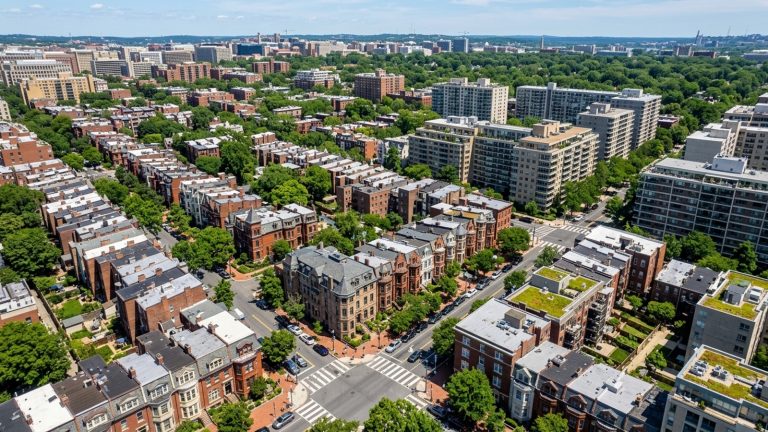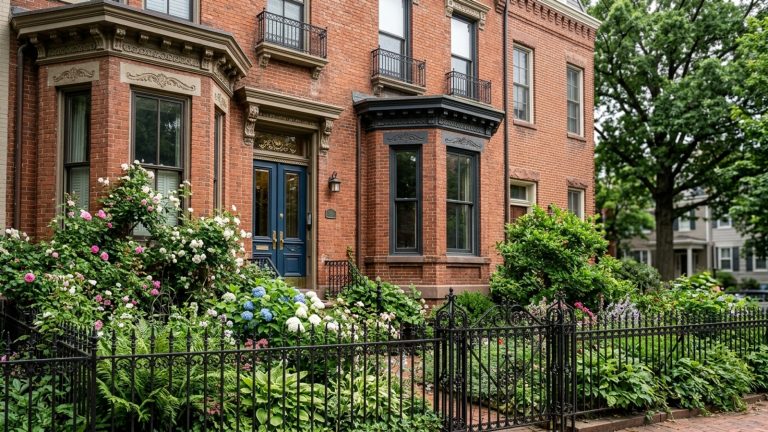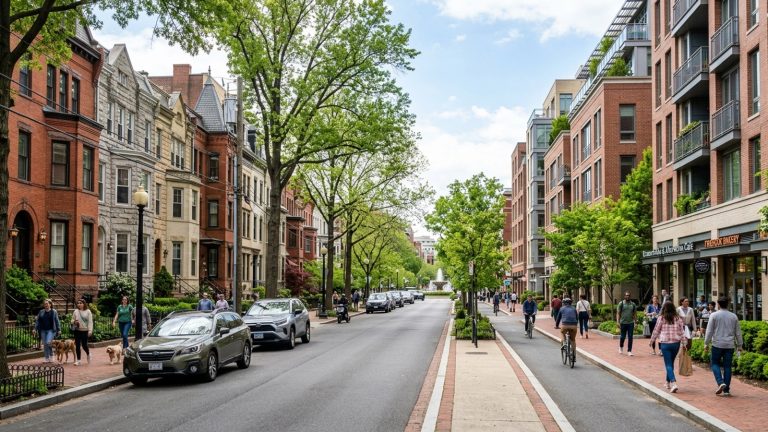

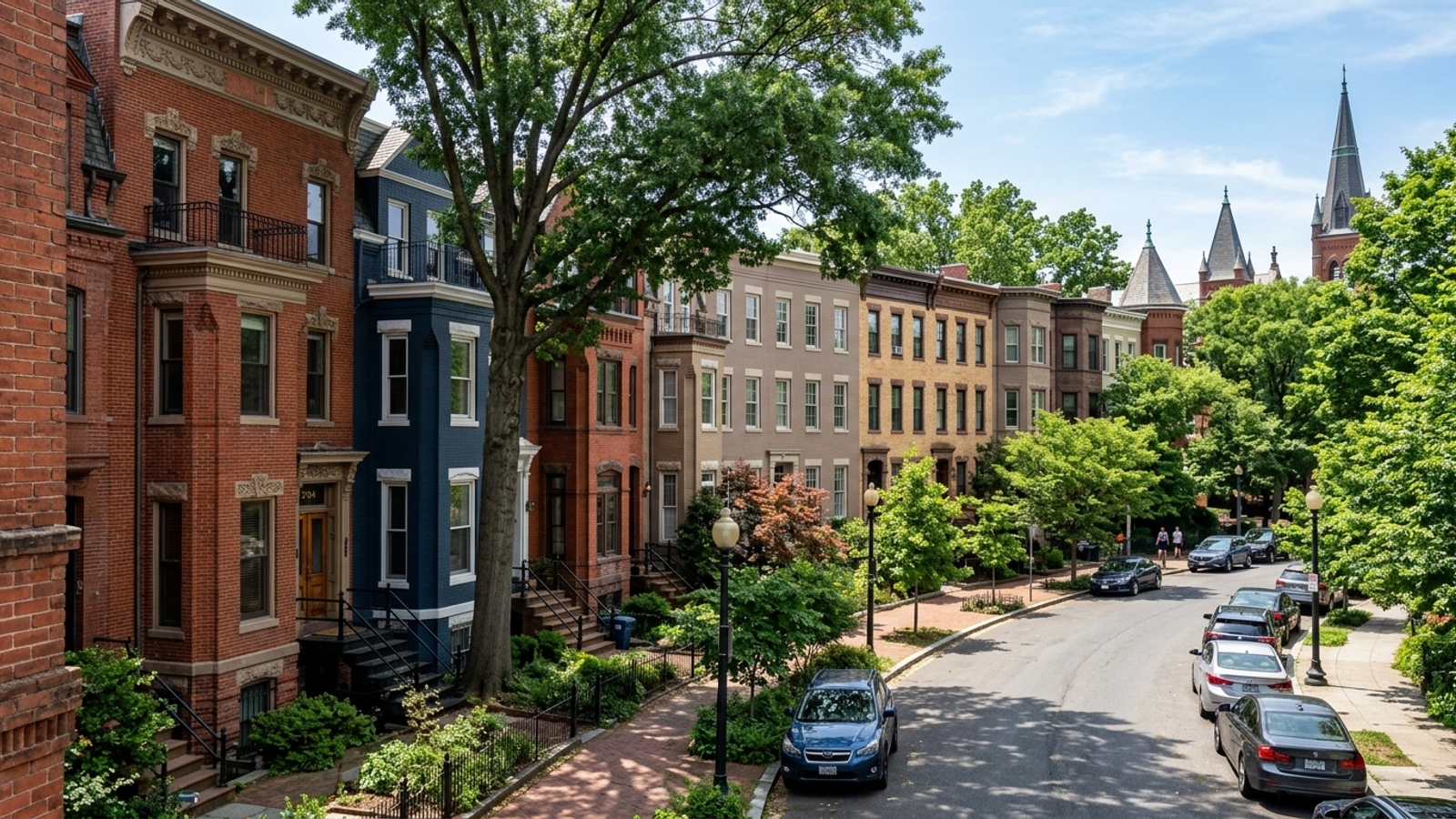
The median sale price for a home in Dupont Circle sits around $480,000 right now, with properties averaging 45 days on the market. If you’re looking at condos or rowhouses as first-time home buyers in Dupont Circle, DC, you’ve probably already asked yourself what your salary actually buys you here.
That question is more complicated than it sounds. Lenders don’t just look at the sticker price – they look at your gross monthly income, your existing debt load, and the specific carrying costs attached to the property you want. In a neighborhood where condo fees and local taxes move the needle significantly, you need to run the real numbers before you fall in love with a listing.
The Math Behind Mortgage Approvals in Dupont Circle
Lenders use standardized financial ratios to decide how much they’ll lend you. These formulas compare your gross monthly income – before taxes – to both your projected housing payment and your existing monthly debt obligations.
Your housing payment, as lenders define it, includes principal, interest, property taxes, and insurance. Buy a condo, and they’ll also fold in the monthly HOA dues. All of it counts.
Applying the 28/36 Rule to Your Income
The 28/36 rule is the benchmark most lenders use when they’re reviewing your application. The “28” is the ceiling: no more than 28% of your gross monthly income should go toward your total housing payment. Earn $10,000 a month before taxes, and a lender generally wants to see that number stay at or below $2,800.
That $2,800 has to cover everything tied to the property – principal, interest, property taxes, homeowners insurance, and any condo association fees. It all fits inside that 28% limit, or you start losing loan amount.
Factoring Your Existing Debt into the Equation
The second number in the 28/36 rule is your back-end debt-to-income ratio, or DTI. Lenders cap your total monthly debt payments – your new mortgage, car loans, student loans, minimum credit card payments, all of it – at 36% of your gross income.
Buyers carrying significant student loan balances or a large car payment often discover their maximum mortgage is lower than they expected, strictly because of this ratio. Paying down consumer debt before you apply directly increases what you can borrow.
Carrying Costs Unique to the District
Your monthly ownership costs in Washington, DC go well beyond the loan payment. Local taxes, insurance, and – especially in Dupont Circle – condo association dues all factor into what you can realistically afford.
Dupont Circle skews heavily toward condominiums, and those fees change the math in a real way. A buyer who qualifies for a $500,000 single-family home might only qualify for a $400,000 condo once the association dues hit their DTI calculation.
Washington, DC Property Tax Rates
DC classifies residential properties as Class 1A, with a base tax rate of $0.85 per $100 of assessed value. After the homestead deduction and assessment caps, though, the effective rate typically lands somewhere between 0.56% and 0.63% of the home’s value.
On a property priced at the neighborhood median of $480,000, that works out to a manageable annual tax bill – and those lower effective rates do help offset some of the other costs that come with buying in the District.
Condo Fees and Homeowners Insurance
Condo fees in Dupont Circle cover a wide range. Older, smaller buildings with fewer amenities tend to run between $300 and $500 per month. Historic full-service buildings can push from $400 to over $800 a month. The district-wide median monthly association fee is roughly $500.
On the insurance side, lenders require homeowners insurance as a condition of your loan. DC premiums average about $1,000 to $1,700 per year – roughly $85 to $145 per month for typical coverage. Condo buyers usually carry an HO-6 policy covering the interior of their unit, which generally runs less than insuring a standalone house.
Upfront Cash Requirements for Closing
You need cash on hand before you get keys to cover the down payment, transfer taxes, and loan origination fees that come with closing.
Closing costs for buyers in DC typically run 2% to 5% of the purchase price, with most landing between 2.5% and 4%. On a median-priced $480,000 home in Dupont Circle, that’s roughly $12,000 to $19,200 on top of whatever you’re putting down.
Down Payment Minimums and Local Assistance
A 20% down payment eliminates private mortgage insurance, but it’s not a requirement. Conventional loans allow down payments as low as 3%, and FHA loans require 3.5%.
The DC Open Doors program, administered by the DC Housing Finance Agency, offers a Down Payment Assistance Loan of 3% for conventional loans or 3.5% for FHA loans. It’s a deferred, zero-interest loan due upon sale, transfer, refinance, or after 30 years. The Home Purchase Assistance Program (HPAP) goes further – it provides eligible first-time homebuyers with up to $202,000 in down payment and closing cost assistance, based on income and household size.
Recordation Taxes and Total Closing Costs
The deed recordation tax is one of the bigger line items you’ll see at closing in DC. Properties selling under $400,000 are taxed at 1.1% of the sale price; at or above $400,000, the rate steps up to 1.45%.
Eligible first-time DC homebuyers can qualify for a reduced recordation tax rate of 0.725% on the sale price – worth checking before you assume the standard rate applies to you. Sellers pay a matching transfer tax of 1.1% or 1.45%, but the recordation side is the buyer’s responsibility.
Interest Rates and Your Purchasing Power
The interest rate on your mortgage determines what borrowing actually costs you over the life of the loan – and it has a direct effect on how much house you can qualify for.
When rates rise, more of your monthly payment goes toward interest instead of principal, which shrinks the loan amount you can carry within your DTI limits. When rates fall, that same monthly budget supports a higher purchase price.
Comparing Monthly Payment Scenarios
Even a one-percentage-point difference in your rate has a real impact. On a $400,000 loan, a lower rate saves you hundreds of dollars a month – which keeps your DTI down and makes approval more straightforward.
Shop multiple lenders. Locking in a better rate directly expands the price range you can work with in Dupont Circle. What looks like a stretch at one rate can become a realistic option when the number moves even slightly in your favor.
Frequently Asked Questions
What salary do I need to afford a typical condo or rowhouse in Dupont Circle?
It depends on your existing debt and the carrying costs on the specific property. With the median sale price around $480,000, a buyer putting 5% down and accounting for a $500 monthly condo fee will generally need a gross income that keeps their total housing payment under 28% of their monthly earnings.
How do high condo HOA fees in Dupont Circle affect my maximum mortgage approval amount?
Lenders include condo fees in your debt-to-income calculation. If a historic full-service building charges $800 per month in association dues, that $800 directly reduces the principal and interest you can carry – which lowers your maximum approved loan amount.
Do I need a full 20% down payment to be a competitive buyer in the Dupont Circle market?
No. A 20% down payment eliminates private mortgage insurance, but many buyers use conventional loans with as little as 3% down. Local programs like DC Open Doors offer deferred, zero-interest loans to cover that 3% minimum.
Will I need to qualify for a jumbo loan to buy a single-family home in this neighborhood?
It depends on the specific home’s price and your down payment. With the current median sale price around $480,000, most condos and smaller properties fall within conventional conforming loan limits – though larger rowhouses may exceed them.
How much should I budget for Washington, DC property taxes when calculating my Dupont Circle housing costs?
Plan on an effective property tax rate of roughly 0.56% to 0.63% of the home’s value. On a $480,000 property, that works out to a relatively low annual tax burden compared to national averages.