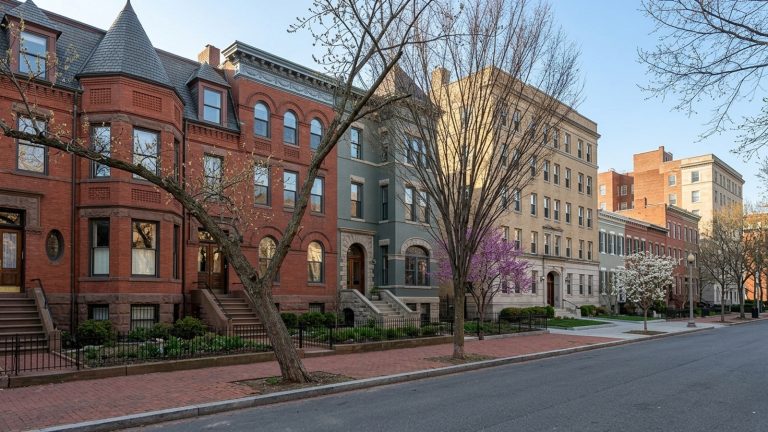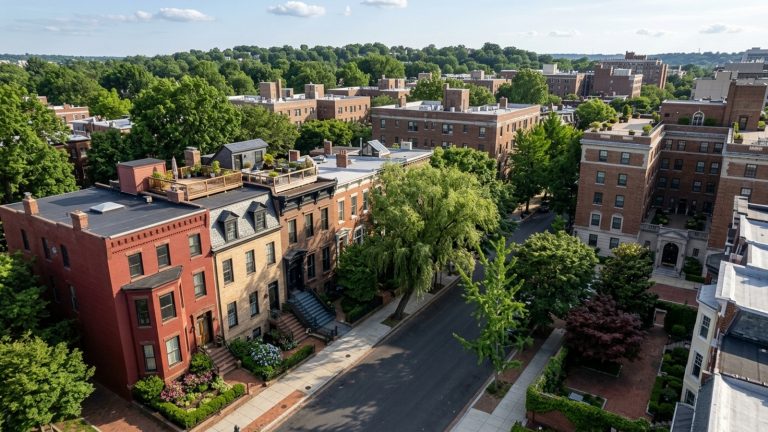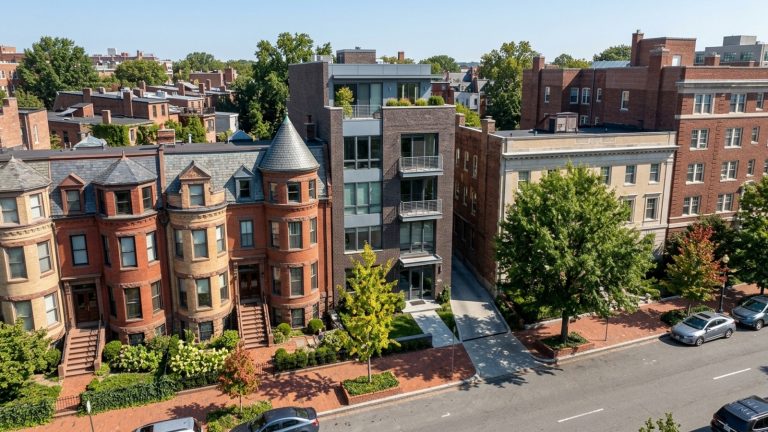

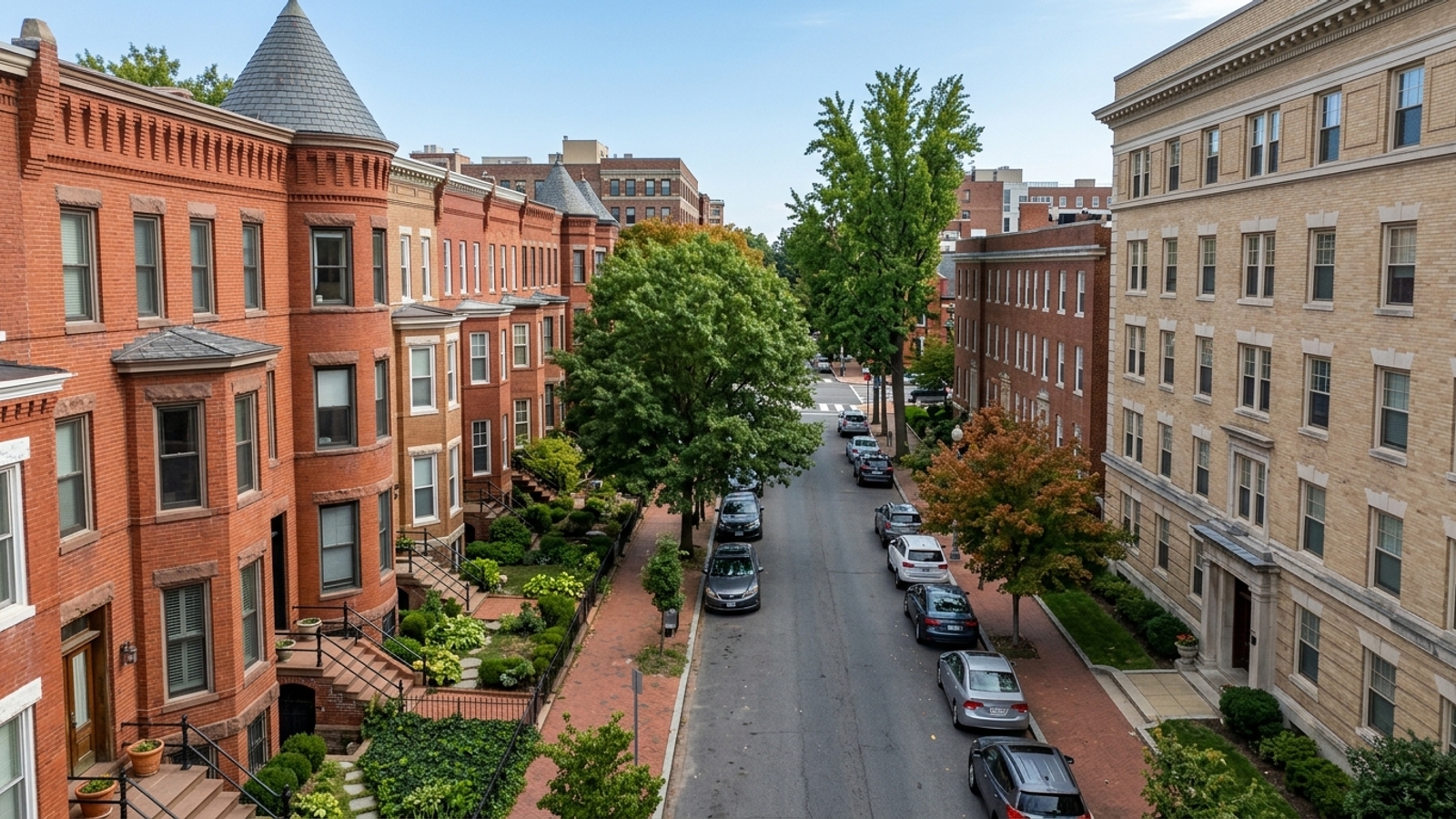
Washington, DC, has always played by its own rules, and Dupont Circle is no exception. The neighborhood draws consistent investor interest – and consistent skepticism about whether the entry price is worth it. Buyers who ask whether investing in the Dupont Circle, DC housing market makes sense usually aren’t wrong to ask.
The housing stock here runs from historic rowhouses to dense condo buildings, which means your strategy options aren’t one-size-fits-all. Whether you’re after rental income or a renovation project, the picture changes depending on which type of property you’re looking at. Current numbers, local rules, and rental market conditions determine whether this neighborhood fits your plan.
Current Market Data for Dupont Circle Investors
Currently, the median sale price in Dupont Circle sits around $490,000. That number reflects the heavy concentration of smaller condo units driving most of the recent sales volume. If you’re looking at single-family rowhouses specifically, broader trackers put the median considerably higher – typically in the $650,000 to $750,000 range.
The neighborhood is carrying about 5.4 months of supply with 107 active listings, which puts it in relatively balanced territory with a slight lean toward buyers. Homes are spending roughly 53 days on the market before closing, and sellers are averaging about 98.25% of their list price.
Median Home Prices and Rental Rates
Appreciation has been steady rather than dramatic. The median sale price is up 3.1% year-over-year – not dropping, but not running away from you either. That kind of pace gives you time to evaluate a deal without the market moving under your feet. About 13.5% of homes still sell above asking, and those tend to be the turnkey units that need nothing.
On the rental side, average apartment rents run from $2,477 to $2,511 per month as of mid-2026. That’s a solid baseline for buy-and-hold investors, especially on condos picked up at the lower end of the pricing spectrum. DC residential property taxes come in at a nominal rate of 0.85%, though the effective rate typically lands around 0.58% to 0.60% after deductions – worth running through your numbers carefully.
Population and Buyer Demand
Dupont Circle has a stable population of approximately 9,191 residents, with a flat 0.0% year-over-year change. The neighborhood isn’t growing fast, but it isn’t shrinking either.
That steadiness matters for investors because it means a predictable tenant pool. The area reliably attracts professionals, diplomats, and long-term renters drawn to proximity to downtown Washington, DC, and the Connecticut Avenue corridor – the kind of tenants who tend to stay put.
Strategies for Investing in Dupont Circle Real Estate
Most investors here land on one of two approaches: long-term rentals or renovation projects. The condo-heavy inventory makes buy-and-hold the path of least resistance – lower maintenance demands, direct appeal to the local renter base, and a relatively straightforward entry point compared to rowhouses.
Rowhouses are a different conversation. The upfront capital requirement is substantial, and the math on conversions or flips needs to work before you make an offer, not after.
House Flipping and the 70% Rule
The 70% rule is the standard gut-check for flippers. It says you shouldn’t pay more than 70% of a property’s after-repair value (ARV) minus your estimated repair costs.
Here’s how that looks on a real Dupont Circle example: if a historic rowhouse has an ARV of $1,000,000 and needs $150,000 in renovations, you multiply $1,000,000 by 0.70 to get $700,000, then subtract the $150,000 repair budget. That leaves a maximum purchase price of $550,000. Finding properties at that discount in a mature market takes patience. But the rule exists for a reason – it protects your margin when something goes sideways.
Common Real Estate Formulas Applied Locally
The 1% and 2% rules don’t apply here. A $490,000 condo would need to rent for $4,900 to $9,800 a month to hit those benchmarks, and the neighborhood average is around $2,500. Investors who come in expecting those ratios leave disappointed. The local strategy centers on cash-on-cash return and long-term appreciation instead.
The 3-3-3 rule is more useful in this context. It calls for saving three months of mortgage payments, three months of vacancy reserves, and three months of maintenance costs before buying. Given, DC’s carrying costs – and the reality that condo assessments can appear without much warning – that cash cushion isn’t optional, it’s just part of owning here.
Short-Term and Month-to-Month Rentals in Washington, DC
If you’re buying with the idea of running a short-term rental in Dupont Circle, you need to understand DC’s rules before you get anywhere near an offer. Washington, DC, enforces the Short-Term Rental Regulation Act, and it limits what property owners can do on vacation rental platforms.
This isn’t fine print. Violations carry escalating fines starting at $500 and reaching up to $6,000, plus revocation of your operating license.
Short-Term Rental Rules and Demand
DC law restricts short-term rentals to your primary residence – meaning you have to live there for at least 183 days of the year. Unhosted stays, where you’re not present, are capped at 90 cumulative nights annually, and no single stay can run longer than 30 consecutive nights. Hosts need a two-year license that costs $99, and you’re required to collect a 15.95% transient lodging tax, a rate currently extended through September 2027.
The part that matters most for investors: non-owner-occupied properties don’t qualify for short-term rental licenses in the District. An investment property can’t be your primary residence, so the short-term rental model is essentially off the table for most investors.
Furnished and Month-to-Month Rental Opportunities
With traditional short-term rentals locked to owner-occupants, a lot of investors shift to month-to-month furnished rentals instead. Leases of 31 days or more fall outside the short-term rental cap entirely.
Dupont Circle is well-suited for this approach. Traveling nurses, government contractors, and international diplomats need medium-term housing on a regular basis, and the neighborhood is exactly where they’re looking. A furnished condo with a flexible lease lets you charge more than a standard 12-month lease would support – without running into DC’s short-term rental restrictions.
Where to Buy Investment Properties Around Dupont Circle
Where you buy within the neighborhood shapes both the tenant profile and the price you’ll pay. The blocks closest to the traffic circle itself offer heavy foot traffic and direct Metro access. The Connecticut Avenue corridor blends residential condos with commercial real estate, which opens up options beyond standard residential leases.
The right location depends on what you’re after – the consistency of a quiet residential street or the premium rents that come with a transit-adjacent building.
Best Blocks and Adjacent Areas for Investors
The eastern edge of Dupont Circle, where it borders Logan Circle, draws renters who want to be close to the 14th Street commercial district. Condos in that transitional zone tend to lease quickly because of the density of dining and entertainment options nearby.
Moving west toward Kalorama, the housing stock shifts to larger, more expensive historic homes. More capital required, but the tenant profile changes too – executive-level renters and diplomats who are prioritizing space and architecture, not just proximity to the Metro.
Commercial Real Estate and Investment Properties for Sale
Dupont Circle also has commercial real estate worth paying attention to – mixed-use buildings with ground-floor retail and apartments above, which diversify your income stream. Those deals come with commercial lending and zoning considerations that residential investors may not be used to.
For anyone actively searching for an investment property in Dupont Circle, DC, inventory is tight. There are just over 100 active listings, so monitoring the local MLS closely and working with a local agent who will get you in front of new listings immediately is how you avoid missing the right deal.
How to Finance and Buy Your First Property Here
Getting financing squared away for a Dupont Circle investment property means being ready for DC’s specific conditions. Lenders are going to look hard at the condo association’s financial health – high HOA fees affect your debt-to-income ratio and eat into cash flow, so you want to know what you’re walking into before you’re under contract.
It’s also worth running a clear-eyed assessment of what might depress a property’s value or rental potential. In this neighborhood, that typically means units without dedicated parking, without central air conditioning, or carrying pending condo assessments. Those factors tend to push a property’s days-on-market up and keep rents down.
Working with a Local Investment Specialist
Buying a rental or a flip in Washington, DC, means operating inside a framework of strict tenant rights laws and local tax structures. An agent who knows Dupont Circle investment specifically can help you identify buildings with HOA bylaws that don’t work against you as a landlord.
Beyond the transaction itself, the right agent connects you with property managers, contractors, and local real estate investment associations so your team is in place before you close – not after you’re trying to find someone to fix the HVAC at midnight.
Frequently Asked Questions
Is Dupont Circle, Washington, DC, a good place to invest in real estate?
Yes. Dupont Circle has a stable renter population and steady property appreciation. With average rents around $2,500 and a median sale price of roughly $490,000, it offers consistent opportunities for buy-and-hold condo investors.
Are home prices dropping in Dupont Circle, DC?
No. Home prices are currently rising, with a 3.1% year-over-year increase. The median sale price sits at approximately $490,000.
Is Dupont Circle a buyer’s or seller’s market?
The overall market is relatively balanced, though it depends on the property type. With 5.4 months of supply and homes spending about 53 days on the market, buyers have room to negotiate – but turnkey properties are still selling at or above list price.
How much is rent in Dupont Circle, DC?
Average apartment rents range from $2,477 to $2,511 per month. Furnished or medium-term rentals can command higher rates depending on location and amenities.
Which micro-neighborhoods around Dupont Circle offer the best ROI for investment properties?
It depends on your strategy. The blocks bordering Logan Circle and the Connecticut Avenue corridor see strong renter demand, with immediate access to transit and dining that tends to keep vacancy times down.
What are the local regulations for hosting short-term and month-to-month rentals in Dupont Circle?
Short-term rentals under 30 days are restricted to primary residences, and unhosted stays are capped at 90 nights per year. Month-to-month rentals of 31 days or more don’t fall under those same restrictions, which makes them a more practical option for non-owner-occupied investment properties.