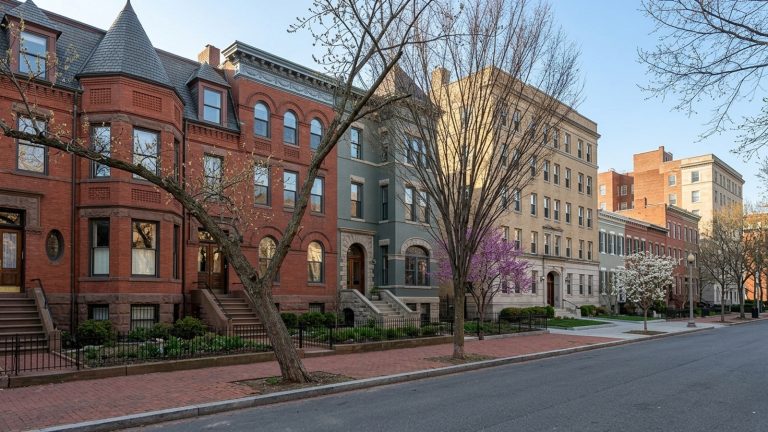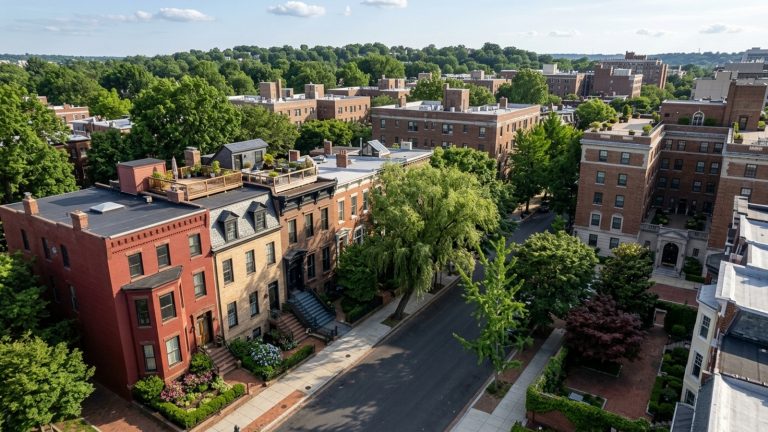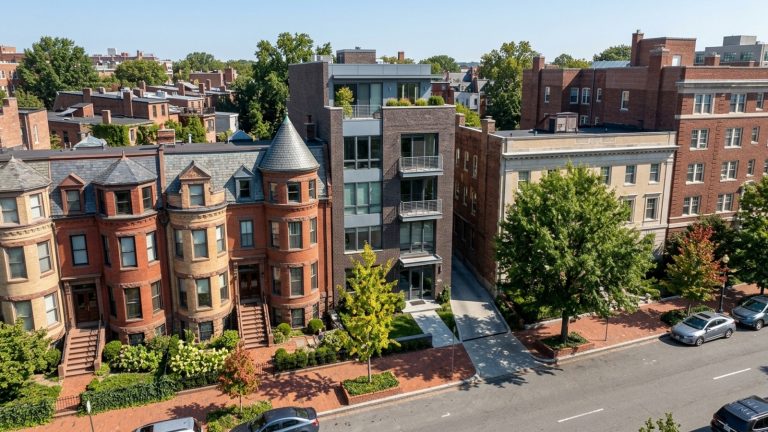

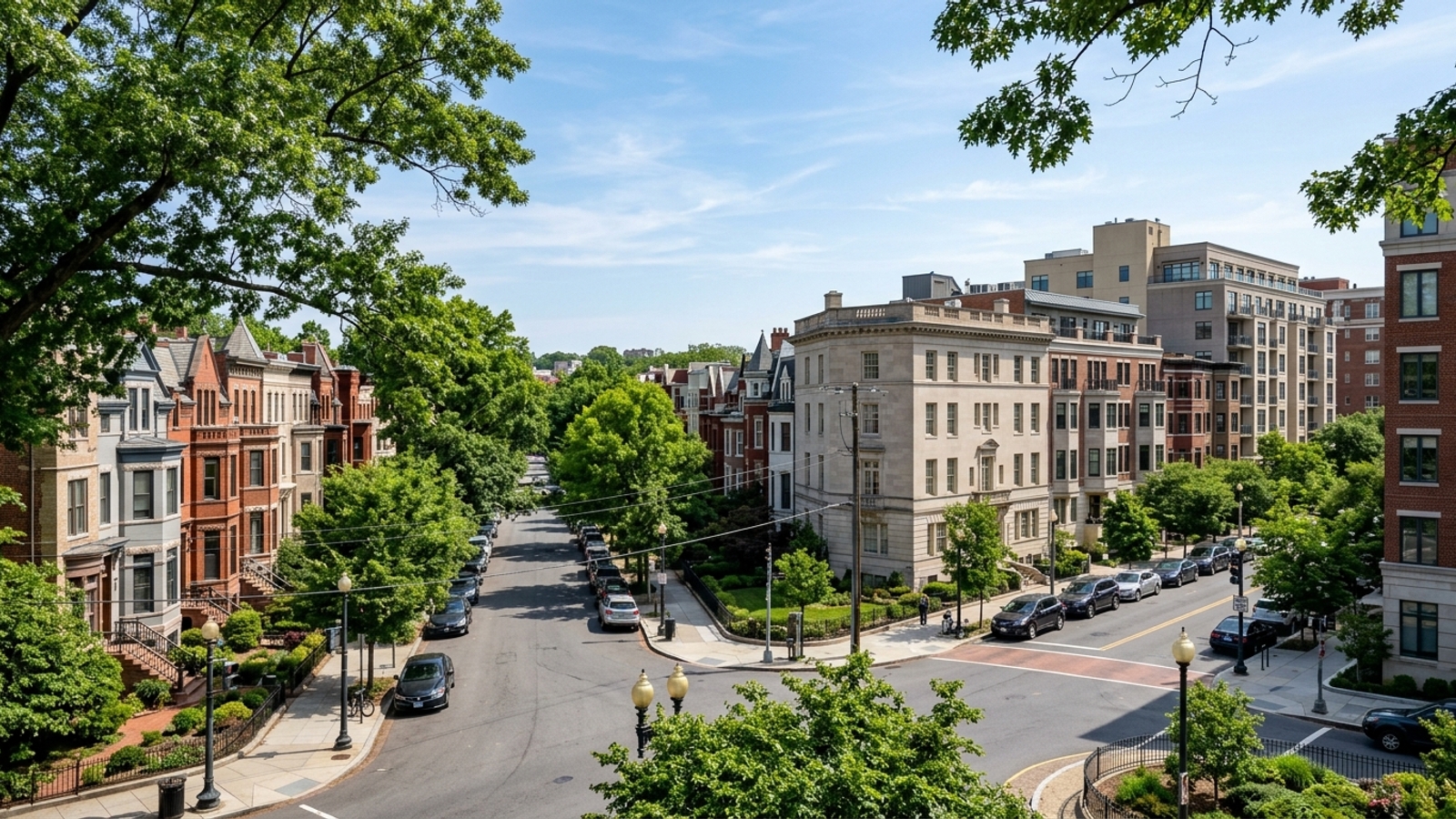
The median sale price in Dupont Circle sits around $480,000 right now, with homes averaging 45 days on the market. You’re looking at a neighborhood where condos, co-ops, and historic rowhouses all coexist – and each one comes with its own financing quirks, especially for first-time homebuyers in Dupont Circle, DC.
Rates matter here more than most buyers expect. As of early September 2026, borrowing costs are still the first thing worth understanding before you start doing the math on monthly payments, property taxes, and association fees. Getting a clear picture of your loan options is how you figure out what’s actually within reach in this part of Washington, DC.
Where Interest Rates Stand Today
On Wednesday morning, September 2, 2026, the average interest rate on a 30-year fixed-rate mortgage was 6.74% APR. Freddie Mac’s weekly survey from late August showed similar figures, with the 30-year fixed rate averaging 6.66%.
These are national benchmarks – starting points that local lenders use to price their own products. What you’ll actually see on a Loan Estimate depends on your credit profile, your down payment, and the specific property you’re buying.
A co-op purchase, for instance, gets underwritten differently than a rowhouse. Lenders are looking at the full picture: the appraisal, your down payment, the building’s financials. That’s where the real rate gets set.
Standard 30-Year Fixed Options
The 30-year fixed is still what most buyers in the District reach for first, and for good reason. Locking in somewhere between 6.66% and 6.74% gives you a predictable principal and interest payment for the next three decades – no surprises, no annual adjustments.
You’ll pay more total interest over the life of the loan compared to a shorter term. That’s the trade-off. But the lower monthly payment often makes qualifying easier, which matters in a market where carrying costs add up fast.
15-Year Fixed Alternatives
If you want to build equity faster and you have the income to support it, the 15-year fixed is worth a serious look. As of early September 2026, those rates are running around 5.98% to 6.01% APR – meaningfully lower than the 30-year.
The catch is a noticeably higher monthly payment. The repayment schedule is compressed, so your income needs to support that. Buyers who can manage it save a substantial amount on interest over the life of the loan.
Adjustable-Rate Mortgages
An ARM offers a lower introductory rate for a set period – typically five to seven years – before adjusting annually based on broader market indexes.
If you’re planning to sell or refinance within that initial window, an ARM can make financial sense. Just read the rate caps carefully before you sign anything, so you understand the worst-case payment scenario if rates move against you after the fixed period ends.
Securing a Favorable Loan in the District
Small differences in your credit score can shift your rate by fractions of a percentage point – and on a 30-year loan, fractions add up to real money. Getting your financial picture in order before you apply makes the underwriting process cleaner and faster.
You’ll need recent pay stubs, tax returns, and bank statements ready to go. That part’s standard. What buyers often skip is comparing offers from more than one lender – and that’s exactly where money gets left on the table.
The local market has regional banks, credit unions, and national lenders all competing for your business. They don’t all price loans the same way.
Preparing Your Credit Profile
A higher credit score gets you better rates and lower fees. Pull your credit reports early, look for errors, and pay down revolving balances before you apply. Lenders are also calculating your debt-to-income (DTI) ratio to make sure the new housing payment fits alongside everything else you owe. Less debt means a stronger application.
Shopping Local vs. National Lenders
National banks and online aggregators hand you a generic rate table. It’s a starting point, not a final answer. Local mortgage brokers and regional credit unions sometimes offer portfolio loans built specifically for District properties – co-ops in particular.
Get pre-approved by at least two lenders. Then pull out the Loan Estimate from each one and compare them line by line: interest rate, origination charges, estimated closing costs. The lowest rate isn’t always the cheapest loan.
Choosing the Right Loan Product
Conventional loans work well for borrowers with solid credit and a down payment of at least 3% to 5%. If you’re a military veteran or active-duty service member, VA loans offer 0% down with competitive rates and no private mortgage insurance – that’s a meaningful advantage in a city with high property values.
FHA loans are an option if your credit score is lower, with a minimum 3.5% down payment required. Just know that FHA has specific property condition requirements that get evaluated during the appraisal, which can complicate purchases in older buildings.
District Homebuyer Assistance Programs
The District of Columbia offers substantial financial support for buyers who qualify. Through the Home Purchase Assistance Program (HPAP), eligible buyers can receive up to $202,000 in gap financing assistance, plus an additional $4,000 toward closing costs.
These programs reduce what you need to borrow from a primary lender. That matters because a lower loan amount – or a higher effective down payment – can improve your overall financing terms.
Home Purchase Assistance Program (HPAP)
HPAP has been providing interest-free loans to eligible first-time homebuyers with low-to-moderate incomes since 1978. Borrowers earning below 80% of the Area Median Income (AMI) receive a 0% interest loan that’s deferred until the property is sold, refinanced, or no longer serves as a primary residence.
Moderate-income borrowers earning between 80% and 110% of the AMI get a five-year deferment. After that period, they move into a 40-year principal-only repayment phase.
DC Open Doors and Employer Assistance
The DC Housing Finance Agency runs DC Open Doors, which provides home purchase loans and down payment assistance. It’s not limited to first-time buyers, which makes it accessible to more people than you might expect.
If you work for the District, there’s also the Employer-Assisted Housing Program (EAHP). First-time buyers who are city employees can receive a deferred 0% interest loan plus matching grant funds for down payments and closing costs.
Estimating Your Monthly Housing Costs
The median sale price in Dupont Circle is around $480,000, though what you actually pay depends on the building and unit size. Current market data shows a 3.7-month supply of inventory, with homes selling at roughly 98.2% of list price.
Your mortgage payment is only part of what you’ll owe each month. Property taxes, insurance, and association fees all get added to the pile – and in a neighborhood with as many condos and co-ops as this one, those fees can be significant.
District Property Taxes and Deductions
Washington, DC taxes Class 1 residential properties at $0.85 per $100 of assessed value for 2026, with real property assessed at 100% of estimated market value.
Owner-occupants get a homestead deduction that subtracts $91,950 from the full assessed value for the 2026 tax year. After that deduction, the median effective property tax rate in the District drops to roughly 0.58%.
Insurance and Association Fees
Your lender will require a homeowners insurance policy. If your down payment is less than 20% on a conventional loan, you’ll also be paying for Private Mortgage Insurance (PMI) each month until you’ve built enough equity to drop it.
Most properties in this neighborhood are condos or co-ops, which means monthly HOA or maintenance fees on top of everything else. Lenders roll those mandatory fees into your DTI calculation – which directly affects the maximum loan amount you can qualify for. It’s one of those numbers buyers sometimes underestimate until they run the full payment.
Frequently Asked Questions
How do high condo HOA fees in Dupont Circle affect my mortgage qualification and rate?
HOA fees directly impact your loan qualification. Lenders include the monthly association fee in your debt-to-income ratio, which reduces the maximum mortgage payment you can afford. It doesn’t change your interest rate, but it does limit your overall borrowing power.
Will I need a jumbo loan for a Dupont Circle rowhouse, and how do those rates compare to conventional mortgages in DC?
It depends on the purchase price and your down payment. The median sale price for the area is roughly $480,000, but larger rowhouses often exceed standard conforming loan limits, which means a jumbo loan. Jumbo mortgage rates are often comparable to standard 30-year fixed rates, though it varies by lender.
Can I use DC Open Doors or other local first-time homebuyer programs to get a better interest rate in Dupont Circle?
Yes. Programs like DC Open Doors provide home purchase loans that often carry competitive interest rates alongside down payment assistance. Using HPAP funds to increase your down payment can also lower your loan-to-value ratio, which sometimes qualifies you for a better rate from your primary lender.
Do mortgage lenders charge higher interest rates for co-op apartments in Dupont Circle compared to regular condos?
It depends on the lender and their portfolio. Some institutions charge slightly higher rates for co-ops because you’re purchasing shares in a corporation rather than real property. Shopping with local lenders who are familiar with the District’s co-op market is the most effective way to find competitive terms.
At what point in the competitive DC market should I lock in my mortgage rate for a Dupont Circle home?
Lock in your rate once you have a signed purchase agreement and a clear closing timeline. With homes in the neighborhood averaging 45 days on the market, most buyers lock immediately after their offer is accepted to protect against rate movement before closing.
What happens to my mortgage rate and approval if a Dupont Circle property appraises for less than my offer?
A low appraisal doesn’t change your interest rate, but it can put your loan approval at risk if the loan-to-value ratio goes beyond what the lender will accept. Your options are to renegotiate the purchase price, challenge the appraisal, or bring extra cash to closing to cover the gap.