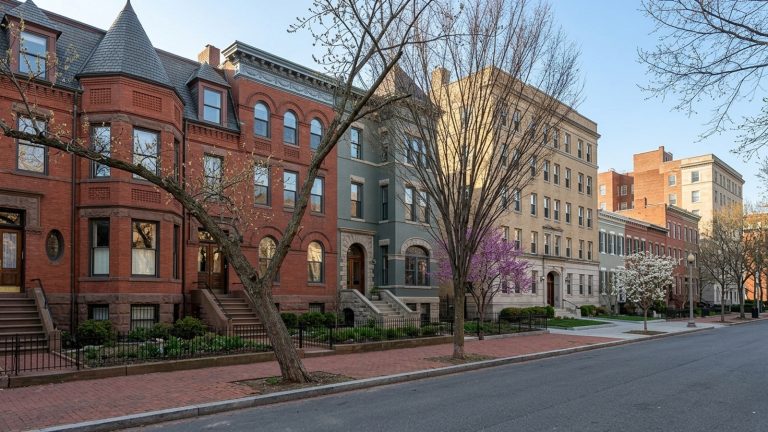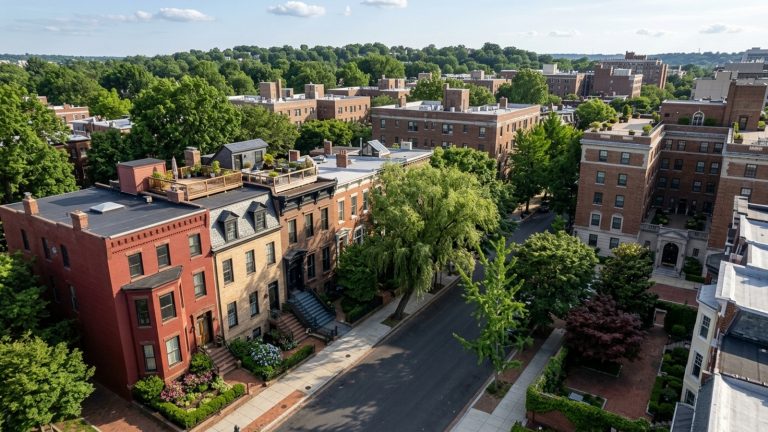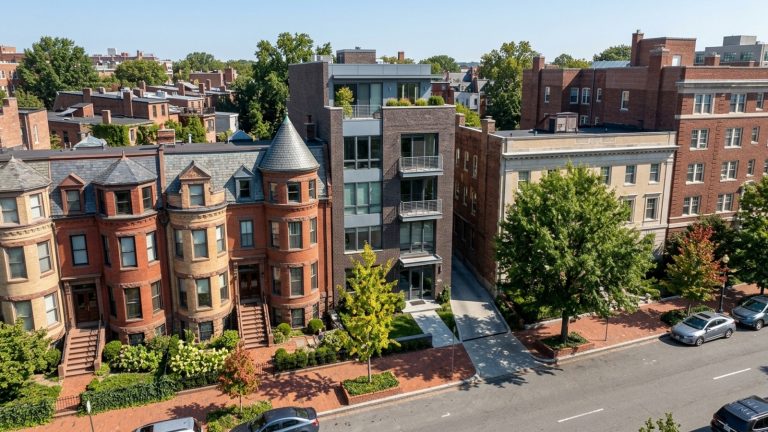

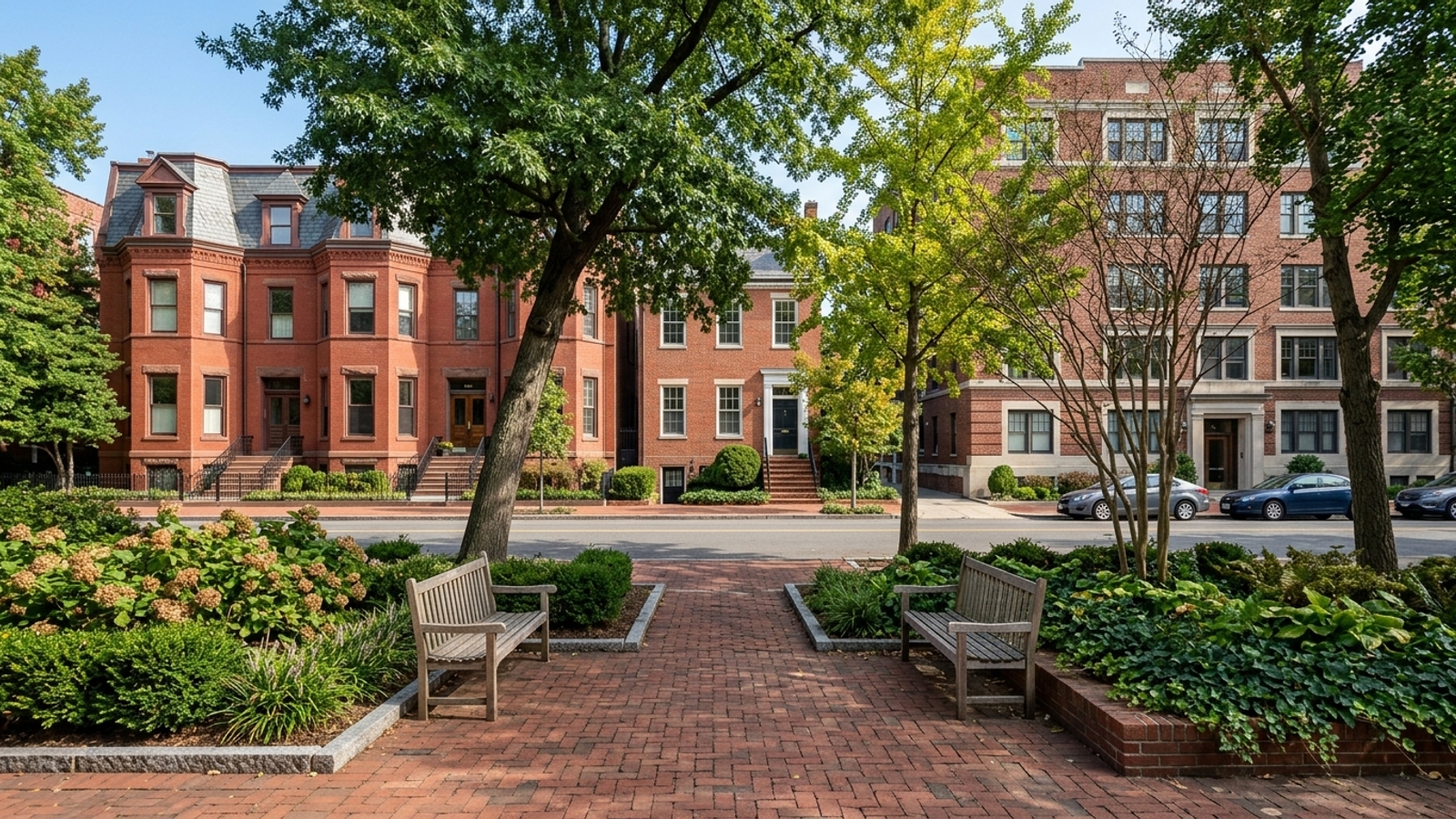
Buying a home in the Dupont Circle, DC housing market is a little different from buying anywhere else in the country – because the District functions as a city, county, and state all at once, the tax structure is genuinely its own thing. Dupont Circle doesn’t have a separate municipal rate layered on top; every property here falls under the unified system run by the District of Columbia.
The local market currently shows a median sale price of roughly $489,664, with homes sitting an average of 53 days before going under contract. There are about 107 homes available right now, so you have room to be selective – but before you make an offer on anything, you’ll want a clear picture of what the District’s tax rates will add to your monthly carrying costs.
The Current Property Tax Rate in Dupont Circle
Because DC is all three levels of government rolled into one, you’re not stacking a city rate on top of a county rate on top of a state rate. The District of Columbia Office of Tax and Revenue (OTR) sets one unified schedule, and it applies to every neighborhood equally. For owner-occupied residential property in Dupont Circle, that rate is $0.85 per $100 of assessed value.
The District does classify real estate into different categories, though, and that classification determines your exact rate. A commercial storefront on Connecticut Avenue gets taxed differently than a residential rowhouse on a side street – so the $0.85 figure is specifically the residential owner-occupied number.
Residential Tax Classes in the District
Most single-family homes and condos fall under Class 1, which carries that $0.85 per $100 rate. Multifamily buildings with three or more units get a Class 1A designation – same $0.85 rate.
Class 1B covers one-to-two unit homes, and here the structure is slightly tiered. The $0.85 rate applies to the first $2.5 to $2.558 million of assessed value. Anything above that threshold gets taxed at $1.00 per $100.
Calculating Your Dupont Circle Tax Bill
Your annual bill is based on the OTR’s assessed value – not necessarily the price you paid. Those two numbers don’t always match, though they tend to track market trends over time. It’s worth pulling the current assessment on any property you’re seriously considering, because that’s the number that drives your tax bill.
If you’re using the home as your primary residence, you can lower that taxable value through the DC Homestead Deduction. For tax year 2026, it reduces a home’s taxable assessed value by $91,950 – which translates to roughly $781 in annual savings at the standard Class 1 rate.
Estimating Taxes on a Typical Home
The math is straightforward once you have the assessed value. Take that number, subtract any applicable deductions, divide by 100, and multiply by $0.85.
Here’s a simple illustration: assume a Dupont Circle condo assessed at roughly $490,000, matching the current median sale price. Apply the 2026 Homestead Deduction of $91,950, and the taxable value drops to $398,050. Divide by 100, multiply by $0.85 – you’re looking at an estimated annual property tax bill of around $3,383. That’s a rough figure for planning purposes, not a guarantee, but it gives you a realistic starting point.
Local Sales Tax and Dining Surcharges
Property taxes are the big one for homeowners, but they’re not the only piece of the local tax picture. The District also levies a general sales tax on retail goods and certain services. As of September 30, 2026, that general rate is 6.0% – and it’s scheduled to increase to 7.0% starting October 1, 2026. So if you’re budgeting for life in the 20036 ZIP code, the timing matters.
The general rate covers most everyday purchases. The hospitality sector is a different story.
Restaurant and Liquor Taxes
Dupont Circle has a large concentration of dining and nightlife venues, so you’ll encounter these rates regularly. Eating at a restaurant or ordering a drink at a bar triggers a 10% tax on the bill. Buying alcohol to take home from a local liquor store runs slightly higher – 10.25% for off-premises consumption.
How to Look Up and Pay Your Tax Bill
Everything is managed through the District’s centralized online portal at MyTax.DC.gov. You can view your current balance, review past billing cycles, and pay directly through the site – no trip to an office required.
DC splits property tax bills into two installments annually. The first half, covering October 1 through March 31, is due by March 31. The second half, covering April 1 through September 30, is due by September 15.
Finding Public Property Records
Property tax records in the District are public, which is genuinely useful when you’re doing due diligence on a specific address. Through the OTR’s public database, you can pull the assessment history and past tax bills for any Dupont Circle property you’re considering.
One thing to pay attention to: those records will show whether the current owner is receiving the Homestead Deduction. That deduction doesn’t transfer automatically – you’ll need to apply for it yourself after closing.
Exemptions, Appeals, and Special Assessments
Beyond the standard Homestead Deduction, the District has targeted relief programs for residents who qualify. The DC Senior Citizen and Disabled Property Tax Relief program offers additional reductions for homeowners who meet age, disability, and income requirements.
If you think the OTR has overvalued your property, you have the right to challenge it. Homeowners can file an appeal with the Real Property Tax Appeals Commission (RPTAC) to request a formal review of their property’s valuation.
Business Improvement District (BID) Taxes
Commercial property owners in certain parts of Dupont Circle may face an additional layer: Business Improvement District (BID) taxes. These are special assessments that fund neighborhood services like street cleaning and public landscaping along the area’s active commercial corridors.
For standard residential buyers – condos, rowhouses – these generally don’t apply. They’re more relevant if you’re looking at a commercial or mixed-use property.
Comparing DC to Maryland and Virginia Suburbs
People shopping across the DC metro area frequently ask how the District’s rate stacks up against suburban options. DC’s flat $0.85 residential rate is simpler than what you’ll find in neighboring jurisdictions, where Maryland and Virginia counties often layer county and local municipal rates on top of each other – which can push the overall percentage higher.
That said, rate comparisons only tell part of the story. Assessed values vary by location, so the actual dollar amount on your bill depends on the specific property. A home in DC might carry a lower tax rate but a higher assessed value than a comparable property across the line in the suburbs.
Frequently Asked Questions
What is the property tax rate in Dupont Circle, Washington, DC?
The standard property tax rate for owner-occupied residential homes in Dupont Circle is $0.85 per $100 of assessed value. This is the District of Columbia’s Class 1 rate, which applies uniformly across all DC neighborhoods.
At what age do seniors stop paying property taxes in DC?
There’s no age at which property taxes simply stop. Seniors can qualify for significant reductions, though – the DC Senior Citizen and Disabled Property Tax Relief program offers tax relief for eligible homeowners based on age, income, and residency requirements.
When are property taxes due in the District of Columbia?
DC property taxes come in two installments each year. The first half is due by March 31, and the second half is due by September 15.
How do I look up and pay my property tax bill in Dupont Circle?
You can look up and pay your bill online through the District’s MyTax.DC.gov portal. The Office of Tax and Revenue maintains these public records, and you can search by property address.
Are there special assessments or BID taxes in Dupont Circle?
Commercial properties in the area may be subject to Business Improvement District (BID) taxes, which fund local neighborhood services. They generally don’t apply to standard residential homeowners.
How do property taxes in DC compare to nearby Maryland and Virginia?
DC uses a unified tax system with a flat residential rate of $0.85 per $100, while Maryland and Virginia suburbs often stack county and local municipal rates – which can make the District’s baseline percentage lower than some surrounding areas. Total bills still vary based on each property’s assessed value.
Do DC tax assessors go inside your home?
Assessors primarily use public records, recent sales data, and exterior evaluations rather than mandatory interior walk-throughs. If you disagree with the value they assign, you can file an appeal with the Real Property Tax Appeals Commission (RPTAC).