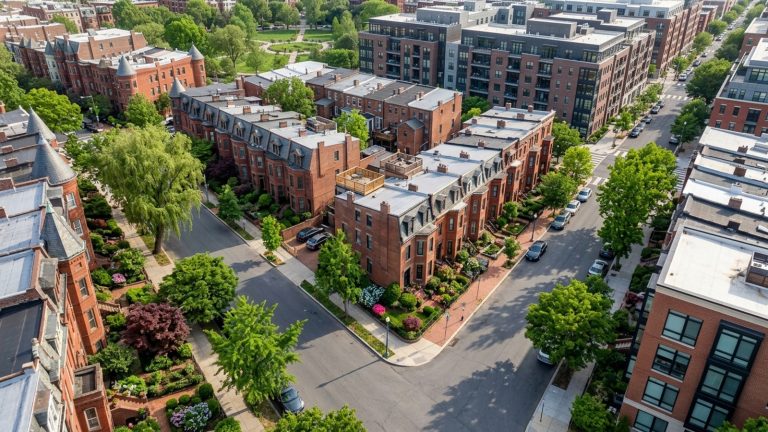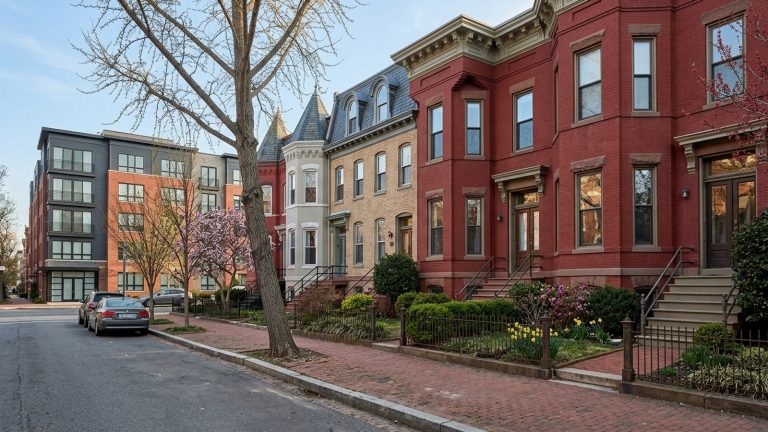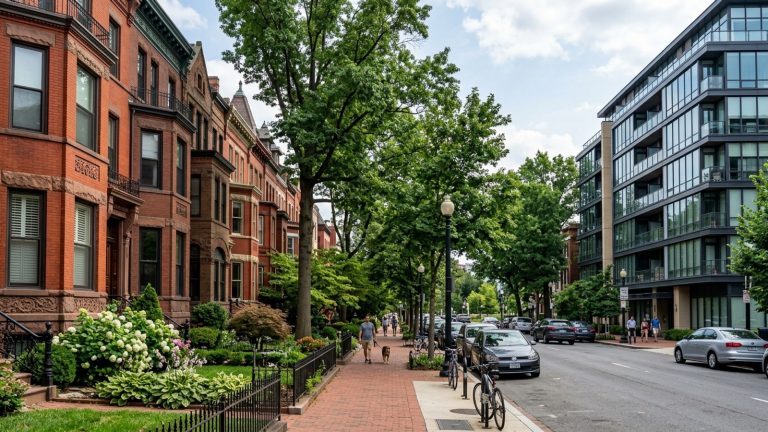

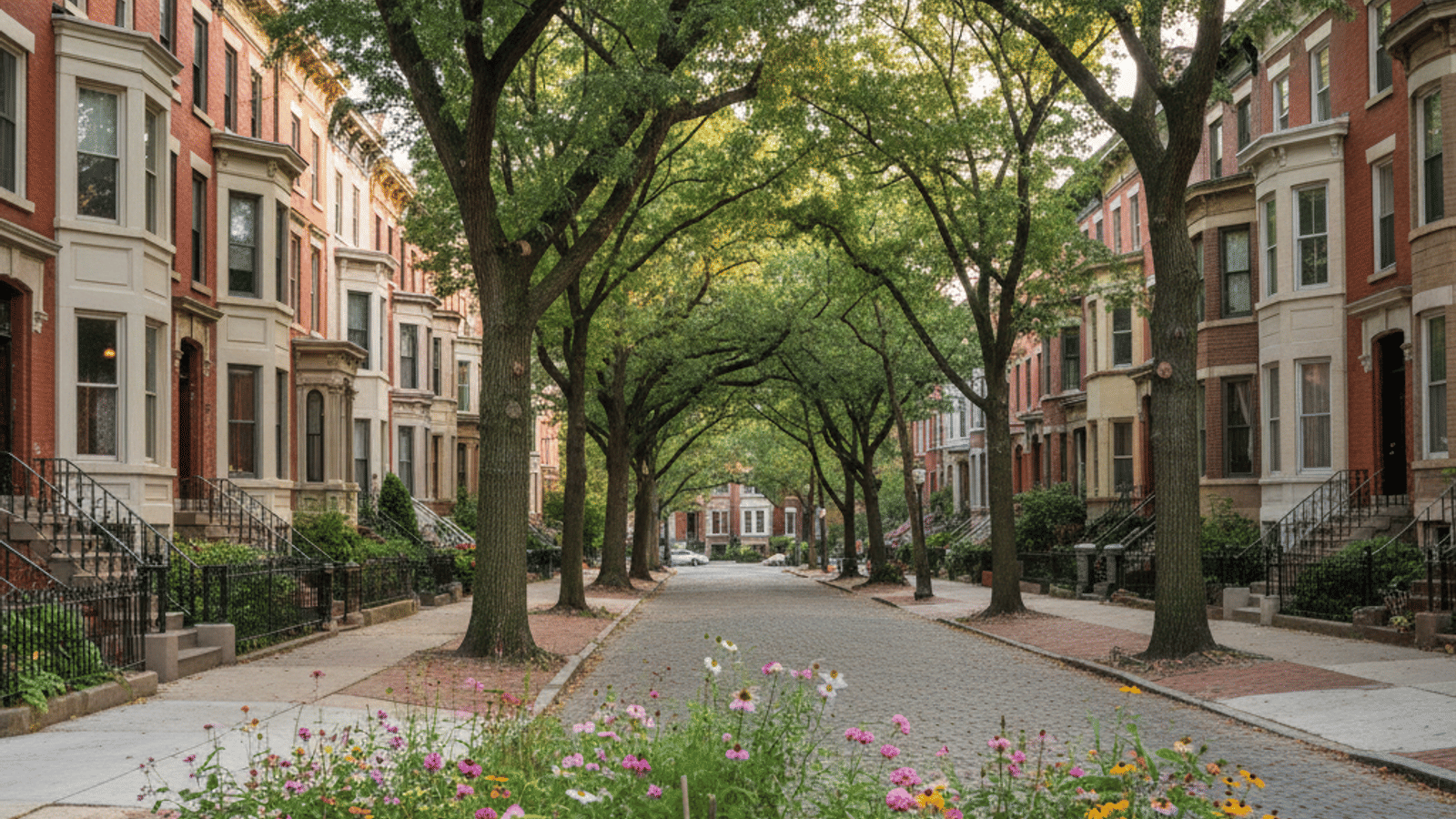
Let’s be honest: looking at real estate in Logan Circle can be a bit of a shock to the system. Between the stunning Victorian rowhouses and the luxury condos along the 14th Street corridor, the price tags often match the high desirability of the neighborhood. But here is the good news that many buyers—even well-paid professionals—often miss: Washington, DC, has some of the most aggressive and generous homebuyer assistance programs in the country.
There is a persistent myth that financial aid is only for low-income buyers. In DC, that is simply not true. Programs here are designed to help moderate and even high-income earners bridge the gap between their savings and the high cost of entry.
When we talk about buying in a market like this, we often refer to the “Capital Stack.” This is the strategy of layering your personal savings with employer grants, city-deferred loans, and tax credits. By stacking these funds, owning a home in the Logan Circle neighborhood becomes a math problem we can actually solve, rather than just a pipe dream.
Types of Financial Aid Available to Buyers
Before we jump into the specific acronyms, it helps to understand what kind of money is actually on the table. Financial assistance generally falls into four buckets, and you might be able to tap into more than one.
Down Payment Assistance (DPA) usually comes in the form of a second trust loan or a grant. This money goes directly toward the upfront cash percentage required by your lender.
Closing Cost Assistance is distinct from the down payment. In DC, closing costs can be high (often 3% to 4% of the purchase price), so programs that cover transfer taxes and title fees are incredibly valuable for keeping cash in your pocket.
Tax Credits & Abatements are often the unsung heroes of affordability. These can either reduce the amount of cash you need at the closing table (through tax exemptions) or lower your monthly federal tax bill, effectively boosting your take-home pay.
Subsidized Inventory refers to programs like Inclusionary Zoning (IZ), where the benefit isn’t a loan, but access to a specific unit priced below market value.
Home Purchase Assistance Program (HPAP)
If you are thinking about buying a condo in DC, the Home Purchase Assistance Program (HPAP) is usually the first program to investigate because the funding amounts are massive. It works on a “Gap Financing” model, meaning the city looks at what you can afford and fills the gap between that number and the purchase price.
As of the current fiscal year, eligible buyers can receive up to $202,000 in gap financing assistance toward a down payment, plus an additional $4,000 toward closing costs. Repayment is generally deferred, often with 0% interest, meaning you don’t make monthly payments on this chunk of money until you sell, refinance, or pay off the main mortgage.
However, for Logan Circle buyers, there is a catch you need to watch out for: the “First Trust” limit. HPAP requires that your primary mortgage generally stays within the conventional conforming loan limits (around $766,550 depending on the year). If you are looking at a $1.2 million rowhouse, HPAP might not work because the primary loan would exceed that cap. This program is usually most effective in this neighborhood for one-bedroom or two-bedroom condos that fit within that price box.
DC Open Doors: The Solution for Higher Earners
For many professionals living in Logan Circle, HPAP’s income limits might be too restrictive. This is where DC Open Doors shines. It is widely considered the go-to solution for buyers who have good income and credit but perhaps haven’t saved the $100,000+ cash needed for a traditional 20% down payment in this zip code.
The most powerful feature of DC Open Doors is how it calculates income. Unlike many programs that look at the total household income, Open Doors only looks at the borrower’s income. This is a massive advantage for couples. If you have a two-income household where one partner earns $150,000 and the other earns $140,000, you might be disqualified from other programs. But if the loan is solely in one partner’s name, you could still qualify.
Here is how the numbers shake out:
- Income Cap: The borrower (the person on the loan) can earn up to approximately $275,400 (based on 2025 limits).
- Loan Limits: This program supports much higher purchase prices, accommodating loans well over $1.2 million, which opens up significantly more inventory in Logan Circle.
- The Help: You get a loan for 3% or 3.5% of the purchase price to cover your down payment. It is a 0% interest deferred loan, repayable when you sell or refinance.
To qualify, you generally need a minimum credit score of 640 and a maximum Debt-to-Income (DTI) ratio of 50%. It’s a fantastic tool for jumbo loans DC buyers often need.
Employer Assisted Housing Program (EAHP)
If you work for the District government, you have a distinct advantage. The Employer Assisted Housing Program (EAHP) is designed specifically for DC government employees, including police officers, firefighters, teachers, and civil servants.
The standard benefit is a $20,000 deferred loan coupled with a $5,000 matching grant for savings you contribute. The best part? That loan is 0% interest and deferred.
If you are a first responder (police, fire, EMS, corrections), the benefits are even stronger. You may be eligible for a recoverable grant of up to $10,000 (which can be forgiven if you stay in the home for a set period) and higher matching funds up to $15,000.
What makes EAHP a powerhouse strategy is stackability. You can combine EAHP funds with HPAP. A qualifying police officer, for example, could theoretically stack $202,000 from HPAP with their EAHP funds to obliterate the down payment requirement. Just remember, this program has strict occupancy rules—you must live in the home to keep the benefits.
Inclusionary Zoning (IZ) in Logan Circle
While the programs above help you pay for a market-rate home, Inclusionary Zoning (IZ) helps you bypass market rates entirely. DC requires developers of new residential projects to set aside a percentage of units for moderate-income buyers.
In a neighborhood like Logan Circle, where new construction condos appear frequently, IZ can be a golden ticket to getting into a luxury building at a fraction of the cost. However, it is not a traditional purchase process. You must register with the Department of Housing and Community Development (DHCD), take a mandatory orientation class, and enter a lottery for specific units.
These units come with strict income caps based on Median Family Income (MFI) tiers (typically 50%, 60%, or 80% MFI). The trade-off is that you cannot flip these units for a profit. They come with permanent affordability covenants that restrict the resale price to keep the unit affordable for the next buyer. If your goal is building massive equity quickly, IZ isn’t the path; if your goal is stable, affordable housing in a premium location, it’s excellent.
Tax Credits and Abatements
Beyond the big loans and grants, there are “hidden” savings that can drastically change your monthly budget and closing costs.
First, look for the DC Tax Abatement. If you meet certain income requirements, you can be exempt from the DC recordation tax. On a $600,000 condo, the recordation tax is 1.1%—that is a savings of $6,600 right at the closing table. You may also get a five-year exemption from property taxes.
Second, consider the Mortgage Credit Certificate (MCC). This allows you to claim 20% of your annual mortgage interest as a federal tax credit (not just a deduction). This effectively boosts your qualifying income because lenders can factor that tax savings into your debt-to-income ratio.
Finally, every owner-occupant in DC should file for the Homestead Deduction, which reduces the assessed value of your property for tax purposes, saving you hundreds of dollars annually on your tax bill.
Strategizing for the Logan Circle Market
Understanding the programs is step one; making them work in ZIP code 20005 is step two. Logan Circle is competitive, and prices are high, so you need a strategy.
Watch the Condo Fees: This is the single biggest hurdle for program recipients in this neighborhood. A beautiful condo might list for $550,000, which seems affordable. However, if the condo fee is $800/month, that fee is counted as debt. High fees can skew your Debt-to-Income (DTI) ratio, potentially disqualifying you from programs like DC Open Doors or HPAP even if you can afford the mortgage. Strategically, you may need to look for boutique buildings with fewer amenities to keep those fees low.
The “Stack” in Action: Imagine a DC government employee looking at a condo near 14th Street. By using EAHP for the initial cash and combining it with the Tax Abatement to wipe out recordation taxes, they might enter a $600,000 purchase with very little of their own cash down.
Co-Buying Strategy: If you are buying with a partner and you are high earners, consider if one of you can qualify for the mortgage solo using DC Open Doors. This allows you to bypass household income caps while still leveraging both of your savings for moving costs and furniture.
For more insights on how these numbers play out in current listings, it’s worth keeping an eye on Logan Circle market trends.
How to Apply and Timeline
Using these programs requires more lead time than a standard cash or conventional offer. Here is the typical flow:
- Housing Counseling: For HPAP and IZ, this is mandatory. You must attend training through a Community-Based Organization (CBO). Do not wait until you find a house; start this months in advance.
- Choose a Lender: Not all lenders work with these programs. You must use a lender participating with DCHFA or DHCD. They understand the specific paperwork and timelines.
- Notice of Eligibility (NOE): Once your application is processed, you get an NOE outlining exactly how much assistance you have.
- House Hunting: Now you can tour homes. However, be transparent. HPAP deals can take 45 to 60 days (or more) to close. In a fast-moving area like Logan Circle, your real estate agent will need to communicate clearly with listing agents to reassure them that the financing is solid, even if the timeline is slightly longer.
FAQ
Yes, you absolutely can, provided the condo building is warrantable (approved for financing). The main constraint in Logan Circle is the price; since HPAP usually requires the primary loan to be within conforming limits, you will likely be targeting one-bedroom or two-bedroom condos rather than large rowhouses.
For the 2026 calendar year, the borrower income limit is approximately $275,400. Remember, this applies only to the person listed on the loan, not necessarily the total household income, which is a major benefit for high-earning couples.
Yes, stacking these two programs is a very common strategy for DC government employees. By combining the substantial down payment assistance from HPAP with the grants and deferred loans from EAHP, you can significantly increase your purchasing power.
Yes, because Logan Circle has seen significant new development over the last decade, many modern buildings include Inclusionary Zoning (IZ) units. These are sold via a specific lottery system managed by the DHCD and are not listed on the standard MLS like regular homes.
Yes, but they function differently for each program. HPAP generally caps the first trust mortgage at the conforming loan limit (around $766,550), effectively capping your purchase price when you add in the down payment assistance. DC Open Doors allows for much higher purchase prices, supporting loans well over $1.2 million.