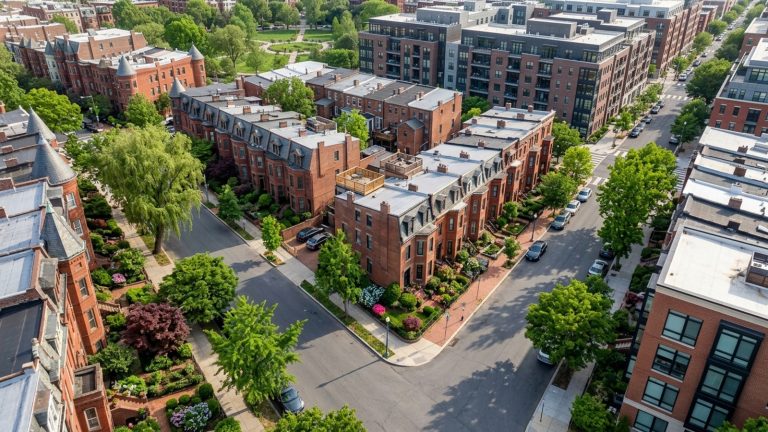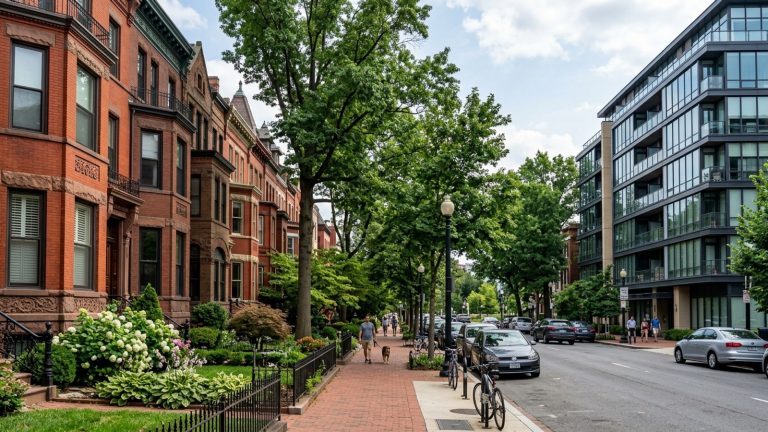

If you are looking at homes for sale in Logan Circle, you have probably experienced a specific moment of “sticker shock.” You find a stunning Victorian conversion or a sleek unit on the 14th Street corridor, the list price looks perfect, and then your eyes drift down to the monthly condo fee: $900. Or maybe $1,200.
It’s a common reaction for buyers, especially those moving from the suburbs or single-family homes. But here is the reality: in a dense, urban market like Washington, D.C., that monthly number isn’t just an arbitrary tax. Unlike a suburban HOA that might only cover mowing a common lawn, D.C. condo fees are heavy lifters. They maintain the structural integrity of historic buildings, often cover your major utilities, and fund the reserves that keep property values high.
As we settle into 2026, we are finally seeing these fees stabilize after the inflation spikes of the last few years. While high fees are a fact of life here, understanding what you get for that money—and knowing how to spot a “bad” fee—is the key to making a smart investment.
Average HOA Fee Ranges in Logan Circle (2026)
One of the most confusing parts of hunting for real estate in Logan Circle is the massive variance in costs. You might see two condos of similar size, one with a $400 fee and another with an $800 fee. Why the gap? It almost always comes down to the type of building and the level of service.
Generally, you can expect fees to fall between $0.50 and $1.00 per square foot for boutique buildings, while luxury full-service buildings often run $0.80 to $2.00 per square foot.
Here is what that looks like in practice:
- Luxury & Full-Service Buildings: If you are looking at prominent buildings like Logan Station or The Radius, expect fees on the higher end ($600 to $1,000+ per month). These fees pay for staff (concierge, front desk), elevators, and extensive amenities like courtyards and gyms.
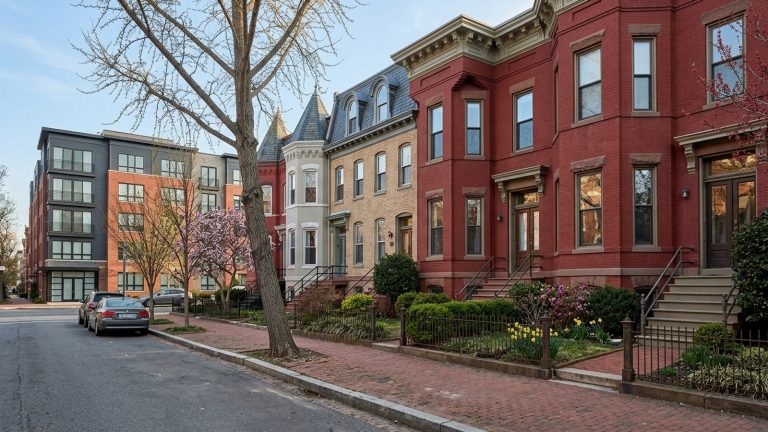
- Boutique & Historic Conversions: These are often rowhouses converted into 2–4 units. Fees here are generally lower ($300 to $500 range). The trade-off? You likely won’t have an elevator, a front desk, or a gym.
- New Construction (14th Street Corridor): Modern glass-and-steel buildings often start with moderate fees. However, buyers should be aware that these can rise after the first few years once developer warranties expire and the association takes on full maintenance costs.
Value vs. Cost: What Do Logan Circle Condo Fees Actually Cover?
To make peace with the monthly payment, it helps to stop viewing it as “lost money” and start viewing it as a “bundled utility.” When you break down the line items, the value proposition often makes more sense.
The Master Insurance Policy
A significant chunk of your fee goes toward the building’s master insurance policy. This covers the exterior “shell,” the roof, and common areas. Because of this, your personal homeowner’s insurance (HO-6 policy) is significantly cheaper than insurance for a standalone house, often saving you hundreds a year.
Utilities: The Hidden Variable
This is the most important question to ask when touring a unit: “Are utilities included?”
- Older/Historic Buildings: Many older buildings operate on a central boiler/chiller system. In these cases, your high fee likely includes all heating, cooling, gas, water, and electricity.
- Newer Buildings: In modern condos (like those built along 14th Street in the last decade), units are usually metered separately. Your fee might be lower, but you will be paying your own electric and gas bills on top of it.
Amenities and Lifestyle
If your building has a gym, you can likely cancel your private gym membership, which saves roughly $100 a month in this neighborhood. Furthermore, fees cover trash removal, snow removal, and in luxury buildings, concierge services that manage package deliveries—a huge perk in the city.
Reserve Funds
Finally, a portion of every check goes into the “Reserve Fund.” This is a mandatory savings account for the building. When the roof needs replacing in 10 years, the money should already be there, preventing a sudden demand for cash from owners.
Condo vs. Rowhouse: The “No HOA” Myth
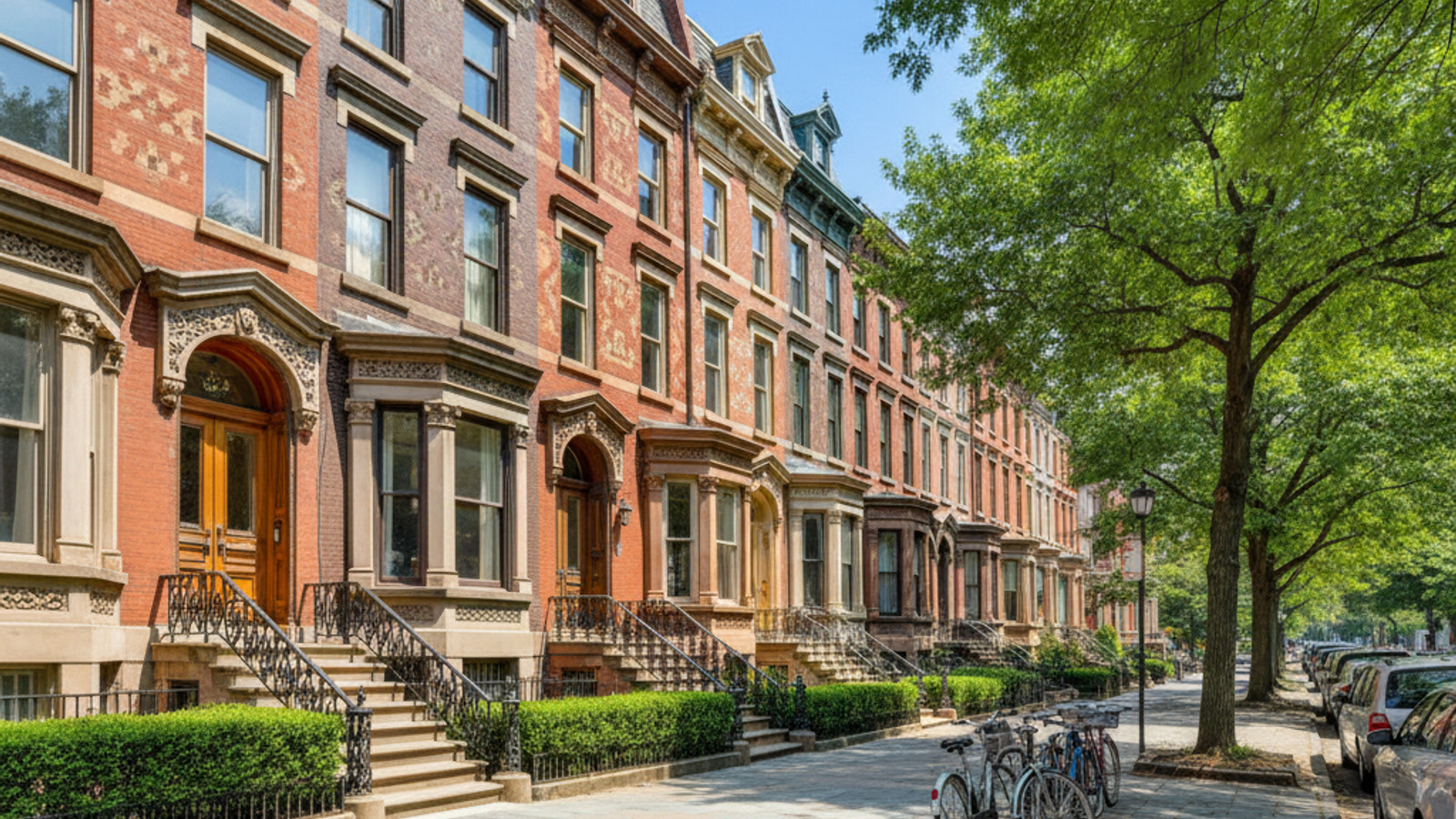
A common alternative for buyers in Logan Circle is purchasing a fee-simple rowhouse to avoid HOA fees entirely. While it is true that rowhouses have $0 monthly fees, that doesn’t mean they have $0 maintenance costs.
When you own a rowhouse, you are the HOA. If the Victorian slate roof fails, that $25,000 repair bill is yours alone. If the brick needs repointing, you write the check.
Condo fees essentially smooth out these “spiky” capital expenses into a predictable monthly payment. Instead of getting hit with a massive bill every five years, you contribute a steady amount monthly. Additionally, rowhouse living requires you to manage your own security and package logistics. In a condo, the fee often buys you a secure lobby, which eliminates the common city headache of package theft.
Red Flags: When Low Fees Are a Warning Sign
It is tempting to filter your search by “lowest monthly fee,” but in D.C. real estate, a suspiciously low fee is often a red flag.
If a building has fees well below the neighborhood average, it may indicate that the association is not saving enough money for the future. This is what we call Underfunded Reserves. If the building isn’t saving a little bit every month for a new roof or elevator repair, they will eventually have to ask the owners for a lump sum of cash.
This is known as a Special Assessment. We have seen buyers jump on a “low fee” unit only to be hit with a $10,000 or $20,000 assessment a year later because the boiler died and the bank account was empty.
The most critical document you will review during your purchase is the Reserve Study. This engineering report predicts how much life is left in the building’s components and whether there is enough cash to fix them. In D.C., buyers have a legally protected 3-day period to review these documents (the “Resale Package”) and can walk away without penalty if they don’t like what they see.
Frequently Asked Questions
Are HOA fees in DC tax deductible?
For a primary residence, typically no. HOA fees are considered a private living expense. However, if you are buying an investment property to rent out, these fees are generally 100% deductible as an operating expense. Always verify this with a tax professional.
Can condo fees in Logan Circle increase?
Yes, and you should plan for it. A healthy condo association usually raises fees by 2-5% annually to keep up with inflation, rising utility rates, and service contracts. If a fee hasn’t gone up in five years, that is actually a warning sign that they may be falling behind on inflation.
Do Logan Circle condo fees include parking?
Usually, the fee covers the maintenance, lighting, and cleaning of the garage, but the parking space itself is often deeded separately. Parking is scarce in Logan Circle; having a spot can add value, but it may also add a small amount to your monthly assessment to cover that specific limited common element.
What happens if I don’t pay my HOA fees in DC?
D.C. laws regarding condo fees are strict. If you fall behind, the association can place a lien on your property and, in severe cases, foreclose on the unit to recover the debt. It is treated just as seriously as a mortgage payment.