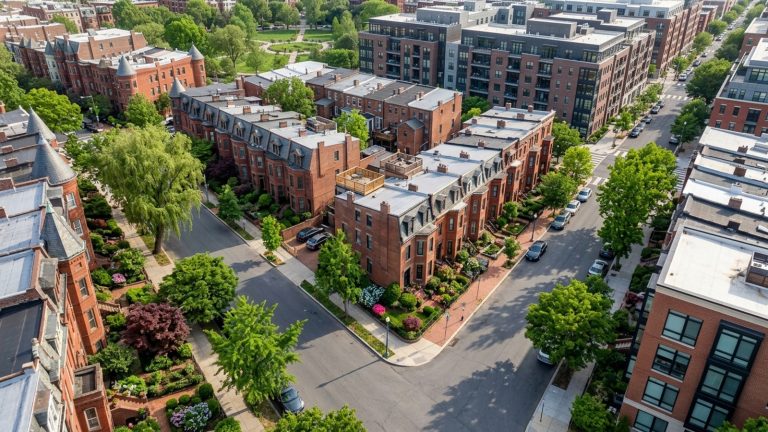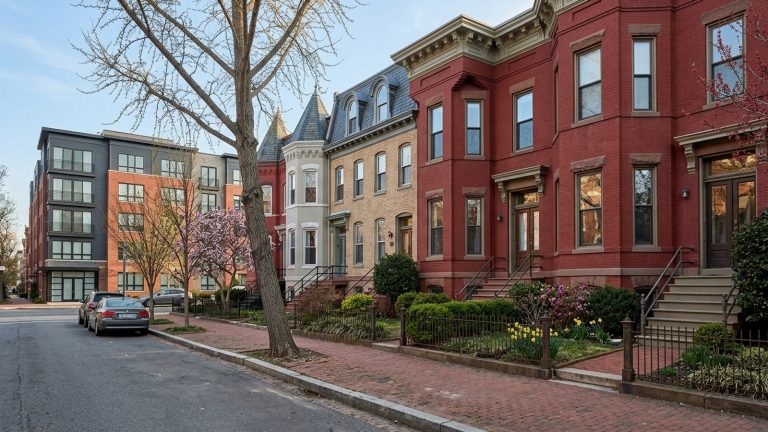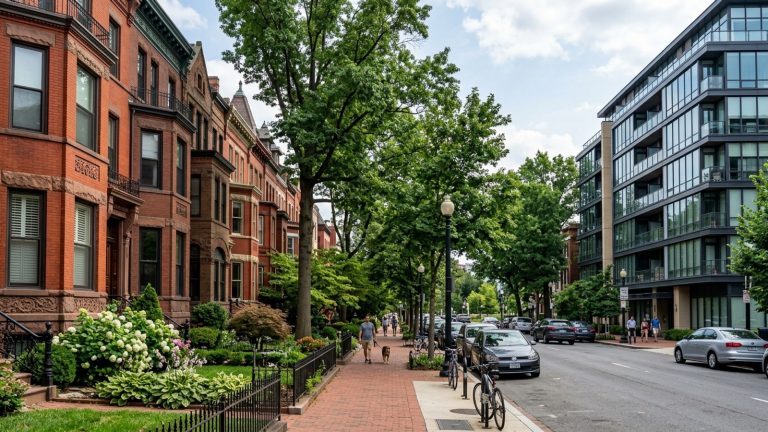

Walking through Logan Circle feels a bit like time travel, but with much better coffee. It is one of the few places in the capital where you can stand in front of an 1870s mansion, squint your eyes, and almost hear the horse-drawn carriages—only to turn the corner and find yourself in the middle of the city’s hottest dining scene.
For anyone thinking about living in Northwest DC, this neighborhood offers a rare mix. It is centered on the only residential circle remaining from the original L’Enfant Plan for the city. While the map might label it “Logan Circle” today—named after the Civil War General John A. Logan in 1930—locals know it has a history that stretches back to when it was originally called Iowa Circle.
The vibe here is a distinct juxtaposition. On the residential side streets, it’s quiet, leafy, and incredibly grand. But just a block away lies the 14th Street corridor, which hums with energy day and night. If you are looking for that specific “old world charm meets new world convenience,” this is exactly where you should be looking.
A Masterclass in Victorian & Richardsonian Romanesque Architecture
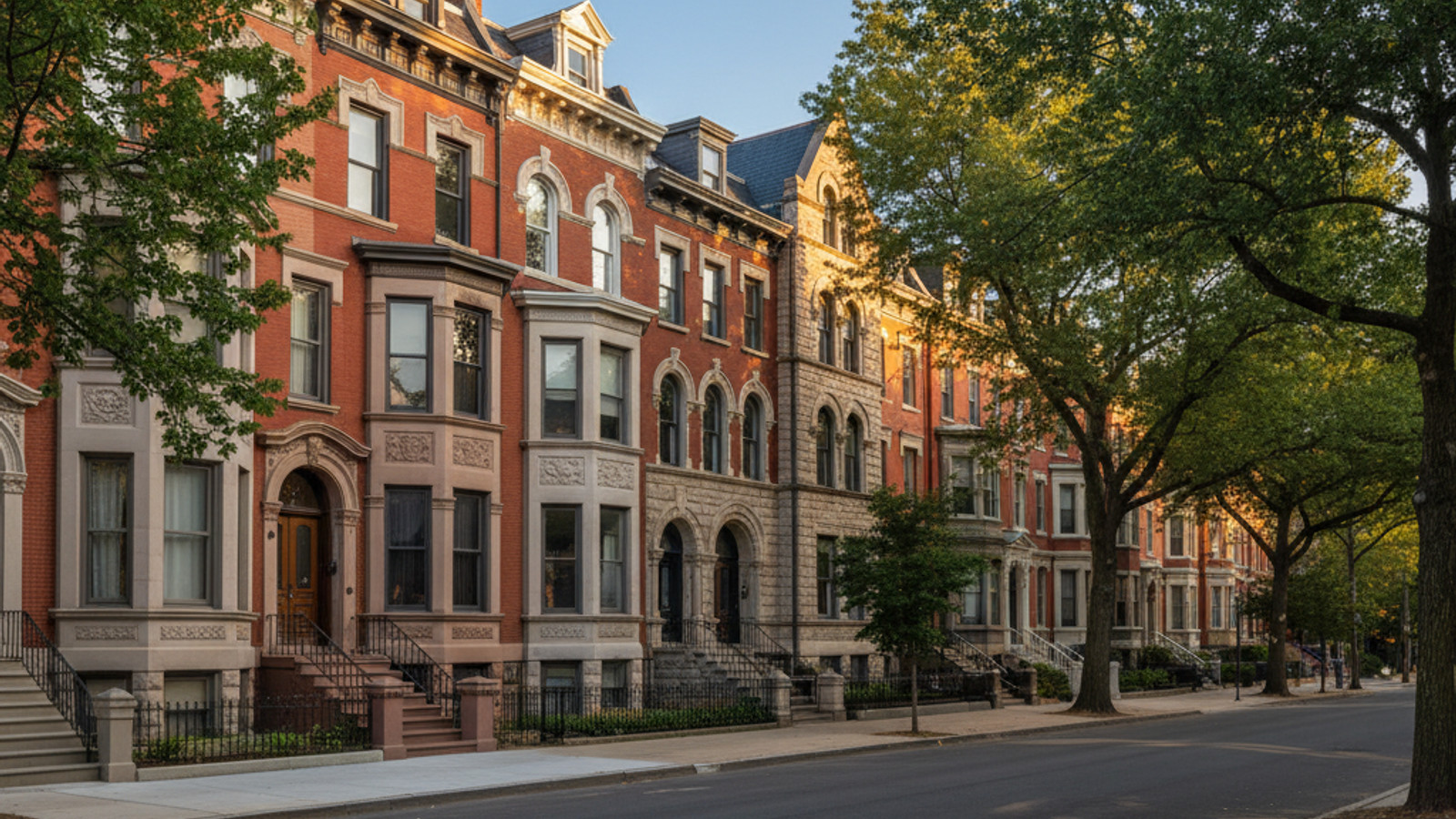
When clients ask me why real estate here holds its value so well, I usually just point to the facades. The Logan Circle Historic District is effectively an open-air museum of the “Gaslight Era,” specifically the boom years between 1875 and 1900.
Unlike some other parts of DC that saw heavy redevelopment in the mid-20th century, Logan Circle’s core remained remarkably intact. There are roughly 135 designated historic residences in the heart of the district, and they are stunning. You aren’t just buying a row house; you are buying a piece of architectural survival.
Defining the Look
If you’re browsing Victorian homes for sale DC, you will see two dominant styles here:
- Late Victorian: These are the red brick beauties you likely picture when you think of DC. They feature intricate brick detailing, bay windows that project over the sidewalk, and decorative cornices.
- Richardsonian Romanesque: This style is heavier and more imposing. Look for massive stone foundations, deep-set windows, and glorious arches. It feels like a fortress but looks like a castle.
The preservation of these styles is what gives the neighborhood its cohesive, red-brick aesthetic. It’s a visual texture you just don’t get in the suburbs.
Buying in the District: HPRB Rules & Renovation
If you fall in love with one of these Victorian dames, you need to understand the rules of engagement. Buying in a historic district means you have a partner in your home ownership: the DC Historic Preservation Review Board (HPRB).
Let’s break down what this actually means for your renovation budget and timeline.
The Exterior is Sacred
The HPRB has jurisdiction over anything visible from the public right-of-way. This includes your windows, your front door, the brick pointing, and sometimes even the paint color if you are restoring masonry. You cannot simply pop down to a big-box store and replace a drafty window with a cheap vinyl one. You generally have to use historically accurate materials, which can cost more.
The Interior is (Usually) Yours
Here is the good news: the historic designation rarely applies to the inside of the house. Unless a property has a specific interior easement (which is very rare), you can modernize the kitchen, open up the floor plan, or finish the basement to your heart’s content. This is why you’ll often find historic preservation real estate that looks like 1890 on the outside but 2026 on the inside.
“Contributing Buildings” and Benefits
Most homes here are classified as “contributing buildings.” While this restricts demolition, it can also open doors to financial benefits. There are occasionally tax credits or the DC Historic Homeowner Grant Program available to help offset the cost of maintaining those historic exteriors. It’s worth checking the current status of these programs before you close.
Living in Logan: The 14th Street Corridor & Beyond
While the architecture brings you here, the lifestyle is why you stay. The transformation of the 14th Street corridor has turned Logan Circle into one of the most walkable DC neighborhoods.
The “Main Street” Energy
14th Street is the artery of the neighborhood. It is packed with everything from high-end interior design shops to vintage staples like Miss Pixie’s. The dining scene is anchored by heavy hitters like Le Diplomate—where getting a table is practically a local sport—and the legendary Black Cat music venue nearby.
Arts and Green Space
Culture is woven into the blocks here. The Studio Theatre offers contemporary performances right in the neighborhood. But the real community “living room” is the circle itself. On any given evening, you’ll see residents picnicking, walking dogs, or just reading on a bench under the shadow of the General Logan equestrian statue. It is a shared backyard for everyone in the condos and row houses nearby.
If you are curious about best DC neighborhoods for nightlife that don’t feel like a college campus, Logan strikes that balance of sophisticated and lively.
Practical Living: Flood Risks and Myths
When we get down to the nitty-gritty of inspections and disclosures, two questions always come up: “Does it flood?” and “Is the circle closed?” Let’s clear up the confusion with some facts.
The Truth About Flooding
There is a misconception that because DC was built on a swamp, everything floods. However, Logan Circle is situated on higher ground than areas like Federal Triangle. It is not in a FEMA Special Flood Hazard Area (Zone A or V). You generally don’t need to worry about the Potomac River rising up to your doorstep.
That said, urban flash flooding is a reality in any city with old infrastructure. During intense, sudden storms, the city storm drains can get overwhelmed. Roughly 7-10% of properties might face minor stormwater risks, specifically basement backups.
- Pro Tip: If you are buying a unit with a basement, just check for a sump pump. It’s a standard, inexpensive safeguard that solves the problem for most homeowners.
The “Closed” Myth
You might see search results asking if Logan Circle is “closed.” The park is open. These queries usually stem from temporary traffic detours. The circle is a popular route for events, such as the United House of Prayer’s annual Memorial Day parade, which shuts down the streets for a few hours. It’s a feature of living here, not a bug.
Frequently Asked Questions
Is Logan Circle a designated historic district?
Yes, the Logan Circle Historic District was listed on the National Register of Historic Places in 1972. It covers an eight-block area surrounding the circle and is protected by local DC preservation laws to maintain its Victorian character.
What is the difference between Logan Circle and Dupont Circle?
While both are historic, they have different vibes. Logan Circle is defined by Victorian red brick architecture and the trendy 14th Street dining corridor. Dupont Circle features grander, white stone Beaux-Arts mansions (Embassy Row) and a more established, slightly quieter commercial scene along Connecticut Avenue.
Does Logan Circle have a Metro station?
There is no Metro station directly on the circle. However, it is incredibly centrally located. Residents typically walk to the McPherson Square (Blue/Orange/Silver), Dupont Circle (Red), or Shaw-Howard University (Green/Yellow) stations, all of which are within a 10 to 15-minute walk.
Is Logan Circle prone to flooding?
The neighborhood is not in a high-risk FEMA flood zone for river flooding. However, like many urban areas, basement units can be susceptible to stormwater backups during heavy rains. Installing a sump pump and backflow preventer is standard advice for home renovation tips DC in this area.