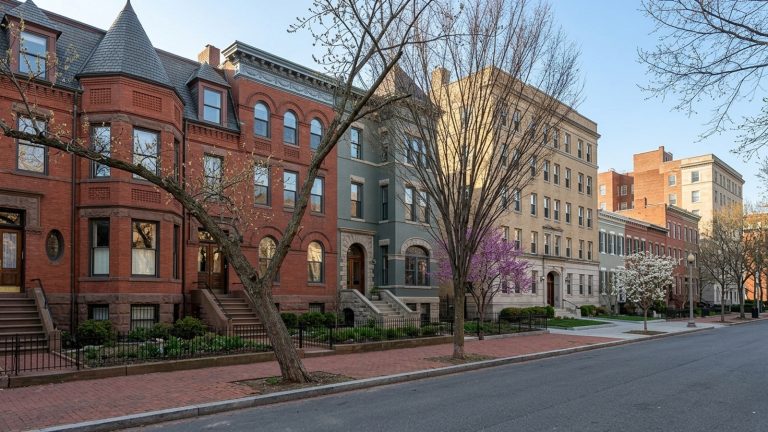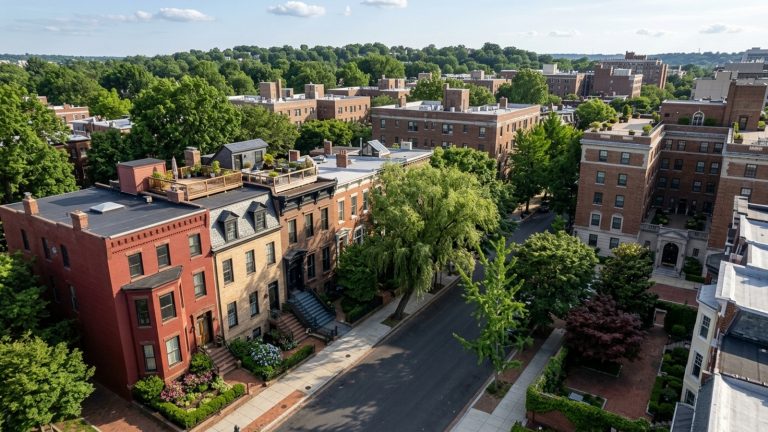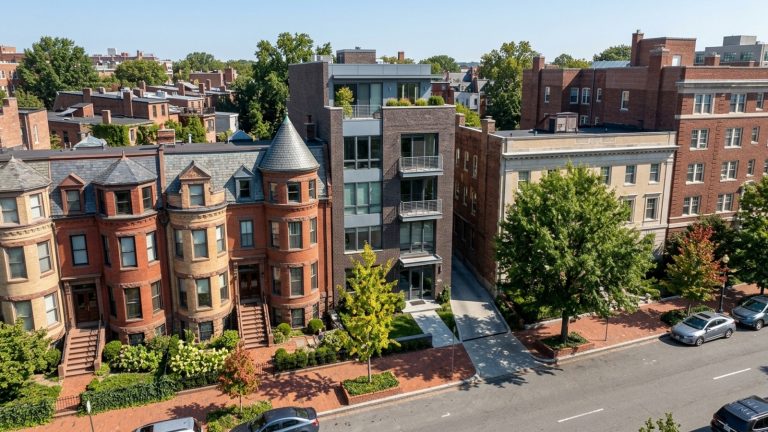

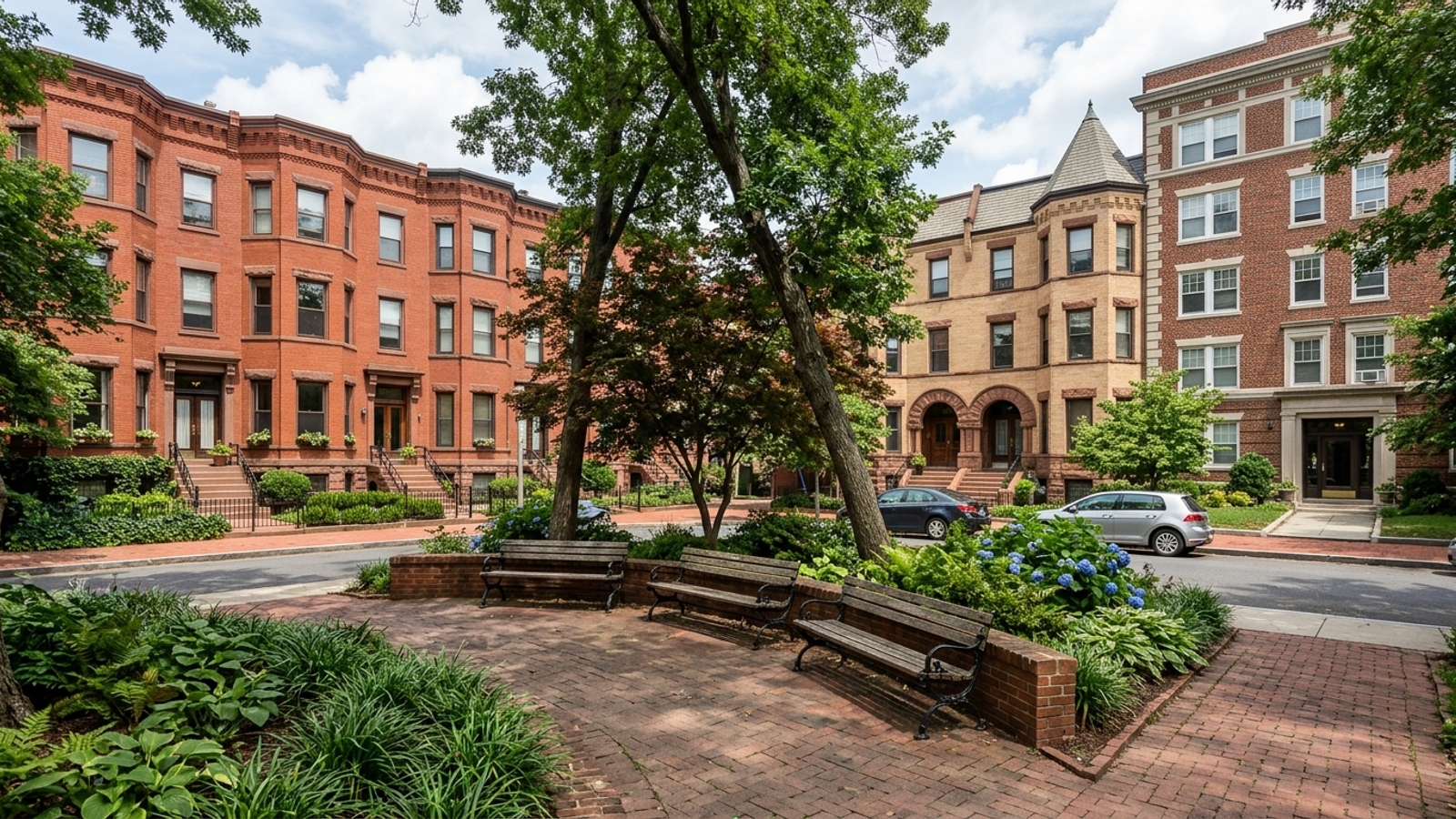
For those buying a home in Dupont Circle, Washington, DC, the neighborhood isn’t one market – it’s two, running parallel to each other inside the same ZIP code. You’ve got a condo segment that’s loosening up and a rowhouse tier that’s as tight as ever. If you treat them the same way, you’ll either overpay or miss your window entirely.
The median sale price is hovering around $490,000. That number tells you something, but not everything. The real story is in understanding which product type you’re chasing and how each one behaves right now in 20036.
Dupont Circle Real Estate Market Overview
About 5.4 months of supply puts the overall market close to balanced – not a buyer’s bonanza, not a seller’s stranglehold. There are roughly 107 active listings and 61 recent sales, so buyers have real choices. Sellers are closing at an average of 98.25% of list price, which means if you price it wrong from day one, you’ll feel it.
Is Dupont Circle a Buyer’s or Seller’s Market?
It depends entirely on what you’re buying. The condo segment is drifting toward buyers – inventory is sitting longer, and prices are moderating. Premium rowhouses are a different conversation. Supply there is thin and demand is steady, which keeps that tier squarely in seller’s market territory.
How the Area Compares to the Broader Washington, DC Metro
Dupont Circle holds a pretty stable position within the District. You don’t see the wilder price swings that show up in some newer development corridors. The established character of 20036 tends to anchor values. If you’re used to shopping across the river in newer buildings, expect a different pace here – and different due diligence requirements, because historic properties come with their own inspection and financing considerations.
Home Prices and Property Values in 20036
The median home price sits at roughly $490,000. That figure is shaped by the volume of one- and two-bedroom condos moving through this market – they dominate the transaction count and pull the midpoint down to a number that can feel misleading if you’re looking at rowhouses.
The average home price is closer to $440,000. When the average falls below the median like that, it usually signals a concentration of sales at the lower end of the price range. That’s what’s happening here.
Price Per Square Foot
Plan on somewhere between $603 and $613 per square foot. That range is useful because it lets you compare a compact studio to a multi-level rowhouse on equal footing – raw list price alone won’t do that.
For sellers, this is your baseline. Adjust up for parking, outdoor space, and recent updates. Adjust down if the unit needs significant work. Buyers, use the same math in reverse.
Current Trends and Inventory Levels
The median sale price is up 3.1% year-over-year. That’s steady, not spectacular – which is a sign of a healthy, demand-driven market rather than something propped up by speculation.
Homes are spending a median of 53 days on the market. That’s enough time to see a property more than once and get a proper inspection done without feeling like you’re racing a stopwatch.
Are Prices Dropping?
Not across the board. The 3.1% annual increase holds for the neighborhood overall. That said, condo sellers who came in overpriced are issuing reductions as their days on market stretch out. If you’re a condo buyer, you have more negotiating room than you would have had a couple of years ago. Rowhouse sellers aren’t in that position.
Market Forecast for Buyers and Sellers
The condo sector is heading toward continued moderation. Units without parking or meaningful updates will sit longer – that trend doesn’t look like it’s reversing anytime soon.
Rowhouse inventory is expected to stay tight. Sellers with premium, updated historic homes will keep seeing real interest from buyers who want ground-level living in the District. That segment isn’t softening.
Is Now a Good Time to Buy?
For condo buyers, yes. With 5.4 months of supply and homes sitting for 53 days, you have standing to ask for seller concessions or closing cost help – use it.
Rowhouse buyers are in a tighter spot. Move when you find the right property, because that segment doesn’t sit. One data point worth keeping in mind: only about 13.5% of homes overall are selling above list price, so you’re not walking into a blanket bidding war environment.
Cost of Living and Income Requirements
The median household income for residents in this neighborhood is approximately $122,984. That’s the financial profile of the people already living here, and it gives you a rough benchmark for what carrying costs look like at current price levels.
Condo buyers, don’t underestimate association fees. They cover exterior maintenance and building insurance, but they count against your debt-to-income ratio – which directly affects how much mortgage you can qualify for. Run those numbers before you fall in love with a unit.
Factoring in Additional Expenses
Historic rowhouses tend to carry higher utility and maintenance costs. Older systems and local preservation guidelines mean you can’t always take the cheapest repair route. Budget for that before you close, not after.
On the condo side, ask for the building’s reserve study. A well-funded reserve is the difference between smooth ownership and getting hit with a special assessment when the roof or elevator needs attention.
Practical Tips for Buying and Selling Here
Condo sellers: stage it, handle the cosmetic stuff, and come in priced correctly. With inventory sitting for nearly two months, your listing needs to earn attention the moment it goes live.
Buyers: get pre-approved with a lender who knows DC’s condo approval process. Not every building qualifies for every loan type, and finding that out late in a transaction is a painful way to learn it.
Working with Local Professionals
The 20036 ZIP code has enough quirks – in its building stock, its pricing dynamics, and its regulatory environment – that a generic approach to buying or selling here tends to underperform. Firms like DC Condo Boutique, Kevin Carlson Real Estate, Brian R. Hill, and Jeff Wilson are active in this specific sub-market. Localized data matters here more than most places. Make sure whoever you work with is using it.
Frequently Asked Questions
What is the average home price in Dupont Circle, DC?
The average home price is currently around $440,000. That sits below the median sale price of roughly $490,000, which reflects the high volume of lower-priced condo sales pulling the average down.
Are home prices dropping in Dupont Circle, DC?
No. The median sale price is up about 3.1% year-over-year. Condo sellers are having to negotiate more than rowhouse sellers, but the overall direction is still up.
Is it a good time to buy a house in Dupont Circle, DC?
Particularly if you’re shopping for a condo. With about 5.4 months of supply and homes sitting for 53 days, condo buyers have real negotiating leverage right now.
Is it expensive to live in Dupont Circle compared to other Washington, DC neighborhoods?
It requires a solid financial foundation. The median household income here is roughly $122,984, and buyers are paying between $603 and $613 per square foot on top of regular condo fees or historic home maintenance costs.
What are the most common hidden costs when buying a historic rowhouse or condo in Dupont Circle?
Condo buyers need to account for monthly association dues and the possibility of special assessments. Rowhouse buyers should budget for specialized maintenance tied to historic preservation guidelines – those costs are real and recurring.
Is Dupont Circle, DC a good place to retire or live?
Many residents choose the area for its established housing stock and transit options. Buyers looking to downsize often target the neighborhood’s accessible single-level condominiums.