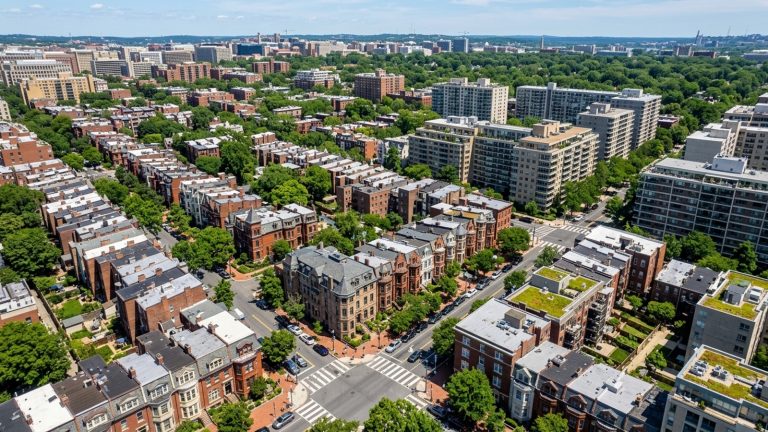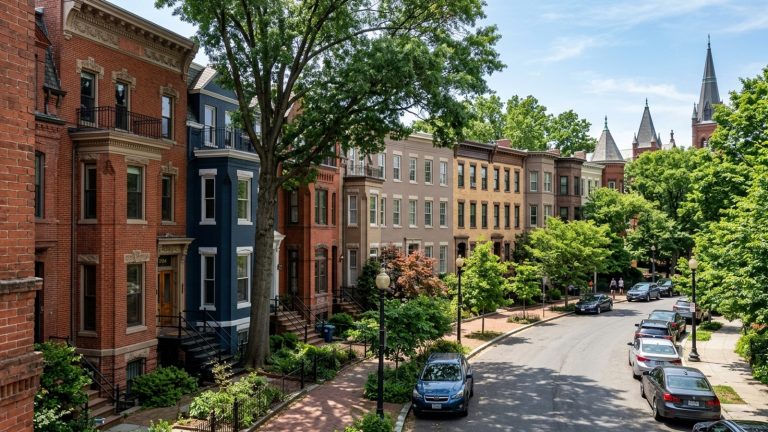

The median sale price for a home in Dupont Circle sits at around $479,833 right now. First-time home buyers in Dupont Circle, DC will find that properties are moving in roughly 45 days, which means you don’t have unlimited time to tour a place, pull your financing together, and get an offer in front of a seller.
For most first-time buyers, the down payment is the wall they keep running into. The District of Columbia has several programs built specifically to help with that – deferred loans, matching funds, and closing cost assistance that can take a real bite out of what you’d otherwise need to bring to the table.
Overview of DC Homebuyer Assistance
Washington, D.C. runs its homebuyer assistance through two agencies: the Department of Housing and Community Development (DHCD) and the DC Housing Finance Agency (DCHFA). These are the organizations that actually control the money and set the rules for who gets it.
Between them, you can access the Home Purchase Assistance Program (HPAP), DC Open Doors, and DC4ME. If you work for the District government, there’s also the Employer-Assisted Housing Program (EAHP).
Who Qualifies as a First-Time Buyer
Most District programs define “first-time buyer” as someone who hasn’t owned a principal residence in the past three years. That’s a wider net than people expect – if you owned something years ago and eventually sold it, you may well qualify today.
Some programs drop that three-year rule entirely for certain professions, including first responders and public school educators. Check the specific guidelines for whichever program you’re pursuing; the details matter.
Types of Assistance Available
The assistance generally comes in three forms: gap financing, closing cost help, or a percentage of the home’s purchase price. And here’s something buyers often get wrong – most of these aren’t grants. They’re structured as deferred, interest-free loans that you repay when you sell or refinance.
HPAP, for example, offers up to $202,000 in gap financing plus a separate $4,000 for closing costs. DC Open Doors works differently – it gives you a set percentage of the sales price rather than a flat dollar amount.
District Grants and Deferred Loans
Funding structures vary quite a bit depending on which program you’re using. Most buyers come in hoping for a grant; most buyers end up with a deferred loan or a second mortgage. That distinction has real consequences for your long-term finances.
A true grant doesn’t need to be paid back. A deferred loan puts a lien on your property that has to be satisfied eventually – usually when you sell, refinance, or transfer title.
District-Wide Funding Options
DC Open Doors provides down payment assistance equal to 3% of the sales price for conventional or VA loans, and 3.5% for FHA loans. Because it’s percentage-based, there’s no separate dollar cap to worry about.
EAHP offers DC government employees up to $20,000 as a deferred loan, plus matching funds up to $5,000. First responders and educators get a better deal – up to $15,000 in matching funds, and their forgivable loan portion can reach $30,000.
How to Apply for DC Funds
You start by working with a lender approved by the DCHFA or DHCD. That lender reviews your financial picture and handles the paperwork submission to the District on your behalf – you’re not filing anything directly with the agency yourself.
You’ll also need to complete a homebuyer education course through a HUD-approved counseling agency. It covers budgeting, mortgages, and the basics of keeping a property in good shape over time.
Down Payment Assistance Details
There are currently 105 homes in the Dupont Circle inventory. That’s not a number that lets you take your time, which is exactly why your financing needs to be in order before you fall in love with a place. Down payment assistance changes the math on what you actually need at the closing table.
These programs can be layered in certain situations. A buyer might use a conventional first mortgage alongside a District-funded second mortgage to cover both the down payment and closing costs – potentially with very little cash out of pocket.
Forgivable Loans Versus Second Mortgages
A forgivable loan draws down the balance you owe over time, as long as you stay in the home for the required number of years. Stay long enough, and the balance reaches zero.
A deferred second mortgage – the kind HPAP uses – never accrues interest and has no monthly payments. The catch is that the full principal comes due the moment you sell the property, transfer the title, or refinance your first mortgage. There’s no gradual forgiveness with this structure; it’s a lump sum obligation that stays on the books until you trigger one of those events.
Income Limits and Eligibility Rules
Every District program draws a line on household income and credit history. Because Dupont Circle falls inside the Washington D.C. metro area, the income caps are tied to the Area Median Income (AMI) that HUD establishes. Lenders verify all of this with two years of tax returns and recent pay stubs – nothing is self-reported.
The limits are program-specific, so it’s worth running your numbers against each one rather than assuming you’re out or assuming you’re in.
Income Caps and Purchase Price Ceilings
HPAP allows households earning up to roughly 110% of the AMI to qualify. For a family of four in 2026, that median family income limit is $163,900.
DC Open Doors is based on the qualifying borrower’s income rather than the full household, with a limit of $199,200 – though some private lenders cite a cap as high as $275,400. Neither program sets a hard maximum sales price, but the underlying mortgage can’t exceed conforming loan limits, which run from $726,200 to $834,977 depending on the loan type.
Credit Score Minimums
DC Open Doors requires a minimum score of 640 across all its loan types. HPAP and EAHP set the floor slightly lower at 630.
That said, the private lender handling your primary mortgage may require a higher score than either District program minimum. Know both thresholds before you assume you’re clear.
Federal Loan Options
Not every buyer uses – or qualifies for – District-specific programs. Federal mortgage options offer their own path to homeownership with lower down payment requirements than standard conventional loans, and they can often be paired with local assistance.
Because they’re government-insured, lenders can be more flexible on qualification terms than they would be with a conventional product.
FHA, VA, and USDA Loans
FHA loans require a 3.5% down payment and generally accept lower credit scores – still one of the more common choices for first-time buyers in Dupont Circle. VA loans offer zero-down financing for eligible military service members and veterans, with no private mortgage insurance required. USDA loans also allow zero down, but they’re designed for rural properties, and Dupont Circle’s location disqualifies it from that program entirely.
Frequently Asked Questions
Do I make too much money to qualify for first-time home buyer programs in Dupont Circle?
It depends on the program and your household size. HPAP sets the limit around 110% of the area median income, which is $163,900 for a family of four. DC Open Doors allows qualifying borrower incomes up to $199,200, making it accessible to higher earners.
Are there maximum purchase price limits for DC buyer grants that make it hard to buy in Dupont Circle?
No, the programs don’t enforce a strict maximum sales price. The mortgage amount is capped near the conforming loan limit, which ranges from $726,200 to $834,977. With Dupont Circle’s median sale price around $479,833, most buyers stay well within those boundaries.
Can I use DC Open Doors or HPAP to purchase a co-op in Dupont Circle?
It depends on the specific guidelines of your chosen program and lender. Buyers should consult a DCHFA or DHCD participating lender to verify whether a specific Dupont Circle cooperative building qualifies for funding.
Will using down payment assistance make my offer less competitive in the fast-paced Dupont Circle market?
It depends on how the offer is structured. Homes in Dupont Circle currently spend roughly 45 days on the market, which gives you a reasonable window to negotiate. Working with a lender who processes District programs efficiently goes a long way toward keeping your offer competitive.
How much extra time does it take to close on a Dupont Circle condo when using a DC first-time buyer program?
It depends on the lender and the specific assistance program. Programs like HPAP require additional administrative review from the District, so you should expect a somewhat longer timeline than a standard conventional closing. Your approved lender can give you a realistic estimate for your specific situation.
Does buying my first home in Dupont Circle qualify me for the DC recordation tax reduction?
It depends on the home’s purchase price and your income. Review the latest District tax guidelines or talk to your title company to find out whether your Dupont Circle purchase meets the criteria for a recordation tax reduction.