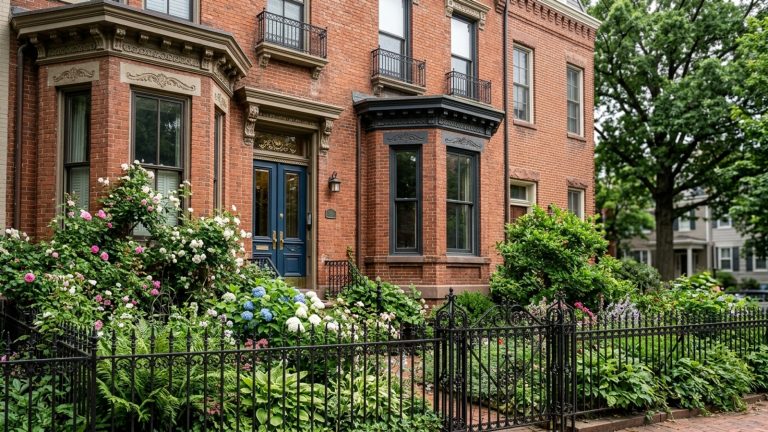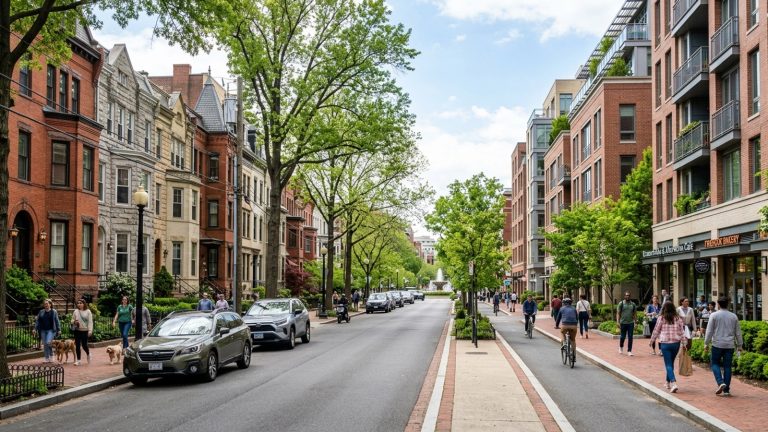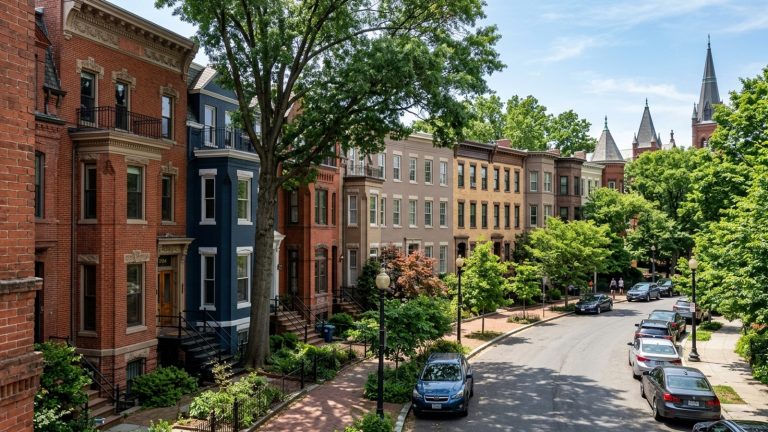

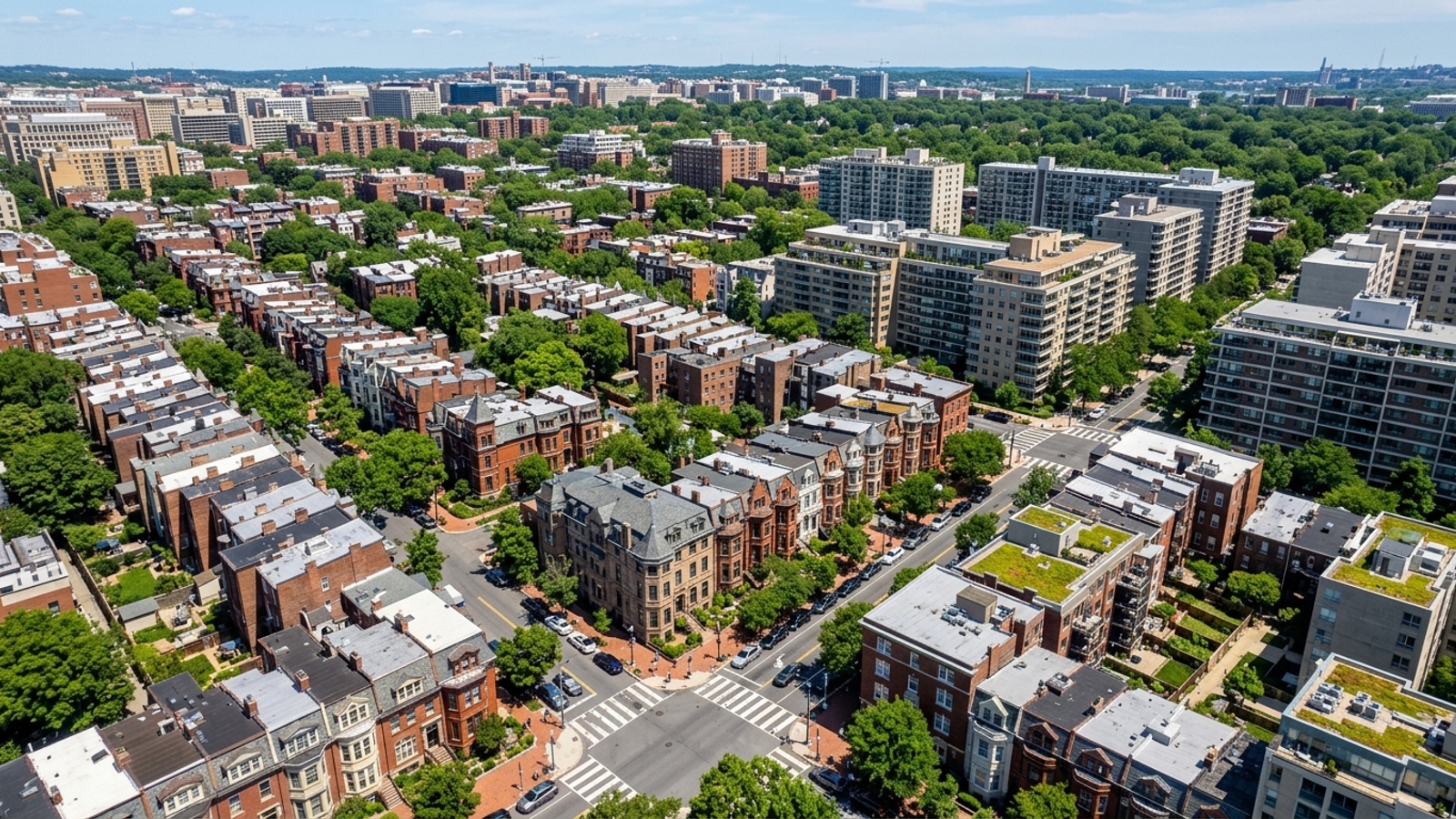
The housing inventory in Dupont Circle, DC, currently hovers around 105 available properties, and the vast majority of them are condominiums and historic rowhouses. If you are buying a home in Dupont Circle, DC, expect a mix of late-19th-century architecture and mid-century high-rises – two very different living experiences that often sit on the same block.
The median sale price sits at roughly $479,833 as of mid-2026. Properties are averaging about 45 days on market, which gives you a reasonable window to tour units and actually read the association documents before you commit.
Current Prices and Market Trends in Dupont Circle
You’re looking at a median sale price of approximately $480,000 to enter this market. Prices have been essentially flat compared to the previous year – the median year-over-year change is less than 1%, which isn’t nothing, but it’s not a story either.
Sellers are averaging a 98.2% sale-to-list ratio, so most homes close very close to asking. About 24% of properties sell above list price, which tells you that well-priced units still attract competition. Price a unit correctly and you’ll see multiple offers. Price it soft and it sits.
Median Prices and Square Footage Costs
The median price per square foot for a Dupont Circle condo runs about $650, generally landing somewhere between $625 and $660 depending on the building and the unit’s condition.
One thing worth understanding about how those numbers work here: a smaller studio in an older building will often carry a higher per-square-foot premium than a larger, unrenovated unit on the same block. Dense urban layouts price convenience and scarcity, not just square footage.
Timing Your Purchase in the District
The broader Washington, DC condo segment has been softer than the single-family market citywide. Bright MLS projected a modest 0.7% to 1% price decline for the metro area in 2026, so you’re not walking into a runaway market.
Dupont Circle currently has about 3.7 months of supply – that leans slightly toward sellers, but there’s enough inventory that you don’t have to panic-buy. Pay attention to days on market. Units sitting past that 45-day median tend to have room for negotiation, and that’s exactly when a prepared buyer has leverage.
Understanding HOA Fees and Co-op Dues
Monthly association fees in older Dupont Circle buildings typically run from $400 to over $800. In full-service buildings – ones with a front desk, gym, or concierge – dues can easily exceed $1,000. These aren’t optional extras; they factor directly into your debt-to-income ratio, so they need to be part of your budget conversation from day one, not an afterthought.
What Monthly Fees Typically Cover
A standard condo fee here generally covers water, trash removal, exterior maintenance, and master insurance. Some buildings also include heating and cooling if the property runs on a centralized HVAC system.
Co-op fees often look higher on paper because they typically bundle in the unit’s share of the building’s underlying mortgage and property taxes. Ask your agent to clarify exactly what utilities and tax burdens are folded into that monthly number – the answer changes the math considerably.
Reviewing Board Documents
Before you finalize any condo or co-op purchase, request and review the resale package. It contains the association’s budget, meeting minutes, and reserve study.
Those documents tell you whether the building has enough cash on hand for what’s coming – a new roof, an elevator replacement, that kind of thing. Low reserves mean the cost eventually lands on the owners as a special assessment. That’s not a reason to walk away automatically, but it’s a number you need to know before you close.
Condominiums by Street and Building
Dupont Circle’s condo inventory includes several prominent named buildings, many of them clustered near Connecticut Avenue and the West End. Recent listings have featured units in The Analoston, Dupont East Condominium, The Apolline, and Morgan Place. The architecture spans ornate pre-war structures to mid-century modern designs, and your choice of building matters as much as the unit itself – boutique associations of a dozen units operate very differently from large-scale complexes with hundreds.
Historic Properties and The Cairo
The Cairo is one of those buildings people mention by name for a reason. Built in 1894, it was once the tallest building in Washington, DC, and its construction directly catalyzed the city’s Height of Buildings Act. That’s not marketing copy – it’s history that shaped the entire built environment of the District.
Units there feature exposed brick, floor plans you won’t find replicated anywhere else, and sweeping views of the city. Newer construction simply can’t reproduce those architectural details.
Mid-Century and Modern High-Rises
If you want something more predictable in layout and construction, the mid-to-late 20th-century buildings are worth a look. The Concord is a 10-story, 101-unit building completed in 1965 that regularly lists studio and one-bedroom units.
Dupont West is another option – 88 units across 10 stories, completed in 1980. Concrete construction from that era tends to do a decent job of minimizing noise transfer between floors, which matters more than people realize until they’re living above someone.
Townhomes, Co-ops, and Multi-Family Properties
Condominiums dominate the market, but there are currently around 30 townhouses and a handful of multi-family units available in Dupont Circle. These make sense for buyers who want private outdoor space or simply don’t want to share a ceiling with a neighbor.
Co-ops represent a meaningful share of the attached-home market in the District. Buying one means purchasing shares in a corporation that owns the building – not the real estate itself – and that distinction has real consequences for financing, flexibility, and how long it takes to close.
Historic Rowhouses and Townhomes
The neighborhood is known for its Victorian rowhouses, many with ornate facades that have survived well over a century. Some remain single-family residences; others have been converted into multi-unit condo buildings.
Buying an unconverted rowhouse typically requires a higher budget than a condo, but you’re also eliminating the monthly HOA fee. The trade-off is that exterior maintenance, roof repairs, and structural upkeep become entirely your responsibility.
The Prevalence of Co-ops in DC
Co-ops are far more common in Washington, DC than in most major cities outside New York. Many have strict rules around renting out units, which makes them less appealing if your plan involves any short-term flexibility on occupancy.
Financing a co-op requires a lender who knows how to do share loans – not every lender does. The board also has the right to review and approve your financial application before the sale can proceed, which adds a step that standard condo purchases don’t have.
Cost of Living and Lifestyle Factors
The overall cost of living index for Dupont Circle is 164 – meaning day-to-day expenses run about 64% higher than the national average. Housing costs do the heavy lifting there, sitting roughly 158% above the national baseline.
Washington, DC also carries a general sales tax that’s 18% higher than the national average, and state-level income taxes run 54% higher. None of that is news to people already living in the District, but if you’re relocating from elsewhere, it needs to be in your budget model.
Comparing Daily Costs to the National Average
Dupont Circle’s cost of living runs about 5% higher than the Washington, DC average as a whole – so it’s not just that DC is expensive; this particular neighborhood carries a premium even within the city. Proximity to Rock Creek Park, downtown DC, and multiple transit lines is part of what you’re paying for, whether you use all of it or not.
If you’re moving from outside the metro area, adjust your budget to account for both local taxes and everyday expenses before you decide what price range makes sense.
Renting vs. Buying Considerations
With the median home price around $480,000, buying a condo locks in your housing costs in a rental market that isn’t getting cheaper. Buyers who plan to stay in the District for at least five years tend to find that building equity outweighs the upfront closing costs.
If flexibility matters more than equity right now, renting makes sense – particularly given the softer condo sales market projected for 2026. Before you make an offer, be honest with yourself about your timeline, your available down payment, and your tolerance for a potential special assessment down the road. Those three things together will tell you more than any market forecast.
Frequently Asked Questions
Are there any detached single-family homes in Dupont Circle, DC, or is the market strictly rowhouses and apartments?
The market is almost exclusively attached housing. You’ll primarily find condominiums, co-ops, historic Victorian rowhouses, and multi-family units – not detached single-family homes.
What restrictions exist for renovating the exterior of a historic Victorian rowhouse in Dupont Circle?
The neighborhood has a long history of structural regulation, dating back to the Height of Buildings Act that was directly catalyzed by the construction of The Cairo in 1894. If you’re planning exterior renovations on a historic Victorian rowhouse, you’ll need to consult local building regulations before you start.
How strict are co-op boards in Dupont Circle when approving new buyers for their buildings?
Co-op boards in Washington, DC have the authority to review and approve a buyer’s financial application before a sale closes. Co-ops are widespread in the District, and each building sets its own financial requirements – there’s no single standard across the market.
Why are HOA and maintenance fees typically higher for condos in Dupont Circle compared to newer DC neighborhoods?
Fees in older Dupont Circle buildings typically run between $400 and $800 per month, and can exceed $1,000 in full-service buildings with gyms or concierges. A significant part of that reflects the cost of maintaining aging infrastructure alongside the staffing that front-desk amenities require.
What are the zoning and permit rules if I want to rent out the English basement of my Dupont Circle rowhouse?
Dupont Circle has around 30 townhouses and a few multi-family units available at any given time. If you’re planning to rent out a portion of a rowhouse, you’ll need to comply with Washington, DC’s current zoning laws and obtain the required local rental permits.
Does the closing process take longer when buying a co-op in Dupont Circle, DC compared to a standard condo?
Yes – usually noticeably longer. You’re purchasing shares in a corporation rather than real property, which requires specialized share loans and additional time for the co-op board to review and approve your application. Factor that into your timeline from the start.