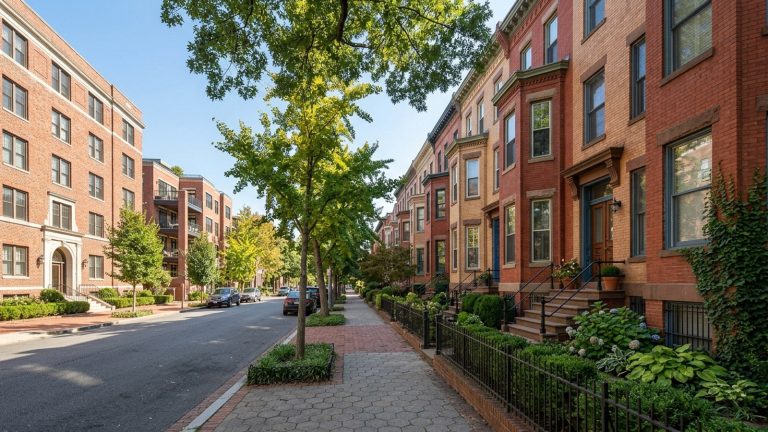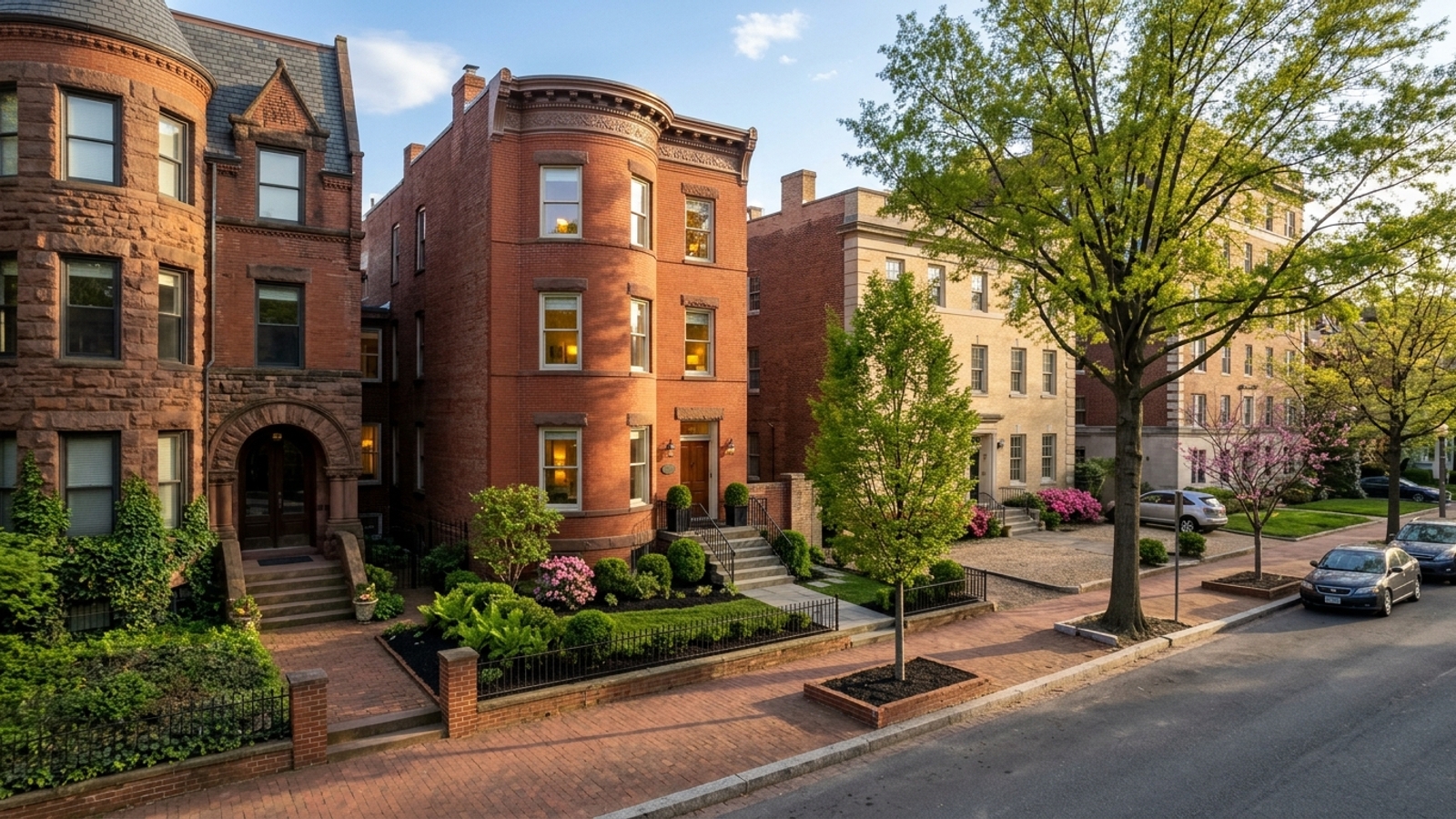
Nearly three out of every four homes for sale in Dupont Circle right now are condos. Supply sits at 7.8 months, which means buyers have plenty of time to scroll listings, save their favorites, and wait.
Key Takeaway
If you’re selling a Dupont Circle condo, stage the living area and the rooms that drive the lead listing photos, because your unit is up against a deep pool of similar condos for sale. If the budget is tight, pay for a one-time stager consultation and restyle with your own furniture. Either way, weigh the cost against what each extra month on the market costs you.
Who This Guide Is For
You’re preparing to list a Dupont Circle condo or rowhouse and deciding three things:
- whether staging is worth paying for
- how much of the home to stage
- how to hire someone to do it
Why Staging Matters in Dupont Circle Right Now
Staging here is less an interior design exercise and more a differentiation problem. Your unit is compared side by side with many similar condos in a slow market. With the median condo price up 11.4% year-over-year, sellers are listing higher, and the property has to look the part to justify that number. Buyers have enough options to be genuinely selective, and only 12.7% of condos sold above list price recently.
Competing with Similar Condo Inventory
Of the 137 homes for sale in the neighborhood, 101 are condos. The listing photos function as the first showing. Units that look identical to a dozen others get skipped rather than negotiated on. Good staging makes one unit’s photos stand out from the rest.
That said, staging can’t fix an overpriced property. With this much supply, a unit priced above comparable listings will sit regardless of how well it’s styled.
Showing the Value of Every Square Foot
At the local condo median of $614 per square foot, a 100-square-foot den or dining nook represents about $61,400 of a buyer’s price. Staging presents that space as usable: a spot for a desk or a dining table rather than leftover square footage buyers can’t picture.
Some staging setups get the scale wrong. Oversized rental furniture makes small rooms read smaller. Ask any stager upfront how they scale pieces for units under 800 square feet.
What You Can Expect to Pay for Home Staging in Washington, DC
Local staging professionals typically charge in three parts:
- a consultation fee
- an installation or design fee
- a monthly furniture rental charge
Vacant full staging costs more than occupied partial staging because the stager supplies everything.
What Stagers Charge
An initial consultation typically runs around $200 to $250 for a one-to-two-hour walkthrough and design session. For a vacant three-bedroom home in the Washington market, physical staging runs roughly $2,000 to $4,500 per month for the main rooms, plus the consultation fee. Alder & Ash Interiors, a local staging firm, uses a standard 45-day term. Extensions come in 30-day increments priced at 30% of the original investment.
Sellers tend to underestimate the ongoing rental cost. If the condo takes longer than the median time on market to sell, the monthly rental keeps billing.
Weighing Staging Against a Slow Sale
The median Dupont Circle condo recently sold for $449,900, which was 98% of the list price, roughly a $9,000 gap. It also took 68 days to sell. That meant over two months of mortgage, condo fees, property taxes and utility bills while the unit sat.
Compare any staging quote against the cost of an extra month on the market plus a share of that list-price gap. To price one extra month, add your monthly condo fee and your property tax bill to your mortgage payment and utilities.
This math has one limitation: market medians don’t isolate staged against unstaged sales. The calculation tells you what a delay costs, not exactly what staging will save.
Choosing Between Full, Partial, and Virtual Staging
Sellers with an empty unit face different challenges than those still living in the space.
Full Staging for a Vacant Condo
An empty small unit photographs as bare walls and makes scale hard to read. Full staging furnishes the living, dining and main bedroom areas so buyers can immediately see the layout and size. It fits sellers who have already moved out and are paying carrying costs on an empty unit.
The tradeoff is the monthly rental bill. Delivery also runs through the building’s elevator and move rules, which adds a logistics layer.
Partial Staging While You Still Live There
The stager edits and rearranges your existing furniture, removes personal items, and fills gaps with a few rented pieces and accessories. It suits owner-occupied condos that are furnished but cluttered.
What you give up is daily convenience. You’re living inside a showroom for the entire listing period. That means resetting the space before every showing and finding somewhere to store personal belongings.
Virtual Staging for Listing Photos
Furniture is added digitally to photos of an empty unit. Nationally, AI and DIY tools run roughly $0.10 to $15 per photo, while human-edited designer services typically charge about $16 to $50 per photo. It’s the fastest way to make an online listing competitive on a tight budget.
The real downside is the gap between photo and reality. Buyers who tour still walk into empty rooms, and that contrast can disappoint them.
Using Your Own Furniture After a Consultation
A stager does a one-time walkthrough and tells you what to remove, move and buy, and you do the physical work yourself. It’s the budget option for occupied homes in decent shape.
Results depend entirely on your follow-through and on how well your furniture suits the space. Nobody comes back to fix the arrangement before the photographer arrives.
Condo Building Rules That Affect Staging
In a managed condo building, clear the delivery logistics with management before any furniture arrives.
Elevator Rules and Move-In Fees
Managed buildings routinely require a booked elevator window, padding, and sometimes a move fee or deposit for furniture deliveries. Ask building management:
- whether deliveries need an elevator reservation, a move fee or a deposit
- how far in advance to book
Staging pays these costs twice: once for installation and once for removal. A missed elevator booking can push back your listing date by days.
Vendor Insurance Certificates
Buildings often require outside vendors to provide a certificate of insurance naming the association before they can work on site. Confirm what your building requires and that your stager can provide it.
Smaller or freelance stagers may not carry the coverage a building requires. That can rule them out after you’ve already chosen them, so ask early.
Common Areas Outside Your Unit
Sellers can’t stage the hallway or lobby, but buyers judge both before they reach the front door. Ask the association about rules for items outside your unit door and about any common-area work scheduled during your listing period.
Common areas are outside your control. Staging inside the unit can’t offset a worn corridor or a lobby renovation running during your listing period.
Where to Focus Your Staging Budget
When you can’t furnish every room, put the money where it makes the online listing competitive and shows usable space on tours.
The Living Room and the Main Photo
Most of the budget goes here because this is usually the first listing photo. The space should show:
- a clear seating area
- a defined dining spot if space allows
- unobstructed light from the windows
Remove extra furniture so the floor area reads on camera.
The downside is visual contrast. If the living room is the only staged room, the unstaged rooms that follow in the photo set can look worse by comparison.
Kitchens and Bathrooms
Staging here is mostly subtraction. Clear the counters, hang new towels, and replace caulk and light bulbs.
Staging can’t hide dated finishes. Buyers comparing dozens of listings will still price in an older kitchen.
The Primary Bedroom
Size the bed to the room so the walkways show clearly. In a one-bedroom condo, this is often the second photo buyers see online.
Scale is the challenge. A queen bed in a small bedroom can make the room read cramped. A smaller bed photographs better but may leave buyers wondering whether their own furniture fits.
Entry, Lobby and the Rowhouse Stoop
For condos, focus on the unit door and the immediate entry space. For rowhouses, focus on cleaning, planters and lighting at the stoop. Check with the DC Historic Preservation Office before painting, replacing or altering anything on a rowhouse exterior.
Exterior changes beyond cleaning and planters, such as painting or replacing a door, may trigger historic review that takes longer than your listing timeline.
Hiring a Home Stager in Dupont Circle
What to Ask Before Signing a Contract
Ask each stager for:
- photos of past work in condos of a similar size to yours
- the minimum rental term, the monthly extension rate and the damage terms, in writing
- who handles elevator bookings and building fees
- how long it takes from signing to installation day
The cheapest quote often has the shortest minimum term and the highest extension rate. Compare the total cost at the median time on market and beyond, not just the first month.
At a Glance
- Median sale price, condos: $449,900 (90 days ending Sept 30, 2026)
- Median sale price, all homes: $525,853 (90 days ending Sept 30, 2026)
- Year-over-year change in median sale price: condos +11.4%, all homes +1.1% (90 days ending Sept 30, 2026)
- Median days on market: condos 68, all homes 66 (90 days ending Sept 30, 2026)
- Sale-to-list price: condos 98%, all homes 98.5% (90 days ending Sept 30, 2026)
- Share sold above list price: condos 12.7%, all homes 14.9% (90 days ending Sept 30, 2026)
- Months of supply: condos 7.8, all homes 8.7 (90 days ending Sept 30, 2026)
- Homes for sale (inventory): condos 101, all homes 137 (90 days ending Sept 30, 2026)
- Median price per square foot: condos $614, all homes $682 (90 days ending Sept 30, 2026)
- Homes sold: condos 40, all homes 48 (90 days ending Sept 30, 2026)
Dupont Circle Home Staging FAQs
Does Home Staging Help a Condo Sell Faster in Dupont Circle?
Surveyed agents say it does, though local results vary. In the National Association of Realtors’ 2025 Profile of Home Staging, 49% of sellers’ agents reported that staging reduced the time a home spent on the market. Separately, 29% of agents reported that staging led to a 1% to 10% increase in the dollar value offered. These are national survey responses, not a local controlled comparison.
Do Virtually Staged Photos Have to Be Disclosed on DC Listings?
Yes. Bright MLS rules require virtually staged photos or renderings to be disclosed in the MLS. The rules strictly prohibit adding visual elements outside the owner’s control. Virtually staged images are allowed without restriction only for to-be-built or under-construction properties.
How Long Does Home Staging Take Before I Can List?
Alder & Ash Interiors, a local staging studio, recommends booking 10 to 14 days in advance to allow time for consultation, design and installation. Red House Staging & Interiors asks for a minimum of four weeks’ lead time for custom model-home installations. Your building’s elevator booking can also set the real install date.
How Do I Find a Home Staging Company in Washington, DC?
Search the Real Estate Staging Association (RESA) national online directory for professionals in Region 01, which covers Washington, DC. You can also ask your listing agent for referrals to companies that frequently work in the area.
Do I Need Approval for Exterior Work on a Dupont Circle Rowhouse Before Listing?
It depends on the type of work. Properties in the Dupont Circle historic district need a standard building permit for most exterior construction, and Historic Preservation Office (HPO) clearance of that permit serves as your preservation approval. Minor work like brick pointing or fence repair falls under a special permit category with a reduced fee, while basic cleaning and planters typically don’t require review.
Are Home Staging Costs Tax-Deductible When I Sell?
It depends on how the IRS classifies the expense for your sale. IRS Publication 523 tells sellers to determine their selling expenses, defined as costs directly associated with selling your home, such as sales commissions and other fees. The official IRS text doesn’t use the word “staging,” so ask a tax professional whether staging costs count for your sale.
Sources
- Redfin: Data Center
- NAR Report Reveals Home Staging Boosts Sale Prices and Reduces Time on Market
- Thumbtack: Home Staging in Washington, DC
- Alder & Ash Interiors
- StageHQ: Virtual Staging Cost
- Bright MLS Rules and Regulations
- Real Estate Staging Association Member Directory
- DC Office of Planning: Building Permits for Historic Property
- IRS Publication 523