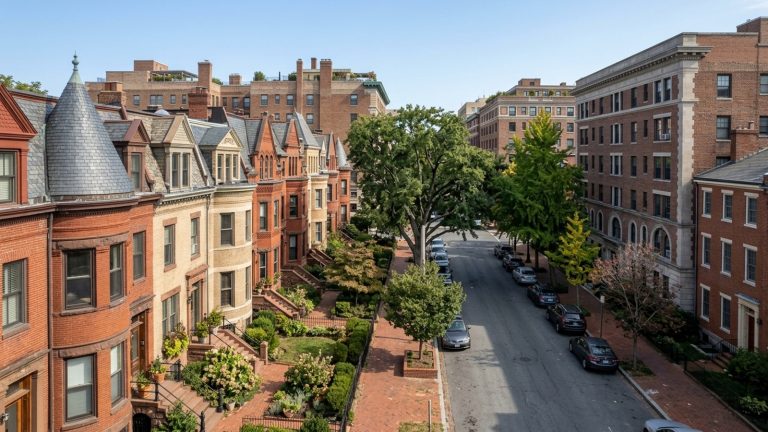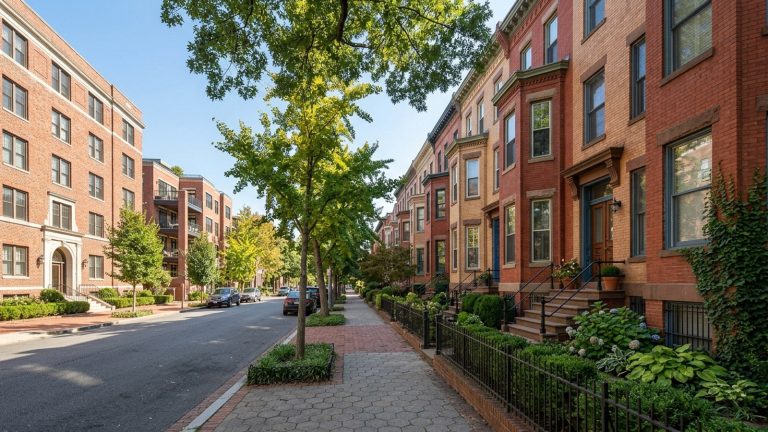

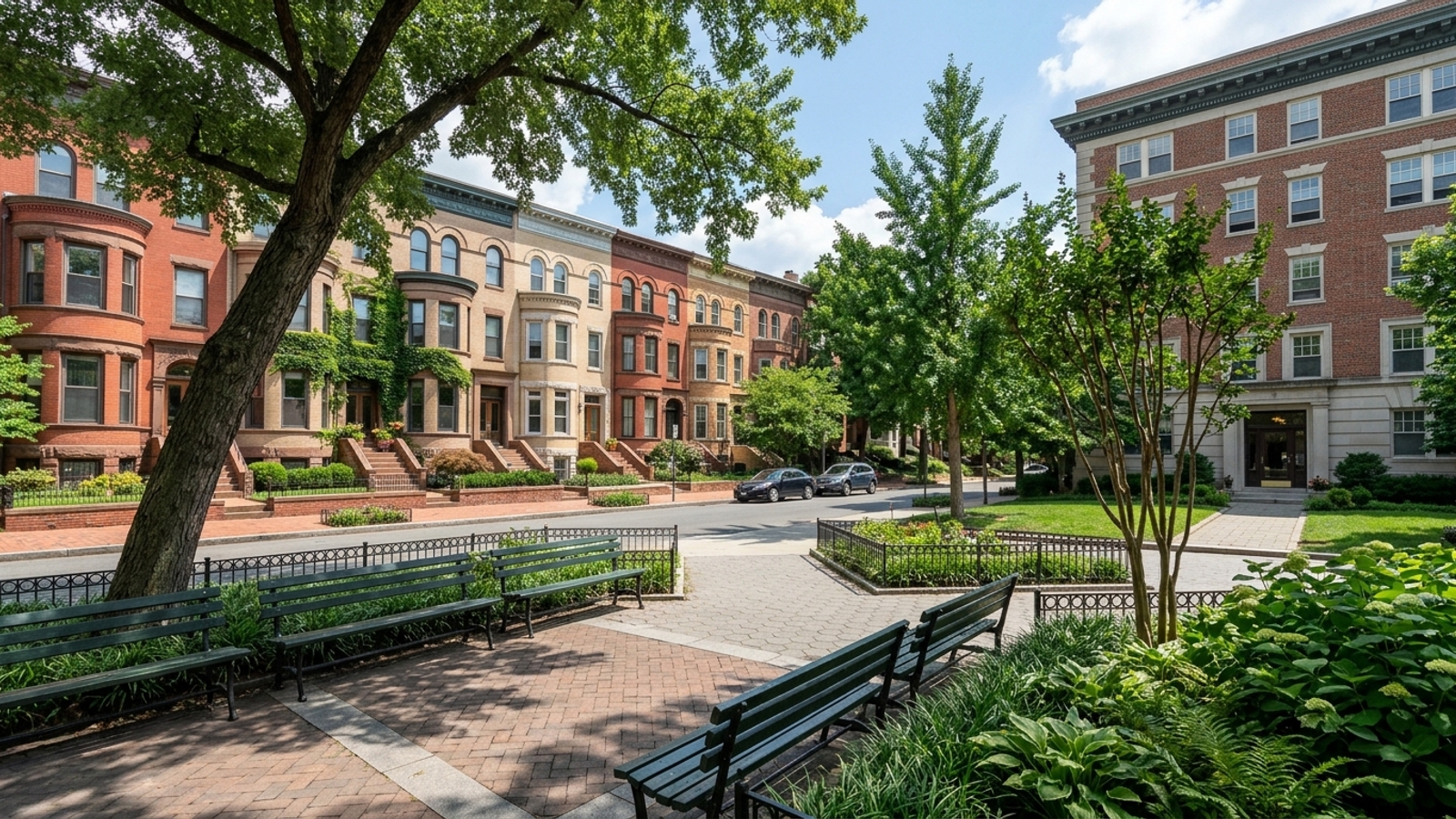
Your property’s value in Dupont Circle comes down to the specifics of your building and your block. A citywide trend tells you almost nothing useful about a row house on Q Street or a one-bedroom condo on New Hampshire Avenue.
Key takeaway
Value a Dupont Circle condo from recent closed sales in your own building and comparable nearby buildings. Then set a list price that still holds up after buyers negotiate, because condos closed at 98% of list price this past quarter. If you own a row house, too few sold for a reliable neighborhood figure, so a comparative market analysis or appraisal that reaches further back in time is the better starting point.
Who this guide is for
You own a condo or row house in Dupont Circle and you’re deciding what it’s realistically worth before you list, refinance, or settle a value for a legal or tax purpose.
Dupont Circle home values right now
The condo median in Dupont Circle jumped 11.4% year over year to around $449,900 recently. The pace of sales tells a different story. Condos sit for weeks and few sell above asking, so buyers still set the final price. A unit’s value comes from closed sales of comparable units, less the discount buyers expect to negotiate.
The all-homes median sale price rose just 1.1% over the same period, landing near $525,853. That gap shows how much a median shifts depending on which property types happen to close in a given quarter.
Why the condo price gain may not apply to your unit
A median moves based on which units reach the closing table. A quarter heavy on larger or renovated units lifts the figure, but that doesn’t mean every one-bedroom in the neighborhood gained that much. You can’t read your own unit’s gain off a neighborhood average. Only closed sales of similar units show it.
What a slow market means for your price
At a 68-day median time on market and 7.8 months of supply, buyers have time and options, and they negotiate accordingly. An ambitious price adds weeks to your timeline rather than dollars to your sale. Every month on the market costs you the mortgage, condo fee, and taxes. Add up your monthly carrying cost before you decide how far above comps to price. Closing costs and agent commissions reduce your net proceeds when you sell a home in Dupont Circle.
At a glance
- Median sale price, all homes: $525,853 (90 days ending 2026-09-30)
- Median sale price, condos: $449,900 (90 days ending 2026-09-30)
- Year-over-year change in median sale price: all homes +1.1%, condos +11.4% (90 days ending 2026-09-30)
- Median price per square foot: all homes $682, condos $614 (90 days ending 2026-09-30)
- Homes sold: 48 total, of which 40 were condos (90 days ending 2026-09-30)
- Median days on market: all homes 66, condos 68 (90 days ending 2026-09-30)
- Sale-to-list ratio: all homes 98.5%, condos 98% (90 days ending 2026-09-30)
- Share sold above list price: all homes 14.9%, condos 12.7% (90 days ending 2026-09-30)
- Months of supply: all homes 8.7, condos 7.8 (90 days ending 2026-09-30)
- Homes listed for sale: all homes 137, condos 101 (90 days ending 2026-09-30)
Ways to value a Dupont Circle home
A real estate agent, a licensed appraiser, and an automated computer model will each give you a different number for the same Dupont Circle property. Each approach trades speed and cost against precision. What works for a quick check won’t hold up in a divorce settlement or a mortgage application.
Automated home value estimates
Online portal estimates are fast, free, and useful as a first look. These models pull from public records and nearby sales to generate a baseline figure. They can’t see your floor, natural light, recent renovations, monthly fees, or building finances. An estimate can’t tell a renovated top-floor unit from an untouched garden-level one in the same building, and that difference is where much of a Dupont condo’s value sits.
Comparative market analysis
An agent’s comparative market analysis pulls closed, pending, and active comparable sales, ideally from your own building, and adjusts for differences. It’s free and built to help you set a list price. A good analysis uses closed sales rather than asking prices, defines a specific time window, and details the exact adjustments made. If you want a list price you can defend with evidence, a comparative market analysis built on closed sales in your building is the right place to start. We can prepare one for your home from the closed sales in your building.
A comparative market analysis is an opinion from someone who wants the listing. Ask to see the closed comps and adjustments behind the number rather than accepting the headline figure.
Appraisal
A licensed appraiser delivers an independent value that lenders, courts, and estate filings rely on. Owners typically order one for a refinance, an estate settlement, a divorce, or when pricing a row house with very few recent comparable sales. The buyer’s lender will also order its own appraisal once you’re under contract.
What you give up is flexibility. An appraisal is a snapshot as of one specific date. It doesn’t tell you how to price against today’s competing listings, and you pay for it whether or not you sell.
How to value a Dupont Circle condo
Condos made up 40 of the 48 recent home sales in the neighborhood. The valuation process follows a path built around building data and buyer financing rules.
Start with closed sales in your building
The strongest evidence for your value is a closed sale of a similar unit in the same building within the past year, with a matching layout, floor, and exposure. The next best option is a comparable building nearby with a similar age, amenity package, and fee level.
Always prefer closed prices over active list prices. Small buildings may have no recent sales at all. Ask your management company or an agent for 12 to 24 months of closed sales in your building, and widen to similar buildings if there are none.
Adjust for fees, reserves, and special assessments
Buyers price HOA and condo fees and building health directly into their offer. District of Columbia law requires resale packages to disclose the condo budget, reserves, and any pending assessments, so buyers will see the building’s finances before closing. A pending special assessment or thin reserves can pull offers below your building comps. Request your condo resale certificate early and check both before you set your price.
Check FHA approval and lender requirements
Whether your building is on HUD’s FHA-approved list and meets conventional project-review standards decides whether buyers using those loans can finance your unit. Search HUD’s official online Condominiums lookup tool by zip code or condo name to see your building’s approval status and expiration date.
Conventional loans carry their own rules. Fannie Mae requires HOAs to budget at least 10% of annual assessment income for replacement reserves, and lenders must confirm new condo projects meet presale owner-occupancy requirements. If your building isn’t approved, or its approval has lapsed, a portion of the buyer pool can’t finance your unit. Know where you stand before you list.
Check your estimate with price per square foot
The recent condo median price per square foot was roughly $614. For illustration only: a hypothetical 750-square-foot unit at that rate points to about $460,500, close to the neighborhood condo median.
If comps support a $460,000 list price, the typical roughly 2% negotiation leaves a sale near $450,800, about $9,200 below the listing. Price per square foot ignores floor, light, outdoor space, parking, and fees, so two units of identical size can close far apart. Confirm your exact square footage too, since tax records and measured size don’t always agree.
How to value a Dupont Circle row house
Only eight non-condo homes sold in Dupont Circle over the 90 days ending in late September, about one in six sales. A row house’s value depends on the property’s own features and permits rather than broad market statistics.
Why neighborhood medians don’t work for row houses
The all-homes median price per square foot of roughly $682 sits above the condo figure, a blend pulled up by that small handful of row house sales. With fewer than 10 data points, row house comps need to reach further back in time or into adjacent blocks. That widens the margin of error considerably.
What moves a row house’s value
A row house’s legal unit count and a rentable lower level change the buyer pool and the price. In DC, adding a second dwelling unit like an English basement apartment turns the property into a two-family use. It then requires a Certificate of Occupancy from the Department of Buildings and a Basic Business License before it can legally be rented. An unpermitted or unlicensed basement unit is valued as storage space, not income, so confirm both are in order before you count it as a selling point.
Exterior work matters too. In the Dupont Circle Historic District, exterior repairs and alterations that require a building permit must be approved by the Historic Preservation Review Board before the work begins. Check whether a pre-sale project needs that review before you spend money on it.
How to price against other Dupont Circle listings
Dupont Circle currently has 101 condos listed for sale. Every weekend, buyers compare your home to everything else they can tour.
Count your competing listings
New construction in Dupont Circle, with fresh finishes and warranties, competes for the same buyers as your unit. Look beyond your own building to every listing at your price point.
Price for the buyers already looking
Only 12.7% of Dupont condos, about one in eight, sold above list price this past quarter. Bidding above asking is the exception right now, not the expectation.
A price set above comparable sales rarely gets bid up and more often gets negotiated down. Days on market accumulate publicly on portal listings, and buyers read a long count as room to push harder. An overpriced start can cost you more than the eventual price cut.
When to re-check your value
Re-run your comps when something changes the evidence: a new closed sale in your building, a newly disclosed special assessment, or a shift in mortgage rates that changes what buyers can qualify for. Neighborhood figures cover a rolling 90-day window and move with a handful of sales. Week-to-week swings are noise, and new closed comps are the signal.
Which home valuation do you need?
First, is your home a condo or a row house? Condo owners should work through the condo steps above, starting with building comps. Row house owners should go to the row house section, because the neighborhood figures are mostly condo sales.
Second, do you need a number to set a list price, or does a lender, court, or tax filing need a documented value? A list price points to a comparative market analysis. A refinance, estate, or legal settlement requires a licensed appraisal, because lenders and courts need an appraiser’s independent value, not an agent’s opinion or a portal estimate.
Third, have units in your building closed in the past year? If yes, start with those closed sales. If not, multiply your square footage by the condo price per square foot and take off the typical negotiation for a ballpark tied to current closed sales. Then get a comparative market analysis.
Fourth, if you’re planning repairs or exterior work before listing, check the historic review rule and the re-check triggers above before spending money.
For a row house, start with an appraisal or a comparative market analysis that reaches further back in time. When you’re ready to set a price, ask us for a free comparative market analysis of your home.
Dupont Circle property valuation FAQs
How large is the typical Zestimate error?
Zillow reports a nationwide Zestimate median error rate of about 7.49% for off-market homes in 2026, versus roughly 2.4% for listed homes. This is a national figure, not specific to DC.
Is now a good time to sell a home in Dupont Circle?
The neighborhood recently showed 8.7 months of supply for all homes. More than six months of inventory generally signals buyer-favorable conditions, giving purchasers more time to negotiate.
Is my DC property tax assessment the same as my home’s market value?
No. For Tax Year 2026, DC’s Office of Tax and Revenue used a January 1, 2025 valuation date for its mass appraisal. The first-level administrative appeal must be filed on or before April 1, or the next business day if April 1 falls on a weekend or holiday. Treat your property tax assessment as a tax figure, not a market value.
Which ZIP codes cover Dupont Circle?
The neighborhood spans multiple ZIP codes, so check the USPS address lookup for your property’s. Portal ZIP-level figures blend Dupont with neighboring areas, making ZIP medians a weaker guide than building comps.
How much does a home appraisal cost in Washington, DC?
Cost-aggregator sites estimate 2026 standard residential appraisal fees in Washington, DC at roughly $400 to $700. Condo and single-family appraisals often run $400 to $600, while FHA or VA appraisals can reach $750 to $900 because of extra inspection requirements. The buyer usually pays for the lender’s purchase appraisal.
What happens if a buyer’s appraisal comes in below the sale price?
Under the GCAAR Regional Sales Contract, the appraisal contingency is not automatic and must be added by a separate addendum. When it is included, the buyer chooses between two options. One makes the contract contingent on the appraisal valuing the property at no less than the sales price. The other removes the contingency, so the buyer must settle regardless and risks their deposit if they can’t. Check which option any offer you receive uses.
Sources
- Redfin: Data Center
- DC Office of Tax and Revenue: Real Property Assessments and Appeals FAQs
- World Population Review: Appraisal Fees by State
- Federal Title: Sellers Should Consider an Appraisal Addendum
- Code of Federal Regulations: FHA Condo Approval Lookup
- Governing Docs: Fannie Mae 15 Percent Reserve Rule
- DC Department of Licensing and Consumer Protection: Certificate of Occupancy
- DC Office of Planning: Building Permits and Historic Property