
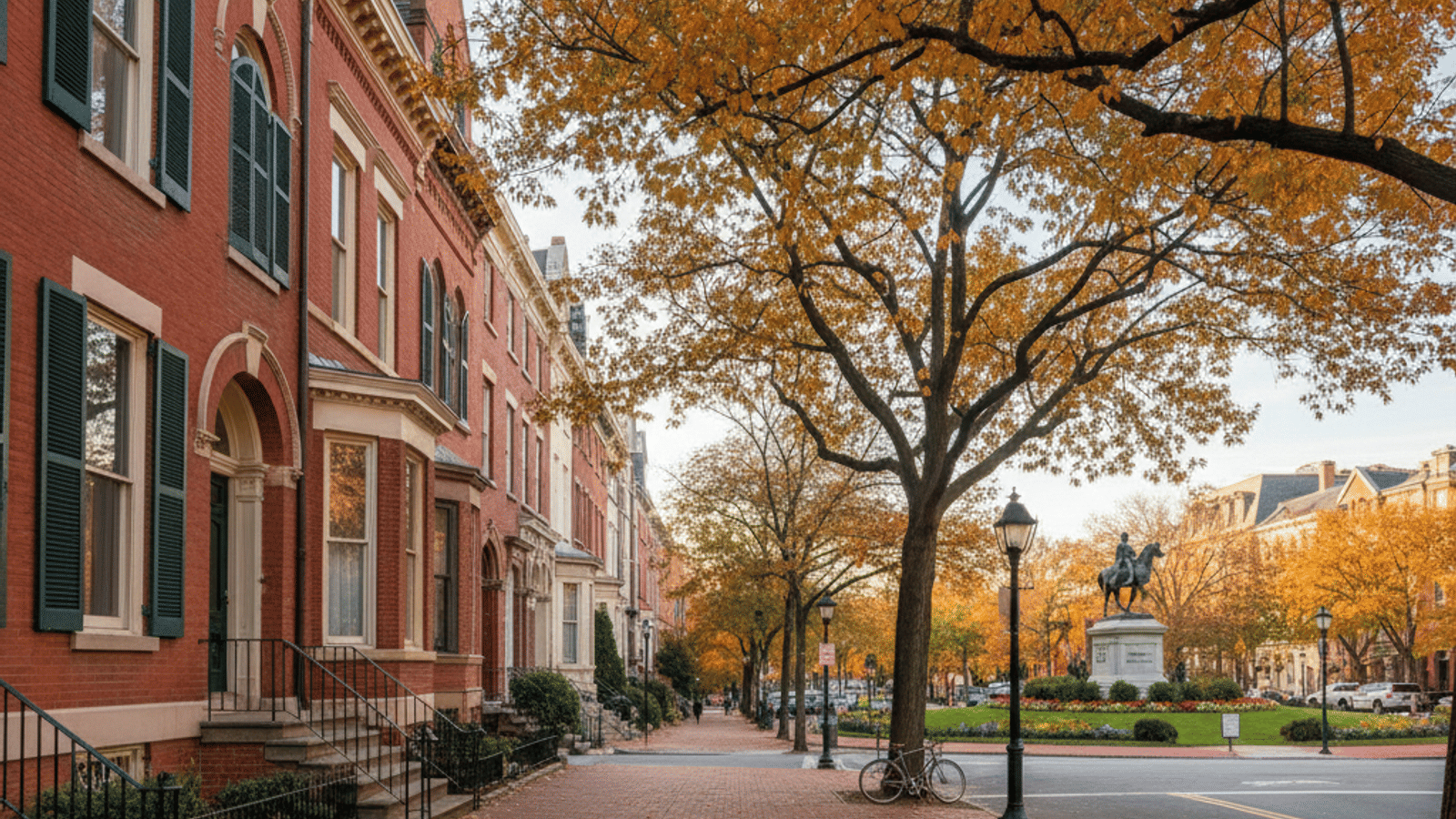
Homes for sale in Logan Circle sit just east of Dupont Circle and a short walk north of downtown, centered on its namesake traffic circle and statue. Day to day, the neighborhood mixes quiet, tree-lined rowhouse blocks with a busy restaurant and retail corridor along 14th Street NW, so it feels very “city” while still having a defined, walkable core.
Buying a Home in Logan Circle
How competitive is the Logan Circle housing market right now?
Logan Circle has cooled from the intense bidding cycles of recent years but still attracts steady demand from people who want a central, walkable location. As of October 2025, median sale price was about $725,000, down 9.8% year over year, with homes taking around 90 days to sell and 67 closings that month, per Redfin’s Logan Circle housing market data. That mix points to a market where well-priced homes still move, while buyers have more time and negotiation room than they did a couple of years ago.
What kinds of homes are common in Logan Circle?
You’ll see a blend of 19th-century Victorian rowhouses, smaller condo conversions in older buildings, and larger condo or loft buildings along the main corridors. Many of the homes around the circle itself and on the surrounding blocks fall within the Logan Circle Historic District, so exteriors tend to keep their original character even when interiors have been updated. Larger new-construction condo buildings and mixed-use projects are more common along 14th Street NW and nearby avenues.
Are there inspections or issues buyers should pay special attention to?
With older rowhouses, buyers usually keep an eye on the roof, brickwork, and drainage because those features tend to age in predictable ways. Condo buyers often look closely at the building’s systems, its reserve funds, and any planned projects mentioned in the resale package, since those can affect future costs. Citywide issues can also show up, so many people work with inspectors who understand DC’s typical construction.
How do condo fees and associations typically work here?
Many Logan Circle condos belong to smaller associations in converted rowhouses or mid-sized buildings, while the 14th Street corridor has more full-service buildings. Fees can cover building insurance, exterior maintenance, reserves, water, and shared amenities; the exact mix depends on building size and services. Buyers usually review at least two years of budgets and condo documents during the contingency period to understand how stable fees have been and whether any major projects are planned.
Is there a best time of year to buy in Logan Circle?
Spring usually brings the most new listings in Logan Circle, since many owners time their moves with better weather. Late summer and fall can be good for buyers who don’t mind a slower pace and are open to homes that have been sitting a bit. Winter has fewer options overall, but you’ll sometimes find sellers who are more open to negotiating if their place didn’t move earlier in the year.
Selling a Home in Logan Circle
When is a good time to put a Logan Circle home on the market?
Most sellers aim for early spring through early summer, when foot traffic in the neighborhood is high and more buyers are touring after work and on weekends. That said, Logan Circle’s central location and transit access mean there is activity year-round, so a well-presented home can still do well outside the traditional “peak” window. Your timing is usually better driven by your next move and the level of prep your home needs than by trying to time the market perfectly.
How should I prepare my home before listing?
In this neighborhood, buyers notice light, finishes, and outdoor space first. Simple steps—fresh paint in key rooms, refinished or well-cleaned floors, updated lighting, and a deep clean—go a long way in both rowhouses and condos. For historic rowhomes, keeping period details like original mantels or staircases visible while decluttering around them tends to photograph well and supports the value story.
How are list prices typically set in Logan Circle?
Pricing usually starts with very close-in comparable sales: same side of a street where possible, similar size and level of renovation, and similar type (rowhouse versus condo). Sellers pay close attention to how long those comps took to sell and whether they required price adjustments, especially given the recent shift to longer days on market. A list price that lines up with recent, realistic numbers usually pulls in better early traffic than one that tests a distant high sale.
What disclosures and documents should sellers expect?
DC requires a standard set of seller disclosures covering property condition and known defects, and most condo and cooperative buildings must provide resale packages with governing documents, budgets, and recent meeting minutes. In the Logan Circle Historic District, buyers may also review information about any exterior changes that required historic review. Clear documentation up front helps reduce surprises once inspections and appraisals begin.
Are there common repairs or credits that come up during negotiation?
It’s common for inspection requests to focus on aging systems (HVAC, roof, and windows)as well as moisture control in basements or garden-level units. In many cases, sellers and buyers work out a repair credit rather than trying to complete every item before closing, especially if contractors are backed up. Smaller items like GFCI upgrades or minor masonry touch-ups often become part of that same negotiation rather than separate issues.
Logan Circle Market Insights
How do property taxes work for Logan Circle homes?
Property taxes in the Logan Circle real estate market follow District of Columbia rates, which are based on the property’s assessed value and class. For most owner-occupied residential properties, DC publishes a Class 1 rate per $100 of assessed value through the Office of Tax and Revenue, and homeowners may also be eligible for relief programs such as the homestead deduction. Because assessments and rates can change, owners usually check both their annual tax bill and the current rate chart when budgeting.
What should I know about transfer and recordation taxes when buying or selling?
DC charges deed transfer and recordation taxes on most real estate transfers, with residential rates typically 1.1% of the consideration or fair market value for properties under $400,000 and 1.45% when the transfer exceeds that threshold. In many Logan Circle transactions, buyer and seller each pay a portion of these taxes, but the split is negotiable and should be spelled out in the sales contract. Because these percentages can materially affect closing costs, they’re usually built into early net-sheet planning.
What are typical closing costs for buyers and sellers?
Buyers in Logan Circle usually plan for things like lender fees, the appraisal, title insurance, transfer and recordation taxes, and prepaid items such as property taxes and homeowners insurance. Sellers tend to budget for brokerage commissions, their share of those same transfer and recordation taxes, settlement fees, and any credits they’ve agreed to give the buyer. The exact numbers vary based on the home and the loan, so most people rely on a tailored estimate for their specific situation.
How do homeowners and condo insurance usually look in this area?
Rowhouse owners typically carry standard homeowners policies that cover the structure and interior contents, with separate coverage for any valuables or special circumstances. Condo owners generally insure interior fixtures and personal property, while the master policy covers the building shell and common areas; the details come from the association’s documents and master policy declarations. Proximity to downtown and the absence of shoreline in Logan Circle mean flood insurance is less common than in coastal neighborhoods, but individual lenders may have their own requirements.
What can I expect for utilities in Logan Circle?
Most homes here are on standard city water and sewer, and many have gas service for cooking or heating. In older rowhouses, you might see a mix of radiator and forced-air systems, while condos often use central systems or in-unit heat pumps. Electric costs can vary based on building efficiency and whether you have shared systems, so it’s common for buyers to request a few recent utility bills from the seller as part of their due diligence.
Living in Logan Circle
What is everyday life like in Logan Circle?
Living in Logan Circle, daily life tends to revolve around the circle itself and the 14th Street NW corridor, where you’ll find most of the neighborhood’s restaurants, bars, and shops. The side streets are quieter, with mature trees and historic rowhouses, so it’s easy to walk a couple of blocks and feel removed from the activity. Many residents rely on walking, biking, and transit for much of their daily routine.
What are the main neigborhoods within Logan Circle?
The Logan Circle neighborhoods immediately around the traffic circle form a historic core of large Victorian homes facing the park. To the west and north, 14th Street NW and nearby side streets make up a restaurant and retail corridor with a heavier condo presence. East and south of the circle, rowhouse blocks and smaller buildings extend toward downtown and Shaw, while corridors like Rhode Island Avenue and P Street NW carry a mix of older and newer multifamily buildings.
How do public school assignments work for Logan Circle addresses?
Public school assignments in this part of DC are based on your specific street address, with in-boundary rights and feeder patterns published by DC Public Schools and the citywide lottery system. Residents can use the My School DC school finder to look up current in-boundary DCPS schools and participating public charter options for a given address. Because boundaries and program offerings can change, it’s a good idea to verify details for the school year you’re planning for rather than relying on older maps.
How do people usually get around and commute from Logan Circle?
Logan Circle is an easy place to get around without a car. Most everyday errands can be done on foot or by bike, and several Metro lines are only a short walk away. Buses run up and down the main avenues, making it simple to reach other parts of the city. There are dedicated bike lanes on streets like 14th and Vermont Avenue NW.
Are there parks or green spaces nearby?
The central circle itself functions as a small park, with a landscaped interior and paths around the statue of John A. Logan. In addition, residents can walk to other small neighborhood parks and plazas, and it’s a short trip by bike, bus, or Metro to larger green spaces elsewhere in the city. Many rowhouses also have small front yards or rear patios, while newer buildings sometimes offer rooftop terraces or shared outdoor areas.
What should I know about short-term rentals and licensing?
Short-term rentals in DC, including those in Logan Circle, are regulated at the city level rather than by individual neighborhoods. Hosts generally need a basic business license with a Short-Term Rental endorsement, must follow occupancy and primary-residence rules, and have to comply with building or association policies in condos and cooperatives. Because rules and enforcement can evolve, owners usually confirm current requirements with the District’s licensing office before listing a property.
Questions About Your Logan Circle Agent
What should I look for in an agent when buying or selling in Logan Circle?
Experience with Logan Circle specifically tends to matter more than sheer years in the business. An agent who regularly works in the neighborhood will know how different blocks perform, how buyers react to features like parking or outdoor space, and how to read recent sales that the general search portals might not highlight clearly. It also helps if they’re comfortable walking you through local contract norms, condo documents, and the way DC handles transfer and recordation taxes.
How can a local agent help with condos, co-ops, and rowhouses in the same neighborhood?
Because Logan Circle has a mix of housing types, an agent who is comfortable across condos, cooperatives, and fee-simple rowhouses can help you compare them on an apples-to-apples basis. That includes explaining how condo fees relate to services, what to look for in building reserves, and how rowhouse operating costs and responsibilities differ. On the selling side, the same familiarity helps tailor pricing, staging, and marketing to the way buyers shop for each property type here.
Historic District & Preservation in Logan Circle
Is Logan Circle part of a historic district?
Yes. The Logan Circle Historic District includes the circle and several surrounding blocks, reflecting a period of significance roughly from 1875 to 1900. That designation recognizes the concentration of late-19th-century townhouses and helps guide how exteriors are maintained and altered over time.
How do historic guidelines affect exterior changes?
If your home sits inside the historic district, most exterior changes that can be seen from the street need to be reviewed and approved; things like major facade updates, new windows, or additions. Interior projects usually offer more freedom, but big structural changes may still require permits. The DC Office of Planning provides clear guidelines and a review process so you know what types of updates are likely to get the green light.
Do historic rules make everyday maintenance harder?
Routine upkeep; painting in the same color range, repairing existing materials, or replacing elements in kind, often fits within established guidelines, though permits may still be required. More substantial changes, like modifying window openings or adding rooftop structures, take more planning and may require architectural drawings and formal review. Many owners find that working with contractors familiar with DC’s historic districts helps keep projects moving smoothly.