

If you are looking for a “get rich quick” flip or double-digit cash flow on day one, Logan Circle probably isn’t the right fit for your portfolio. However, if you are looking for stability, asset preservation, and a “blue chip” addition to a buy-and-hold strategy, this neighborhood is arguably the premier market in Washington D.C.
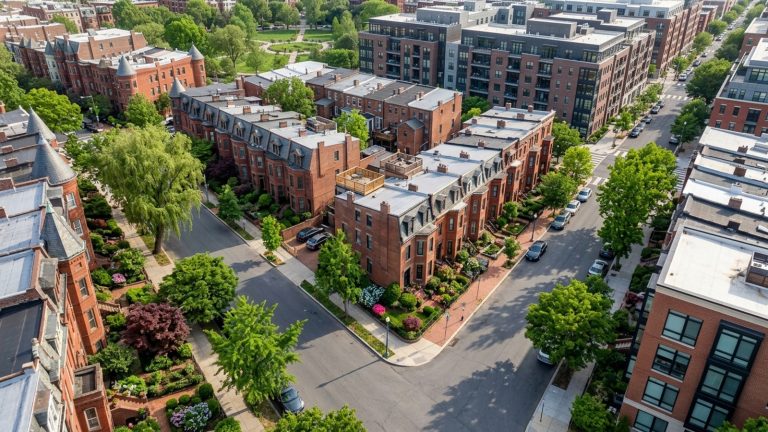
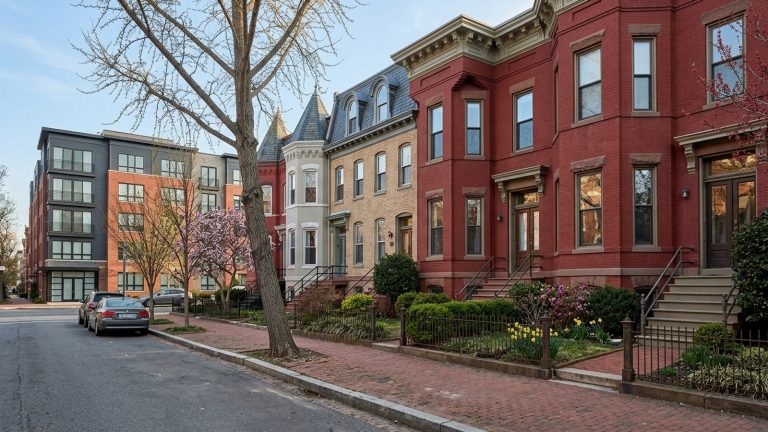
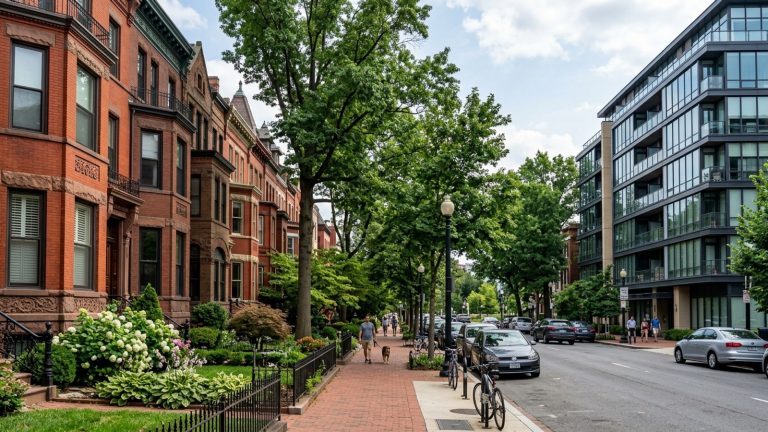
Logan Circle has transitioned from the rapid-appreciation darling of the early 2000s into a mature, high-barrier-to-entry market. In early 2026, we are seeing a balanced market dynamic. It is no longer the Wild West; it is established wealth. The inventory here is a distinct mix of historic Victorian architecture and high-end modern infill, attracting a tenant base that is resilient to economic downturns.
For investors, the entry price varies significantly depending on the asset class. While the median sales price hovers around $675,000, that number is heavily skewed by the volume of one-bedroom condos. If you are looking at fee-simple row homes, you are looking at an entry point of $1.6M and climbing rapidly from there.
Why Invest in Logan Circle? The Location Value
When you buy in Logan Circle, you aren’t just paying for the square footage; you are paying for the proximity to the city’s most vibrant commercial arteries. The location provides an intrinsic floor to property values that outlying neighborhoods just can’t match.
The 14th Street Corridor This is the commercial heartbeat of the area. The stretch of 14th Street NW bordering Logan Circle is packed with high-end retail, Michelin-star contenders, and nightlife. This density drives tenant demand. People don’t move here to commute out to the suburbs; they move here to be in the middle of the action.
Walkability & Transit With a Walk Score consistently hitting 96-98, this is a true walker’s paradise. Tenants here rarely rely on cars for daily errands. The proximity to major employment hubs like K Street and Downtown DC means your property appeals to professionals who value time over square footage.
Tenant Profile The rental pool here is distinct. You aren’t typically marketing to students. You are attracting high-income professionals, diplomats, lobbyists, and corporate transfers. These tenants rent for lifestyle and convenience, often staying for multiple years if the property is well-managed.
2026 Market Analysis: Prices, Rents, and Cap Rates
Let’s look at the numbers. As we move through 2026, the market has settled into a predictable rhythm, which is exactly what conservative investors like to see.
Sales Market Inventory remains tight, simply because people who buy here tend to hold. However, the days on market have normalized to the 70-80 day range. This is good news for buyers; you have a little more breathing room to conduct due diligence compared to the frenzied bidding wars of the past decade.
Rental Market Rents have stabilized and are inching upward. You can expect a median rent of roughly $2,500 to $2,850 per month for a standard one-bedroom unit. Vacancy rates are exceptionally low, largely driven by the strong return-to-office mandates in the District, which has brought the professional class back from the exurbs.
Cap Rates This is the most important metric to set expectations on. Logan Circle is a low-cap environment. Expect Class A properties to trade at compressed cap rates between 5.1% and 5.4%. Investors here are accepting lower immediate yields in exchange for lower risk and the likelihood of consistent long-term appreciation.
Asset Class Comparison: Historic Row Houses vs. Modern Condos
Your investment experience in Logan Circle will depend entirely on whether you buy a piece of history or a piece of a high-rise.
Victorian Row Houses These are the iconic, turreted homes that define the neighborhood.
- Pros: Scarcity value is massive—they aren’t building any more 1890s Victorians. You also have no HOA fees, giving you total control over holding costs.
- Cons: The entry point is high, usually starting at $1.6M. Maintenance is entirely on you, and old brick requires constant vigilance.
- Best For: Investors with deep pockets looking for a trophy asset or a multi-unit conversion play.
Luxury Condos These are units in converted historic buildings or new construction along 14th Street.
- Pros: Lower entry price ($500,000 to $800,000). These buildings are amenity-rich (gyms, roof decks, concierges), which is a huge draw for the tenant base mentioned earlier.
- Cons: Condo fees in DC are high and they never go down. You should budget $0.60 to $1.00+ per square foot in monthly fees. This can severely eat into your monthly cash flow if you aren’t careful.
- Best For: Hands-off investors who want a “set it and forget it” rental.
Critical Regulatory Updates: TOPA and Historic Districts
Investing in DC comes with a specific set of rules. The good news is that the regulatory environment in 2026 is friendlier to small investors than it has been in years.
TOPA Reform (The RENTAL Act) For years, the Tenant Opportunity to Purchase Act (TOPA) was a major headache for investors, allowing tenants to delay sales for months or years. However, recent reforms have streamlined this process significantly. Single-family homes and small multifamily properties (2-4 units) now have much clearer exemptions. If you are a small investor, the “timeline risk” of selling your property has been drastically reduced.
Historic Preservation Almost all of Logan Circle falls within a designated historic district, with a “Period of Significance” generally cited between 1875 and 1900. If you plan to renovate, understand that the Historic Preservation Review Board (HPRB) has strict authority over anything visible from the street. You cannot simply swap out windows or paint the brick. You must budget extra time and money for approvals on exterior work.
Rent Control Not every unit in DC is rent-controlled. Generally, buildings constructed after 1975 are exempt. Furthermore, small landlords (owning fewer than four units) can often file for an exemption even on older properties. It is vital to file these exemptions immediately upon purchase to ensure you can adjust rents to market rates.
Investment Strategies for Logan Circle
Given the high asset costs and compressed cap rates, how do you make the math work?
- Buy and Hold: This is the primary strategy for Logan Circle. You are betting on the 10-to-20-year appreciation curve. You buy a row house or premium condo, let the tenant pay down the mortgage, and capture the equity growth of one of the nation’s most stable markets.
- Furnished Rentals: Because of the diplomat and lobbyist traffic, there is a strong market for medium-term, furnished rentals (3-9 months). These can command a 20-30% premium over unfurnished long-term leases, helping to boost your yield.
- House Hacking: This is popular with younger investors entering the luxury market. By purchasing a multi-unit row house (e.g., a main house with a basement English basement apartment), you can live in one unit and rent the other. This often simplifies financing and can provide immediate exemptions from TOPA and rent control regulations.
Frequently Asked Questions
Is Logan Circle a good place to invest in real estate?
Yes, if your goal is wealth preservation and long-term appreciation rather than immediate high-yield cash flow. It is a “blue chip” neighborhood with high tenant demand, ensuring low vacancy rates even during broader economic shifts.
What are the property taxes in Logan Circle DC?
DC property taxes are surprisingly reasonable compared to the surrounding suburbs in Maryland and Virginia. The residential rate is generally around $0.85 per $100 of assessed value. For a $1,000,000 property, that is roughly $8,500 annually.
Do historic district rules apply to all renovations in Logan Circle?
The rules primarily apply to the exterior of the building that is visible from the public right-of-way. You generally have freedom to renovate the interior as you see fit, provided you don’t alter the structural integrity or exterior appearance. Always check with the HPRB before starting exterior work.
How does TOPA affect investment properties in Logan Circle?
While TOPA still exists, recent reforms have exempted most single-family rentals and small accommodations (2-4 units) from the most complex requirements. For most individual investors buying a row house or condo, the process is now much faster and less risky than it was a decade ago.