
Dupont Circle is one of those neighborhoods that doesn’t need much of an introduction – a prominent residential and commercial hub sitting in the northwest quadrant of Washington, DC, with a traffic circle at its heart that’s been drawing people in since the 1880s. In mid-2026, buyers weighing the pros and cons of living in Dupont Circle, DC will find a median home sale price of around $479,800. Homes are sitting on the market for roughly 45 days, and there are typically about 105 available listings at any given time.
The neighborhood has traveled a long road – from a remote, undeveloped tract with slaughterhouses and a brickyard to one of the capital’s most recognized addresses. If you’re seriously considering buying here, understanding that history isn’t just interesting background noise. It shapes what you can do with the property, what you’re paying for, and why the architecture looks the way it does.
Dupont Circle at a Glance
The area started taking real shape in the late 19th century, pushed along by the expansion of the city’s streetcar lines and the paving of Massachusetts Avenue. Those early infrastructure decisions set the bones of what you’re looking at today.
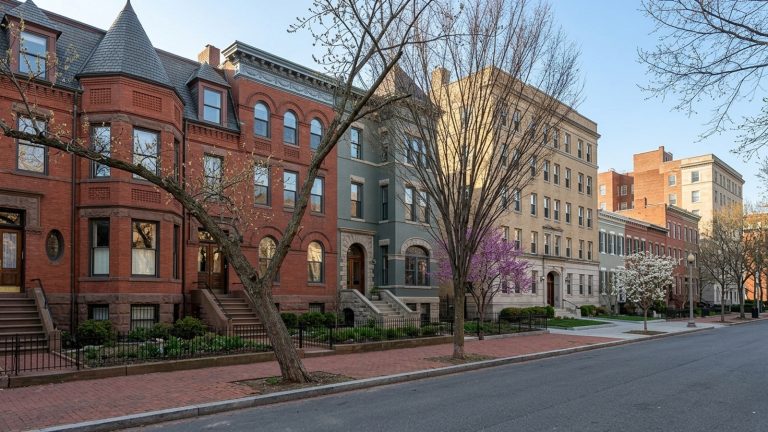
The neighborhood is now known for its historic rowhouses, embassies, and the large traffic park at its center – and buyers consistently come here looking for architectural character and proximity to downtown Washington, DC.
Fast Facts About the Area
The traffic circle itself intersects with Massachusetts Avenue, Connecticut Avenue, New Hampshire Avenue, P Street, and 19th Street. The local market is active: 87 homes have sold recently, with properties generally closing at about 98.2% of their list price.
The circle’s original layout came from Pierre Charles L’Enfant’s broader plan for the capital. Alexander “Boss” Shepherd later modified it, overseeing the construction and paving work in the 1870s.
Defining the Neighborhood Boundaries
Dupont Circle is a neighborhood within the District of Columbia – not a separate city or town, and not governed by any independent municipal body. Everything here runs through DC.
The boundaries are generally understood to be 16th Street NW to the east, 22nd Street NW to the west, M Street NW to the south, and Florida Avenue NW to the north. Inside those lines you’ll find both busy commercial corridors and dense residential blocks.
Location and County Details for Dupont Circle
Washington, DC has a jurisdictional setup that catches some buyers off guard, particularly those coming from states where you’re always dealing with a county layer on top of a city layer. That’s not how it works here.
When you buy in Dupont Circle, you deal directly with the District government for all municipal needs – no secondary county offices, no separate town councils.
District of Columbia County Structure
Washington, DC has no counties. The entire city functions as an independent city and a county-equivalent, full stop.
All property tax assessments and land records for Dupont Circle homes are processed by the District of Columbia. There are no further jurisdictional subdivisions to sort through.
Where the Neighborhood Sits in Washington, DC
Dupont Circle sits in the Northwest quadrant of the city, just north of the downtown business district and south of Adams Morgan. It’s central enough that the Washington Metro’s Red Line runs directly beneath the traffic circle, with a station right there.
That location matters when you’re thinking about day-to-day life – and when you’re thinking about resale.
The Story Behind the Dupont Circle Name
The name comes straight from the traffic circle at the neighborhood’s center. In its early planning stages, the area was known as Pacific Circle. Congress officially renamed it in 1882 to honor a prominent military figure, and the surrounding neighborhood eventually took on the same name as development spread outward from the park.
Rear Admiral Samuel Francis Du Pont
The circle was named after Rear Admiral Samuel Francis Du Pont, a member of the prominent Du Pont family and a recognized naval commander during the American Civil War. In 1884, a bronze statue of Du Pont was erected at the center of the circle to formalize the dedication. It stayed there for several decades before the Du Pont family requested its removal.
Naming the Traffic Circle
The bronze statue was relocated to Wilmington, Delaware in 1920, but the name Dupont Circle stayed. One thing worth knowing: the spelling of the neighborhood and circle typically combines “Du” and “Pont” into a single word – different from the family’s own surname.
The name now applies to the physical park, the surrounding historic district, and the broader residential neighborhood. It’s one of the most widely recognized place names in the District.
Timeline and Founding of the Area
Before the Civil War, this land was largely empty – a few scattered estates, slaughterhouses, and a brickyard. Not exactly what you’d picture standing at the fountain today.
Development accelerated in the 1870s when the city’s Board of Public Works began aggressively paving streets and installing utility lines. That infrastructure push turned the area into a prime residential building site for wealthy Washingtonians, and things moved quickly from there.
Early Settlement and Construction
Through the 1880s and 1890s, large mansions went up along Massachusetts Avenue. Those grand homes set the neighborhood’s tone and drove further construction of brick and stone rowhouses on the adjacent streets. By the early 20th century, the neighborhood was fully built out – and the housing stock from that era is largely what you’re buying when you purchase here today.
Growth and Development Over the Decades
After World War II, many of the large mansions shifted to new uses – embassies, private clubs, office spaces. The residential rowhouses were frequently divided into smaller apartments or boarding houses. The neighborhood changed character considerably during that period.
The 1970s brought a wave of historic preservation efforts. Residents organized to protect what remained of the original architecture, and that work led directly to the formal historic districts that still regulate home renovations today. If you’re buying here, those districts are something you need to understand before you close.
Historic Districts and Local Landmarks
A lot of what draws buyers to Dupont Circle – the streetscape, the architectural consistency, the sense that the block hasn’t been picked apart by bad renovation decisions – exists because of historic preservation guidelines. Those same guidelines apply to you once you own.
Exterior changes to homes in the historic district require approval from the city’s Historic Preservation Review Board. That’s not a bureaucratic footnote; it’s a real part of owning property here.
The Dupont Circle Fountain
The Dupont Circle Fountain sits at the center of the traffic circle and is the neighborhood’s defining landmark. Formally known as the Rear Admiral Samuel Francis Dupont Memorial Fountain, it was designed by architect Henry Bacon and sculptor Daniel Chester French, and dedicated in 1921 – replacing the original bronze statue of Du Pont that had been relocated to Wilmington, Delaware in 1920.
The fountain was listed on the National Register of Historic Places in 1978 as part of the Civil War Monuments in Washington, DC, and it’s a contributing property to the Dupont Circle Historic District.
The Strivers’ Section Historic District
Within the broader Dupont Circle area is The Strivers’ Section, a sub-neighborhood with its own distinct history. It developed in the late 19th and early 20th centuries as a community for upper-middle-class Black Americans, and it carries its own separate listing on the National Register of Historic Places.
The district is bounded roughly by Swann Street, Florida Avenue, and the 16th Street Historic District, and it features well-preserved examples of late 19th-century residential architecture. It’s a part of this neighborhood’s story that doesn’t always get the attention it deserves.
What Dupont Circle is Known For Today
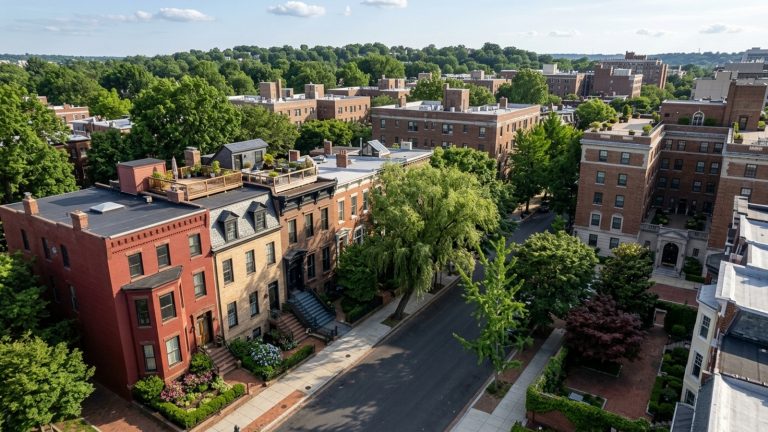
The neighborhood today is busy – commercially active corridors, historic residential streets, and a central park that functions as a genuine gathering point. The real estate market reflects it: those roughly 105 available listings consist mostly of historic rowhouses and condo conversions.
Architecture and Real Estate
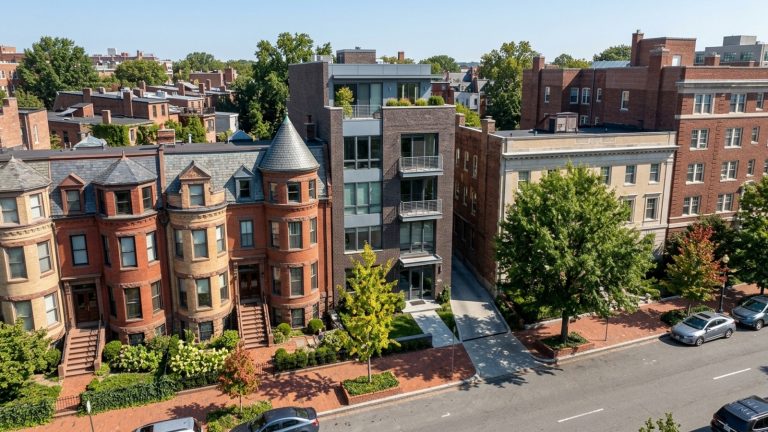
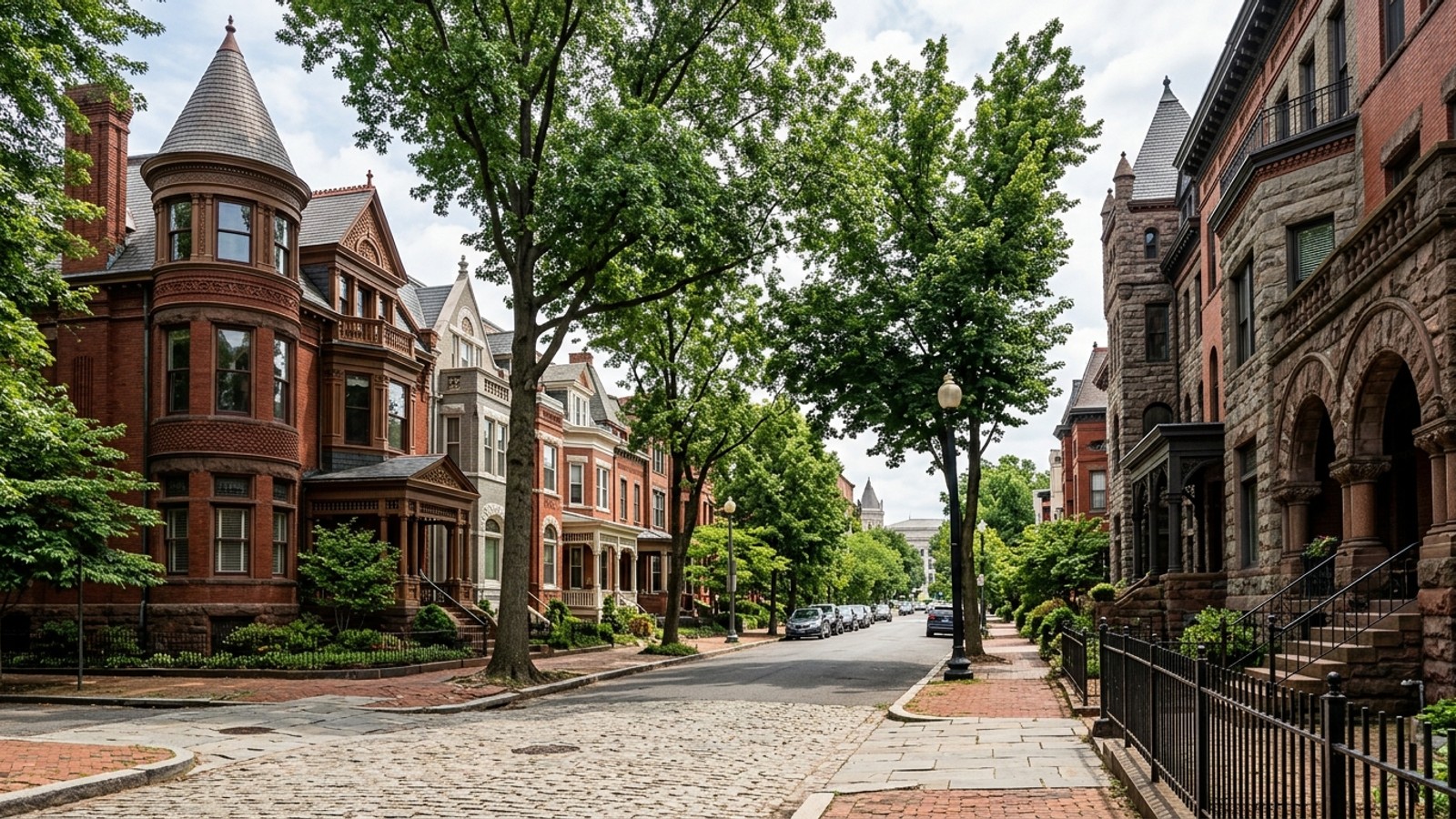
The dominant styles are Queen Anne and Richardsonian Romanesque – brick and stone rowhouses with prominent bay windows, turrets, and intricate masonry work. The large mansions along Massachusetts Avenue, now known as Embassy Row, give the area its most dramatic visual character, but it’s the rowhouses on the side streets that most buyers are actually purchasing.
People come here specifically to own late 19th-century DC architecture. That’s not an accident of the market – it’s the point.
Local Food and Specialties
The commercial strips along Connecticut Avenue and 17th Street offer a dense concentration of restaurants and cafes, with options ranging from casual bistros to long-standing international restaurants. On weekends, the neighborhood hosts one of the city’s largest year-round farmers markets near the Metro station, bringing in produce, baked goods, and specialty foods from farms across the mid-Atlantic region.
Frequently Asked Questions
What are the restrictions for renovating a home in the Dupont Circle Historic District?
Yes, there are restrictions. Any exterior changes to a property in the historic district must be reviewed by the DC Historic Preservation Office. That includes alterations to windows, doors, masonry, and rooflines – all evaluated against the historical character of the area.
Do historic rowhouses in Dupont Circle, DC hold their resale value better than new construction?
It depends on the specific property and market conditions. That said, historic rowhouses here tend to maintain strong buyer interest because of their architectural details and limited supply. Recent market data shows homes in this area generally sell for about 98.2% of their list price.
What historical architectural styles are most common when buying a house in Dupont Circle?
Queen Anne and Richardsonian Romanesque are the most common. You’re typically looking at brick and stone rowhouses with bay windows, elaborate cornices, and sometimes turrets dating back to the late 19th and early 20th centuries.
Are there DC property tax incentives available for restoring a historic home in Dupont Circle?
Yes, the District of Columbia offers certain tax relief programs for historic properties. If you’ve completed approved rehabilitation work on a historic home, check with the local tax office to find out whether your specific renovations qualify for property tax adjustments.
How long does it take to get historic board approval for exterior home updates in Dupont Circle?
It depends on the scope of the project. Minor exterior updates can often be approved over the counter by historic preservation staff. Major renovations or additions require a formal hearing before the Historic Preservation Review Board.
What happens if I buy a Dupont Circle property and do exterior work without historic preservation approval?
You’ll face penalties from the District. The city can issue stop-work orders, levy fines, and require you to reverse the unauthorized changes at your own expense – restoring the property to its approved historical appearance.