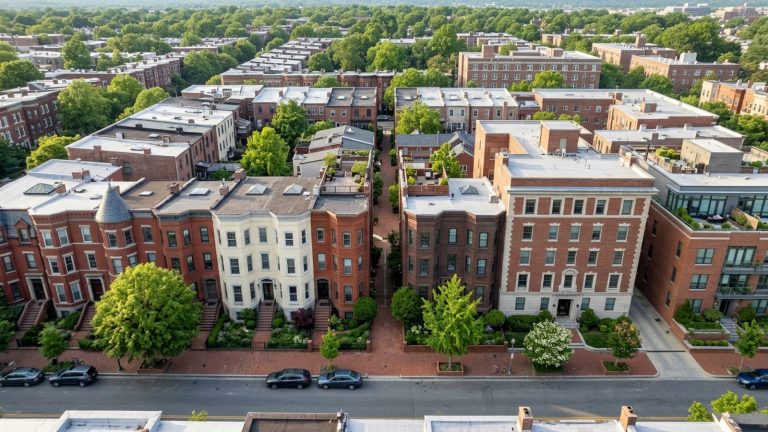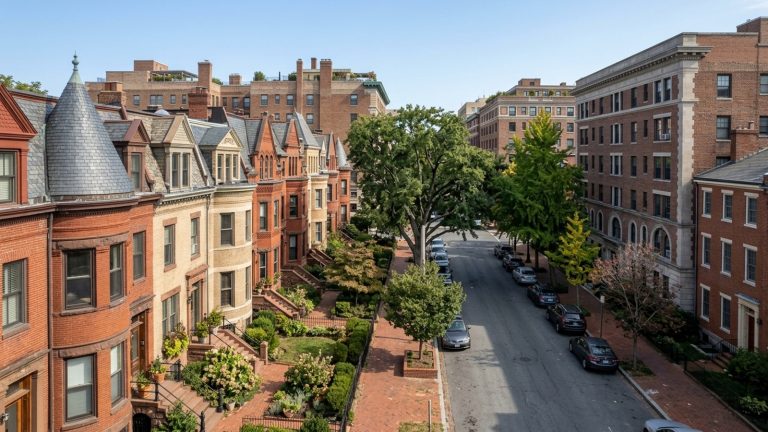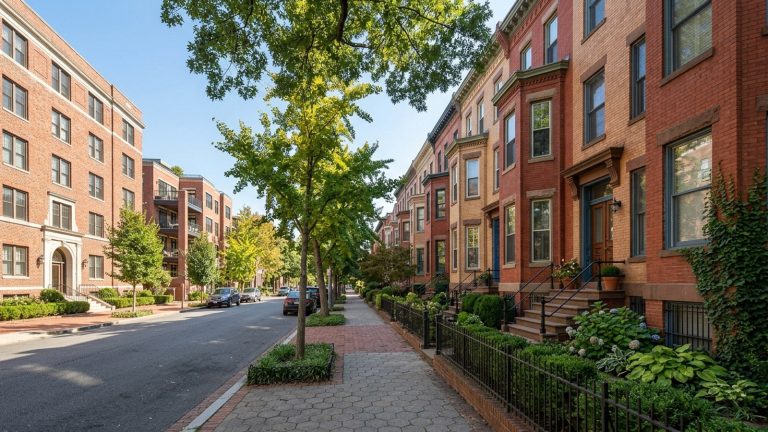

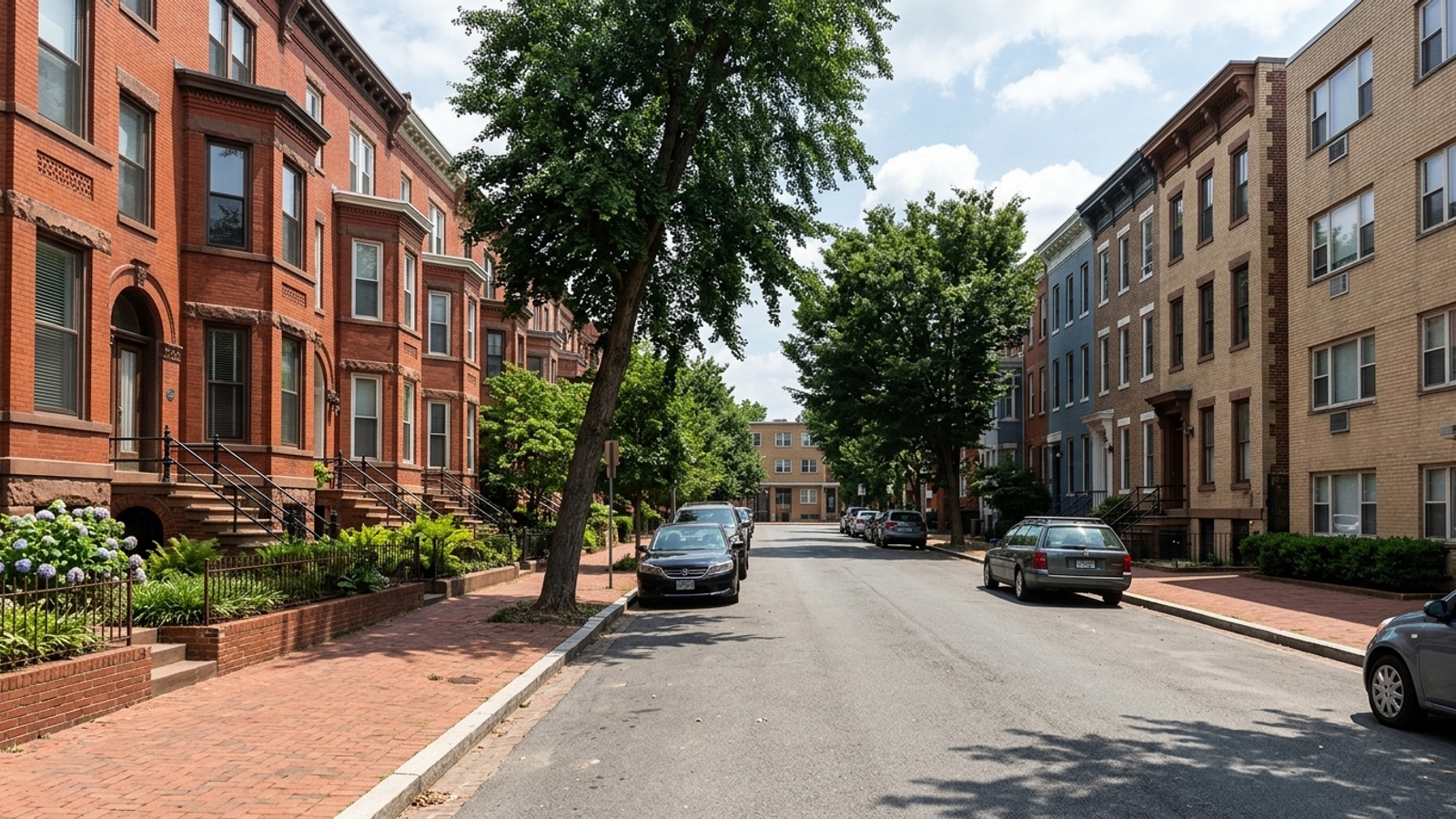
Dupont Circle sits in the northwest quadrant of Washington, DC, where historic rowhomes and high-density condominium buildings share the same blocks. The neighborhood centers around its namesake traffic circle and park, a space that commuters cut through every morning and locals claim on weekends.
If you’re thinking about buying here, the two things you’ll need to square right away are the convenience of an urban layout and the premium that comes with it. The median sale price for a home in Dupont Circle runs roughly $490,000, with inventory moving in about 53 days. Get clear on the costs, the commute times, and the housing types before you decide whether this area fits your budget and your daily life.
The Quick Verdict on Dupont Circle Living
The core trade-off is simple: you get real urban convenience, Metro Red Line access, walkable amenities, proximity to major employment centers, and you pay for it. Property taxes run higher than what you’d face in suburban Virginia or Maryland, parking is a genuine headache, and inventory is tight. Right now there are about 107 homes for sale in the neighborhood, so when something matches your criteria, you don’t have the luxury of sitting on it.
That’s the shape of it. The sections below break it down.
Pros at a Glance
The pedestrian-friendly layout is the headline. Data from Point2Homes shows nearly 41% of residents walk to work. That’s not a rounding error, that’s a neighborhood built around foot traffic. The Metro stations handle most of the rest, connecting residents to downtown offices without a car.
The housing stock is genuinely varied, from historic Victorian rowhouses to modern condominium buildings. And Rock Creek Park sits right on the neighborhood’s edge, offering miles of paved trails for anyone who wants outdoor space without leaving the city.
Cons at a Glance
The median sale price around $490,000 is the floor, not the ceiling. Larger rowhomes move well above that figure, and that’s before you factor in the cost of parking. Dedicated garage spaces carry a real premium, whether you’re buying or renting.
Urban density brings logistical friction. Street parking is tightly restricted, and if a personal vehicle is part of your daily routine, that friction will add up fast.
Location, Population, and Metro Access
Dupont Circle occupies a central position in the northwest section of the District of Columbia, which makes it a practical base for commuters heading to downtown Washington, DC, or nearby employment hubs. The local infrastructure supports walking, cycling, and transit. You’re not dependent on any single option.
Commute times naturally vary based on where you work, but NeighborhoodScout reports that most commuters spend between 15 and 30 minutes traveling one-way. For residents working immediately downtown, even shorter trips are common.
Population and Density
The population figures for Dupont Circle shift depending on exactly how you draw the boundary. Estimates range from roughly 9,100 to over 17,000 residents, a wide spread that reflects different definitions of the neighborhood’s edges. The density, though, is consistently high, as you’d expect for a central DC location.
Household income data varies by census tract the same way. Statistical Atlas shows tract-level medians ranging from $72,000 to $106,000, while broader area aggregators report figures up to $159,000. Neither number is wrong. They’re just measuring different slices of the same geography.
Side-by-side comparisons: vs Georgetown, vs Alexandria Virginia. Related guides: Schools in Dupont Circle, Washington, Job market Dupont Circle, Washington, Retirement communities in Dupont Circle, Washington, Is Dupont Circle, Washington, DC safe, Things to do in Dupont Circle, Washington, Moving to Dupont Circle, Washington, Getting around Dupont Circle, Washington, Restaurants and nightlife in Dupont Circle, Hospitals in Dupont Circle, Washington, Utilities in Dupont Circle, Washington, Weather patterns in Dupont Circle, Washington, History of Dupont Circle, Washington, Cost of living in Dupont Circle, Washington.
Crime Statistics and Data Sources
Dupont Circle falls under the Metropolitan Police Department’s Second District (2D). That’s the starting point for any honest look at local crime: not neighborhood impressions, but published data.
Citywide MPD figures for 2026 year-to-date show a 15% overall decrease in crime. Property crimes are down 17%, totaling 14,093 incidents across the city. Violent crime is moving the other direction, up 10% year-over-year, totaling 2,103 incidents citywide. At the neighborhood level, CrimeGrade estimates Dupont Circle’s violent crime rate at 7.886 per 1,000 residents.
How to Research Specific Areas
If you’re seriously considering a property, look at the block, not just the neighborhood. The MPD Crime Cards portal lets you filter incidents by Police Service Area (PSA) and date range, which gives you a much sharper picture than any aggregate statistic.
The FBI’s Uniform Crime Reporting (UCR) program and the National Incident-Based Reporting System (NIBRS) provide an additional layer of verifiable, primary-source data. Use them. They’ll tell you what types of incidents occur near a specific address and how frequently, which is what matters when you’re deciding where to live.
Cost of Living and Housing Prices
The median sale price in Dupont Circle sits at roughly $490,000, up 3.1% year-over-year. Sellers are in a solid position: the average sale-to-list price ratio is 98.25%, and about 13.5% of homes have recently sold above their initial asking price. Demand is steady, and buyers feel it. Those buying a home in Dupont Circle, DC, can review our active property listings.
Those numbers tell you what the market is doing. They don’t tell you what your specific monthly costs will look like, which is where most buyers underestimate the total picture.
Renting and Everyday Expenses
Median rents run somewhere between $2,382 and $2,500 per month. Two-bedroom condominiums can reach $4,000 monthly without much difficulty. On top of housing, you’re budgeting for District of Columbia income and property taxes, which differ from the rates in neighboring Maryland and Virginia, sometimes meaningfully so.
Groceries, dining out, and everyday expenses also carry an urban premium relative to suburban markets. None of this is a surprise for central DC, but it’s worth running the full number before you commit.
Amenities, Lifestyle, and Housing Options
The park at Dupont Circle, maintained by the National Park Service and centered on its well-known fountain, is the literal and figurative center of the neighborhood. Commercial corridors radiate outward from there, with a dense concentration of dining, retail, and grocery options within walking distance.
The District of Columbia Public Schools (DCPS) system serves school-aged residents in the area. And Rock Creek Park sits close enough to function as a genuine backyard substitute. Extensive hiking and biking trails available without getting in a car.
Specialized Housing: Senior and Sober Living
For residents who need specific care or community structures, the neighborhood has options. Several senior living and assisted living facilities operate in and around Dupont Circle, giving older adults access to structured care in an urban, transit-connected setting.
Sober living environments are also available in the broader Washington, DC market, including options near Dupont Circle. These offer structured residential support while keeping residents close to public transit and employment centers, which matters for people in recovery who are rebuilding a daily routine.
Dupont Circle vs. Nearby Alternatives
The most common comparisons buyers make are Dupont Circle against Logan Circle, or against Arlington, Virginia, across the river. Each option reflects a different set of priorities.
Arlington gives you more detached single-family homes and a different tax structure. The trade-off is that every trip to a downtown District job involves crossing the Potomac. Logan Circle offers urban density similar to Dupont Circle but doesn’t have a dedicated Metro station. You’re relying more on bus routes and walking to get around.
Weighing the Tradeoffs
Choosing Dupont Circle means you’re putting Metro access and historical architecture ahead of square footage. Large yards and multi-car garages exist here, but they’re rare and they’re expensive. That’s just the reality of the inventory.
The buyers who tend to be happiest here are the ones who want to eliminate the car commute entirely. With nearly 41% of residents walking to work, the neighborhood is genuinely built for that kind of daily routine, in a way that most suburban alternatives aren’t.
Frequently Asked Questions (FAQ)
Is Dupont Circle, Washington, DC a Good Place to Live?
The neighborhood offers a walkable layout, immediate Metro Red Line access, and proximity to major employment hubs. However, housing costs are substantial, with a median sale price around $490,000 and median rents near $2,500. Buyers should weigh the convenience of urban living against the premium pricing and limited parking.
What Are the Cons of Living in Dupont Circle?
The primary drawbacks include a high cost of living and limited housing inventory. Residents also face urban density challenges, such as restricted street parking and the higher taxes associated with living in the District of Columbia.
Is Dupont Circle Expensive to Live In?
Yes, housing and everyday expenses carry an urban premium. The median home price sits roughly at $490,000, and two-bedroom condos can rent for up to $4,000 a month.
What Do the Crime Statistics Show for Dupont Circle, DC?
Dupont Circle is part of the MPD’s Second District, where citywide 2026 data shows property crime down 17% but violent crime up 10%. CrimeGrade estimates the local violent crime rate at 7.886 per 1,000 residents. Buyers should review the MPD Crime Cards portal for block-specific data.
Is Dupont Circle or the Wider Washington, DC Metro a Better Fit to Live In?
It depends on your housing preferences and commute. Dupont Circle offers historic rowhomes, walkable amenities, and immediate Metro access, while the wider metro area provides larger detached homes, dedicated parking, and different tax structures.
What Specialized Housing Options, Such as Senior or Assisted Living, Are Available in Dupont Circle?
The area includes senior and assisted living options that provide older adults with structured care in an urban setting. Sober living environments are also available nearby, offering supportive residential communities close to public transit.