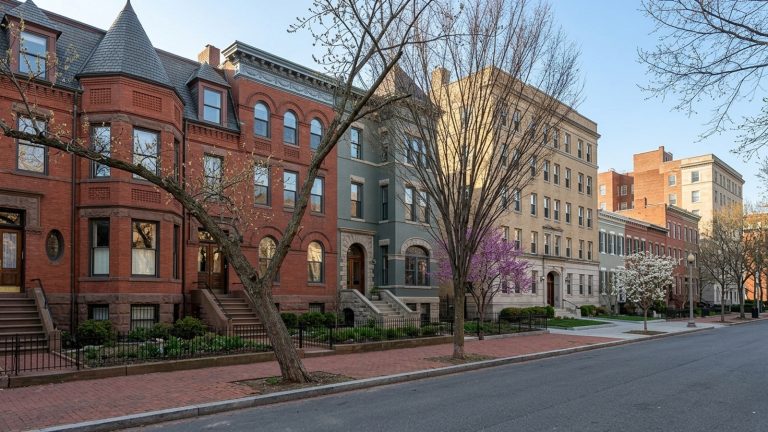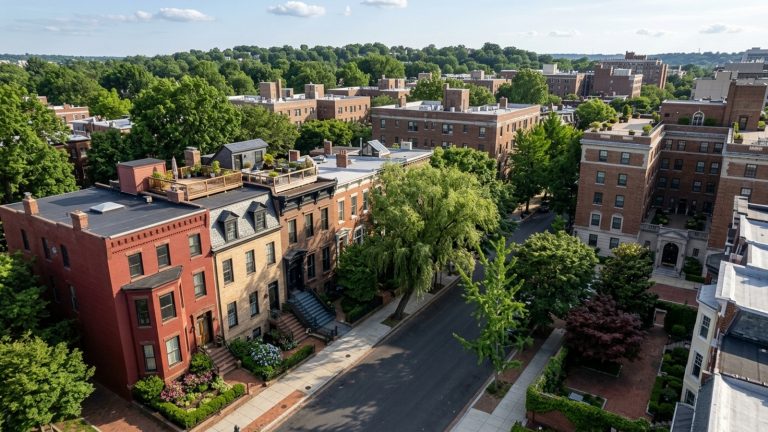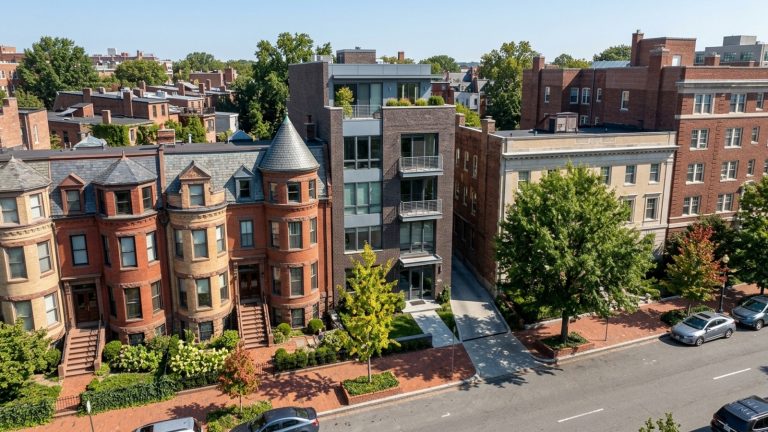

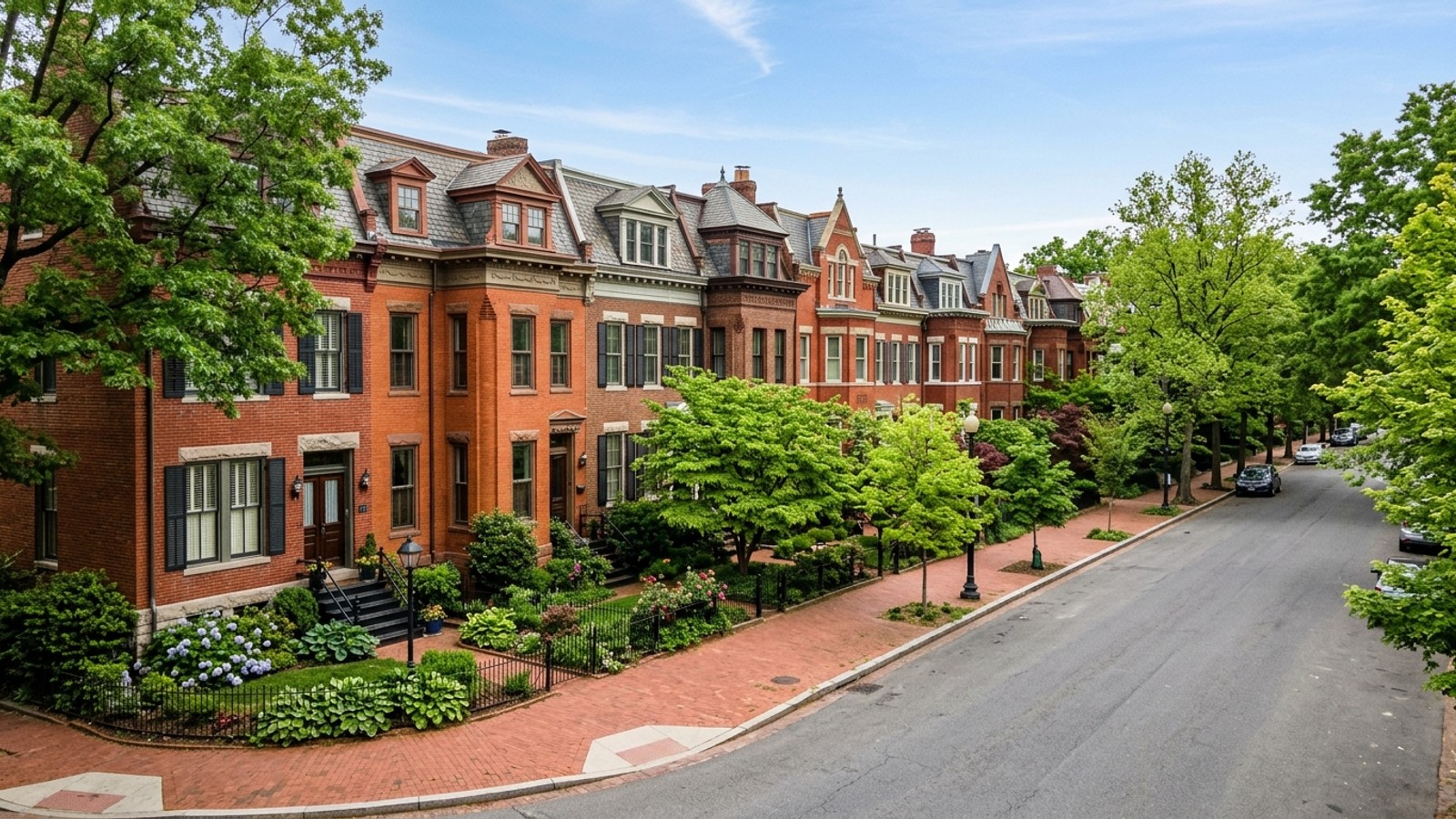
The median home price in Dupont Circle, DC sits around $479,833 right now. If you’re evaluating properties and weighing the pros and cons of living in Dupont Circle, DC, climate is the kind of thing that sneaks up on you – it shapes your utility bills, your commute, and how much attention you’ll need to pay to routine maintenance. Washington, D.C. runs through genuine seasonal swings: hot summers, cold winters, and two transitional seasons that are genuinely pleasant before the extremes set back in.
The Climate Zone and Overall Averages
Washington, D.C. carries a humid subtropical climate – Cfa under the Köppen-Geiger classification – which means you get real moisture year-round alongside real temperature swings. This isn’t a mild coastal city.
July pushes average daily highs to about 89°F, with overnight lows settling in the 69 to 72°F range. January runs the other direction, with highs near 44°F and overnight lows dropping to 28 to 30°F. Your HVAC system earns its keep at both ends. If you’re touring any of the roughly 105 available homes in the neighborhood, pay close attention to the age and condition of the heating and cooling units – they get a serious workout here.
Precipitation and Snowfall Totals
The district averages roughly 40 to 46 inches of precipitation annually. The wettest stretch runs June through August, driven by frequent summer thunderstorms, with July typically the peak.
Snow is a different story. The area averages 10 to 15 inches per year, with January as the snowiest month and essentially no snow from April through November. You won’t need winter weather gear for long.
Seasonal Moisture and Humidity
Humidity stays elevated across all four seasons, generally running in the 60% to 70% range. January and February actually hit the highest readings – 83% to 84% relative humidity – which surprises most people who assume summer is the worst of it. Spring drops to around 76% to 78%, with May feeling noticeably damp.
In July and August, relative humidity dips slightly to around 72% to 74%. That sounds like relief until you pair it with 89°F average highs. The air still feels thick.
Storms and Severe Weather Risks
Severe thunderstorms are a regular part of DC summers – damaging winds, hail, and flash flooding included. During a recent event, the National Weather Service issued both flash flood and tornado warnings after strong storms downed trees and flooded roads across the area. Tornado warnings do occur here, though specific long-term tornado frequency statistics for Washington, D.C. are not definitively established.
For homeowners, that means gutters need to stay clear and the grading around your foundation needs to actually direct water away from the structure. Basements and ground-floor units are the first to feel a sudden flash flood, and they’re common enough that this isn’t theoretical maintenance advice.
Timing Your Move Around the Seasons
Homes here spend a median of 45 days on the market, which gives you some room to plan. Most buyers try to avoid closing in a way that has them hauling boxes in July heat or January snow – and honestly, that’s a reasonable instinct. Spring and fall are the practical sweet spots for moving logistics.
With 87 homes sold recently, the market sees steady turnover. If you’re touring in May or October, you’ll get the most temperate conditions for actually evaluating a property. Sellers should think about this too – homes here carry an average sale-to-list ratio of 98.2%, and clean landscaping during the milder spring months is a straightforward way to support a strong showing.
Real Estate and Daily Life in the Neighborhood
The humid subtropical climate has direct consequences for the historic rowhouses and condominiums that define this area. Air conditioning runs continuously through summer. Heating systems take over in winter against those 44°F daytime highs. With 3.7 months of supply currently available, you have enough time to request a thorough inspection – use it to evaluate weatherproofing and insulation carefully.
Day-to-day, residents lean on the Metro during weather extremes – July’s heat and January’s cold both push people underground. The moderate spring and fall months are when walking to local shops actually sounds appealing, and when this neighborhood shows itself at its most functional.
Common Questions About Dupont Circle Weather and Real Estate
What is the best time of year to list a home in Dupont Circle to avoid the slow market during DC’s extreme summer humidity?
Spring or fall. July and August combine average highs of 89°F with relative humidity around 72% to 74%, which makes outdoor home tours and moving logistics genuinely uncomfortable – and that affects buyer turnout.
Are English basements and ground-floor condos in Dupont Circle prone to flooding during heavy spring rainstorms?
It depends on the specific property’s grading and drainage systems. Washington, D.C. receives 40 to 46 inches of annual rainfall and does see severe thunderstorms with flash flooding, so if you’re looking at a lower-level unit, inspect the water diversion carefully before you commit.
How much does it typically cost to winterize the original windows of a historic Dupont Circle rowhouse?
That depends on the size and condition of the windows in question – there’s no single answer. What’s certain is that January brings average lows of 28 to 30°F, so a tight seal isn’t optional, it’s a practical necessity.
Are Dupont Circle homeowners legally responsible for clearing snow and ice from the public sidewalks in front of their property?
That’s something you’ll want to verify directly with the city, since it turns on local municipal codes. What’s clear is that Washington, D.C. averages 10 to 15 inches of snow per year, concentrated mostly in January, so snow removal preparation is a standard part of owning here.
How do DC snow emergency parking bans affect scheduling and permits for a moving truck in Dupont Circle?
Snow emergency bans can force moving trucks to find alternative parking or push the move back entirely. January is the snowiest month out of the city’s 10 to 15 annual inches, so if you’re planning a winter move, build in a flexible backup plan from the start.
Does the urban heat island effect significantly increase summer cooling costs for top-floor condos in Dupont Circle?
It depends on the building’s roof insulation and HVAC efficiency – there’s no blanket answer. July is the hottest month with average highs around 89°F, and the persistent summer heat means top-floor units will be running air conditioning constantly regardless of how well-insulated they are.