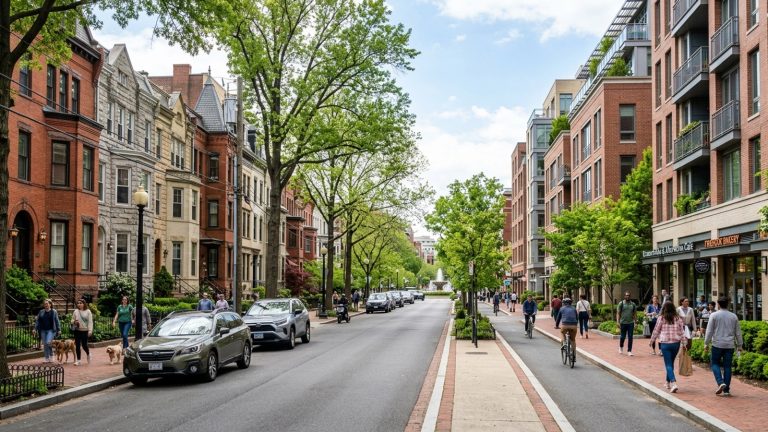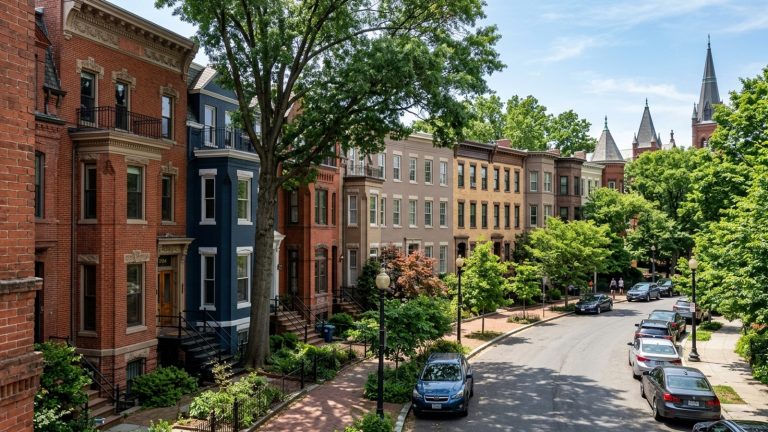

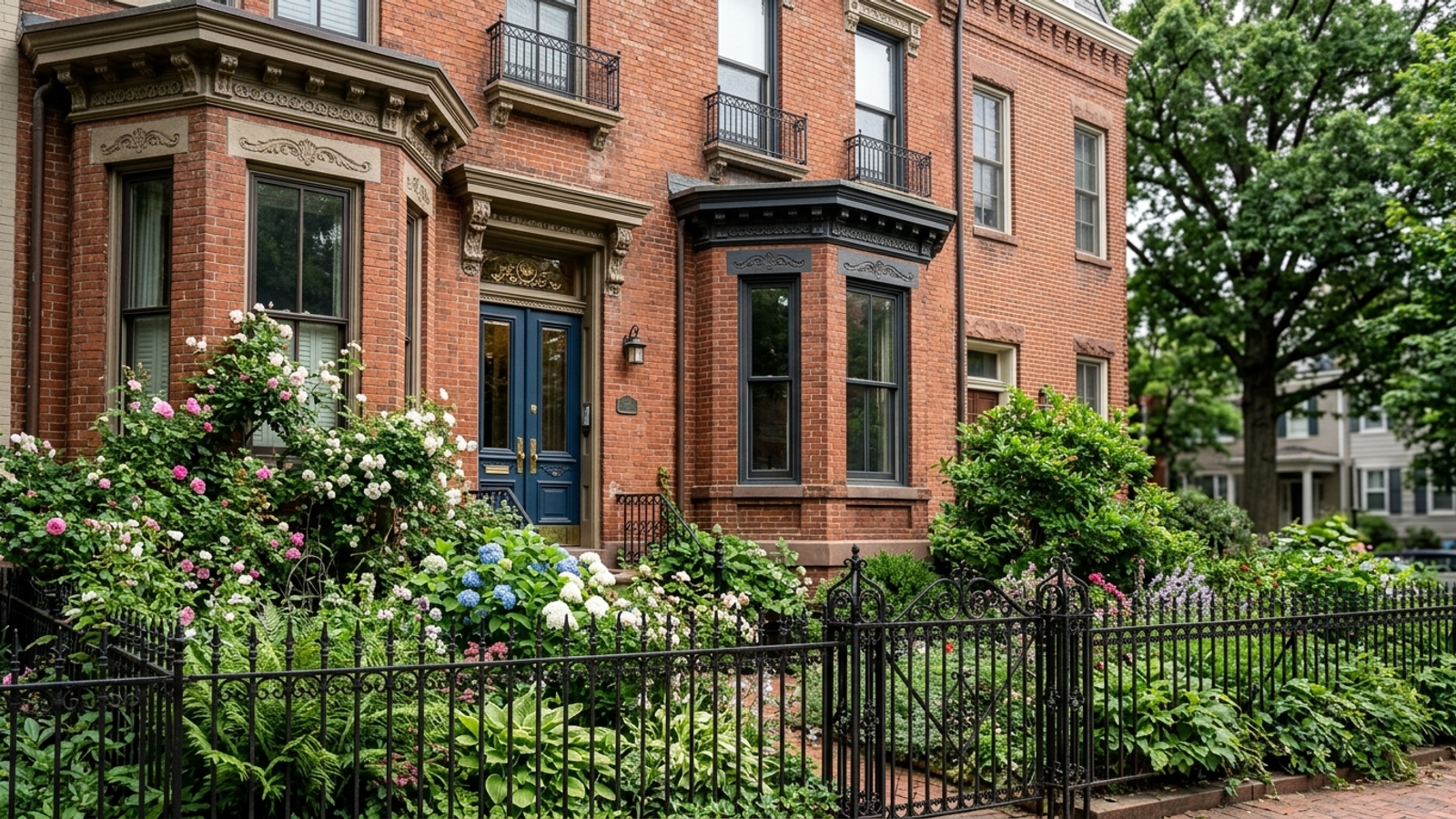
The median home sale price in Dupont Circle is currently around $479,800, while the average apartment rent hovers near $2,511 per month. For first-time home buyers in Dupont Circle, DC, those two numbers sit closer together than most people expect – and that’s exactly what makes this decision harder than it looks.
Homes here move at a reasonable clip, averaging 45 days on market before selling. Whether you’re drawn to the flexibility of a 12-month lease or the long-term equity of owning a historic rowhouse or condo, the only way to get clear on which path makes sense is to lay the actual costs side by side.
The Current Market for Renters and Buyers in Dupont Circle
Both sides of the market have distinct financial baselines this year. Renters pay a premium for square footage; buyers contend with interest rates and monthly association dues on top of their mortgage. The gap between what a renter pays each month and what a buyer pays – all-in – is smaller than most people assume, but it cuts both ways.
Local Rent Trends
As of mid-2026, the average rent for a Dupont Circle apartment is roughly $2,511 per month. One-bedroom units typically run $2,600 to $2,800. Two-bedrooms average between $3,795 and $4,308.
Average rents did tick down slightly from the prior year, though the monthly outlay still represents a meaningful share of most households’ budgets.
Home Prices and Interest Rates
The median sale price for a home in Dupont Circle is $479,833. Homes are selling for about 98.2% of list price, and roughly 23% are going above asking – so this isn’t a market where you walk in expecting to negotiate significantly.
Finance that median price with 20% down on a 30-year fixed mortgage near 6.58%, and your principal and interest payment lands around $2,460 per month. That number doesn’t include property taxes or insurance, which we’ll get to.
The Advantages and Costs of Renting
Renting in Dupont Circle means predictable monthly expenses and a relatively modest entry cost. If you’re not planning to stay in Washington, DC for more than a few years, that predictability has real value – you’re not on the hook for selling a property or absorbing transaction costs on the way out.
The trade-off is straightforward: every rent check covers your housing costs and nothing else. You’re not paying down a loan, and you won’t share in any appreciation the Dupont Circle neighborhood sees over time.
Flexibility and Short-Term Commitment
Standard leases here run 12 months. When the lease is up, you can leave without coordinating a sale, paying commissions, or timing the market.
Upfront costs are also considerably lower. Moving into an apartment typically requires the first month’s rent plus a security deposit equal to one month’s rent – so roughly $5,022 out of pocket to get your keys.
Maintenance and Upkeep
If the HVAC fails or a pipe bursts, that’s the landlord’s problem. Renters don’t pay directly for major building repairs, appliance replacements, or structural issues. You also don’t pay Washington, DC property taxes. Your monthly obligation is base rent plus utilities and, if you’re prudent, renters insurance.
The Advantages and Costs of Buying a Property
Buying locks in your housing cost and, with a fixed-rate mortgage, your principal and interest payment doesn’t move over the life of the loan. That’s a meaningful hedge against the kind of annual rent increases renters absorb over time.
That said, ownership comes with financial obligations that don’t appear on the mortgage statement. Property taxes, association dues, and ongoing maintenance all need to be factored into your real monthly number before you decide this pencils out.
Building Equity Over Time
Every mortgage payment chips away at your loan balance. And if the property appreciates – which Dupont Circle properties have generally done over long hold periods – that gain accrues directly to you.
Washington, DC’s residential property tax structure is relatively favorable for owner-occupants. The 2026 rate for Class 1 properties is $0.85 per $100 of assessed value. With standard deductions like the Homestead Deduction applied, the effective rate typically falls in the range of 0.56% to 0.60%.
Understanding Homeownership Costs
Condos in Dupont Circle carry HOA fees, and in older buildings those fees typically run $400 to over $800 per month. High-rise elevator buildings generally cost more to operate than smaller walk-up conversions, so the type of building matters here.
Beyond association fees, buyers are responsible for everything inside their unit – appliances, plumbing fixtures, whatever breaks. Setting aside a dedicated maintenance reserve isn’t optional; it’s just part of owning.
Direct Cost Comparison Over Five Years
A single-month snapshot of rent versus mortgage payment doesn’t tell you much. The more useful frame is five years, which is roughly the minimum horizon needed to offset what you spend getting into a purchase.
Mapping out both upfront capital and ongoing monthly cash flow is how you figure out which option actually fits your situation.
Upfront Out-of-Pocket Expenses
Renting a $2,511-per-month apartment requires around $5,022 upfront – first month plus security deposit. Unless you qualify for homebuyer assistance programs, buying that median-priced $479,833 home with 20% down requires nearly $96,000 in cash before closing costs, which add several thousand dollars more.
That gap in initial capital is often what settles the question before anything else gets analyzed.
Monthly Cash Flow Differences
A renter pays base rent and, ideally, a renters insurance policy. A buyer’s monthly number includes the $2,460 principal and interest, plus property taxes, homeowners insurance, and HOA fees.
Add a $500 HOA fee and taxes, and the buyer’s total monthly outlay exceeds the $2,511 average rent. The offset is that part of that mortgage payment is reducing the loan balance – so the buyer is recovering some of that cost in equity. Whether that tradeoff works for you depends on how long you’re staying and what you’d do with the capital difference if you rented instead.
Frequently Asked Questions
How many years do I need to live in Dupont Circle before buying becomes cheaper than renting?
It depends. Buyers face high upfront closing costs and monthly HOA fees ranging from $400 to over $800, so it typically takes at least five to seven years of building equity and property appreciation to break even compared to renting.
Do the high condo fees in older Dupont Circle buildings make renting a better financial choice?
It depends on your timeline and budget. Condo fees in elevator buildings can easily exceed $800 a month, which pushes total monthly ownership costs well above the $2,511 average rent – making renting cheaper on a straight cash flow basis, at least in the short run.
What hidden maintenance costs should I expect if I buy a historic Dupont rowhouse instead of renting one?
Buyers of historic rowhouses are fully responsible for structural upkeep, roof repairs, and aging plumbing or electrical systems. Renters don’t pay directly for any of that – the landlord handles it.
If I rent in Dupont Circle, am I protected by DC rent control laws, or is buying safer for locking in long-term housing costs?
It depends on the building. Some older apartment buildings in Washington, DC fall under rent control, which limits annual increases – but buying with a 30-year fixed mortgage is the most reliable way to lock in your exact principal and interest payment over the long term.
Should I rent a newer luxury apartment in a different DC neighborhood or buy an older condo in Dupont Circle?
It depends on your priorities. Renting a newer luxury apartment gives you modern amenities without maintenance liability, while buying a median-priced $479,833 older condo in Dupont Circle lets you build equity over time, even with higher HOA fees in the mix.
If I buy a property in Dupont Circle and need to relocate later, how easy is it to legally convert it into a rental?
It depends on the property type. If you buy a condo, the building’s HOA rules may restrict rentals or cap the number of leased units. Owning a fee-simple rowhouse typically gives you more flexibility to lease the property out if your plans change.