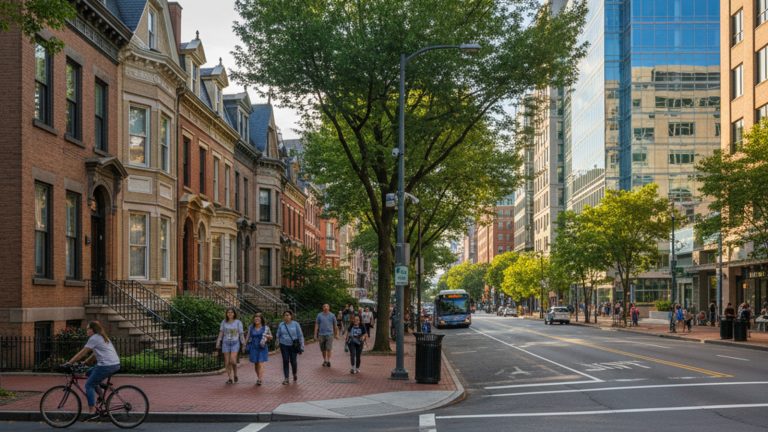

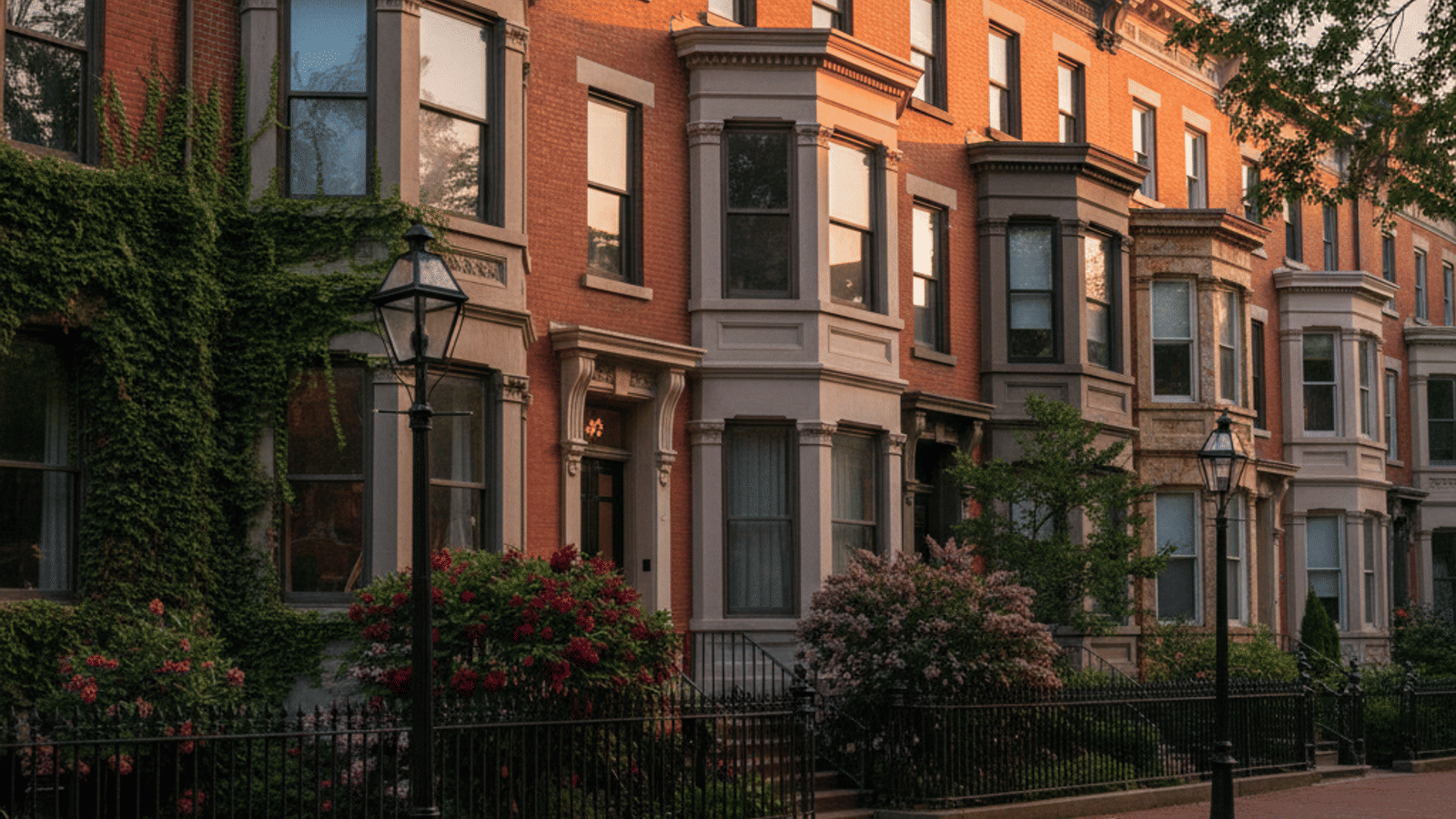
If you are thinking about moving to Washington DC, Living in Logan Circle is likely already on your radar. It is one of the District’s most desirable zip codes, famous for its stunning Victorian architecture and the bustling nightlife along the 14th Street Corridor. But as any local will tell you, living in the center of the action comes with a premium price tag.
Life here is defined by convenience—locals boast about a “Walk Score of 98” where everything from high-end groceries to spin classes is just steps away. However, figuring out if you can afford it goes beyond just looking at the sticker price of a home. While housing is certainly the biggest line item, “lifestyle inflation” (think impromptu dinners and boutique fitness classes) plays a major role in the total cost of living here.
Let’s break down the real numbers for 2026 so you can decide if Logan Circle fits your budget.
Housing Costs: Renting vs. Buying in Logan Circle
Whether you are looking to sign a lease or a deed, housing expenses in Logan Circle are significantly higher than the national average—and higher than many other parts of the District. The market here is split between modern luxury condos and historic rowhomes, and both demand a serious financial commitment.
The Rental Market
If you are planning on renting in DC, expect to pay for the privilege of location. As of early 2026, Logan Circle rents are roughly 40% higher than the national average.
- Studios: These are popular with young professionals and typically range from $1,800 to $1,900 per month.
- One-Bedrooms: The standard for couples or solos wanting more space usually lands around $2,500 per month.
- Two-Bedrooms: If you need a home office or a roommate setup, prices jump significantly, averaging around $3,600 per month.
The Sales Market
For buyers, the inventory tells a tale of two cities: sleek, glass-walled condos and multi-story Victorian rowhouses. Recent data from late 2025 shows the median home sold price hovering around $860,000. However, that number is heavily skewed by one-bedroom condos. If you have your heart set on one of those beautifully restored luxury rowhomes, you are likely looking at an entry point exceeding $1.6 million to $1.8 million.
Don’t Forget the HOA Fees
This is the hidden cost that catches many first-time home buyers in DC off guard. In Logan Circle, Condo and HOA fees are substantial.
- New Buildings: You pay for the concierge, the rooftop pool, and the elevators.
- Historic Buildings: You pay for the maintenance of 100-year-old brick and roofs.
Regardless of the building type, you should budget between $400 and $800+ per month just for these fees.
Monthly Utilities and Connectivity
Once you have secured a roof over your head, you need to keep the lights on. Utility costs in Logan Circle can vary wildly depending on the age of your building.
If you buy or rent in a LEED-certified condo along 14th Street, your insulation is modern, and your bills will likely be lower. Conversely, if you choose a charming, unrenovated Victorian rowhouse, you might find it drafty in the winter and harder to cool in the summer. On average, most residents spend between $200 and $275 per month for combined electric, water, and gas.
Connectivity is excellent here, as you would expect in a tech-forward city. Gigabit internet is standard in most buildings, typically costing $70 to $80 per month.
Food, Dining, and Lifestyle Expenses
This is the category where your budget can easily drift off track. Living in Logan Circle means you are surrounded by some of the best restaurants and bars in the city. The temptation to dine out is constant, and it constitutes a “lifestyle premium” you have to account for.
The Grocery Bill
The neighborhood hub is undoubtedly the P Street Whole Foods. While convenient, it—along with other local options—contributes to a DC Grocery Index that is roughly 114.1 (about 14% higher than the national average). If you cook at home, you are paying city prices for ingredients.
Dining Out
The 14th Street corridor is a dining destination for the entire region. A casual dinner for two with drinks at a popular spot can easily run $100 to $150. If you grab coffee every morning and happy hour twice a week, your discretionary spending will rise sharply compared to quieter neighborhoods.
Transportation: Metro, Parking, and Car-Free Living
One of the financial benefits of living in Logan Circle is that you legitimately do not need a car. This is a “Walker’s Paradise,” and many residents choose to forgo vehicle ownership entirely to save money.
Public Transit
You have walkable access to multiple Metro lines. You can catch the Green and Yellow lines at Mt Vernon Square or Shaw, or grab the Blue, Orange, and Silver lines at McPherson Square. For 2026, fares have remained stable, with a base fare around $2.25 and a maximum of roughly $6.75 depending on distance.
The Cost of Cars
If you do bring a car, prepare for the parking headache. Street parking requires a Zone 2 Residential Parking Permit (RPP). While the permit itself is cheap—$50 for the first car—finding a spot after 6:00 PM is a competitive sport.
To avoid the stress, many residents rent a private garage spot. In this neighborhood, a dedicated parking space is a luxury asset that rents for $200 to $300 per month.
Childcare and Education Costs
For households with young children, childcare is often the second largest expense after housing. It is important to be realistic: Washington DC has some of the highest childcare costs in the nation.
Waitlists for top-tier local centers can be long, and securing a spot is competitive. For infant center-based care, you should budget between $2,200 and $2,700 per month (that’s $26,000 to $32,000 per year).
However, there is a significant financial relief valve: DC’s public pre-K system. The city offers universal PK3 and PK4, which can save families tens of thousands of dollars once their children reach three years old, assuming they secure a spot in a local school.
Taxes: Property and Income Considerations
When calculating affordability, you have to look at the taxes that come out of your paycheck and your bank account.
- Property Tax: DC has a relatively low residential property tax rate of $0.85 per $100 of assessed value. However, because property values in Logan Circle are high, the actual dollar amount you pay will still be significant.
- Income Tax: The District uses a progressive income tax structure. High earners often pay more here than they would in neighboring Virginia.
- Sales Tax: The general sales tax is 6%, but be aware that the tax on restaurant meals and alcohol is higher (typically 10%), which adds up if you frequent the bars on 14th Street.
Neighborhood Comparison: Logan Circle vs. The Neighbors
If you are on the fence, it helps to compare Logan Circle to its immediate neighbors.
- Vs. Dupont Circle: Dupont is historic and established. Rents are comparable, but Logan Circle often commands a slight premium for rentals because the inventory is newer and features more modern luxury amenities. Dupont tends to have more older, boutique units.
- Vs. Shaw: Shaw offers a “grittier,” cooler vibe and is arguably the nightlife capital of the moment. Rents in Shaw can be slightly lower, though the gap is closing fast as development spreads east.
- The Verdict: Choose Logan Circle if you prioritize modern condo amenities and being in the absolute geographic center of the lifestyle corridor.
Sample Monthly Budgets for Logan Circle Residents
To help you visualize the total cost, here are three estimated monthly budgets for different household types living in Logan Circle.
The Single Professional
- Scenario: Rents a studio, uses the Metro (no car), cooks at home mostly but enjoys weekend nightlife.
- Estimated Monthly Total: $3,500 – $4,200
The Power Couple
- Scenario: Owns a luxury 1-bedroom condo, owns one car with a garage spot, dines out frequently on 14th Street.
- Estimated Monthly Total: $6,000 – $7,500
The Young Family
- Scenario: Rents a 2-bedroom apartment, one child in daycare, moderate dining out.
- Estimated Monthly Total: $10,000+ (Heavily dependent on childcare costs)
FAQs
Yes, Logan Circle is consistently one of the most expensive neighborhoods in Washington DC. The combination of historic charm, new luxury construction, and a prime location drives up both real estate prices and daily living costs.
As of 2026, you can expect to pay approximately $2,500 per month for a one-bedroom apartment. Prices can go significantly higher for units in luxury buildings with amenities like pools and concierges.
No, you do not need a car. With a Walk Score of 98 and easy access to multiple Metro lines, most daily errands and commutes can be done on foot or by transit. Going car-free is the single best way to lower your cost of living here.
It depends on the building. Newer condos often have lower energy bills due to modern efficiency standards, while historic Victorian rowhomes can be drafty and more expensive to heat and cool, pushing bills toward the $275/month range.
Condo fees (HOA fees) are a major factor here, typically ranging from $400 to $800 per month. Always check if the fee covers utilities and amenities, or if it is strictly for building maintenance and reserves.