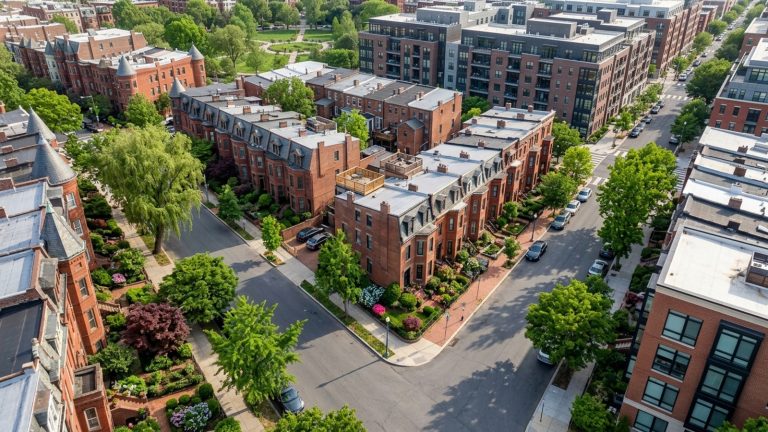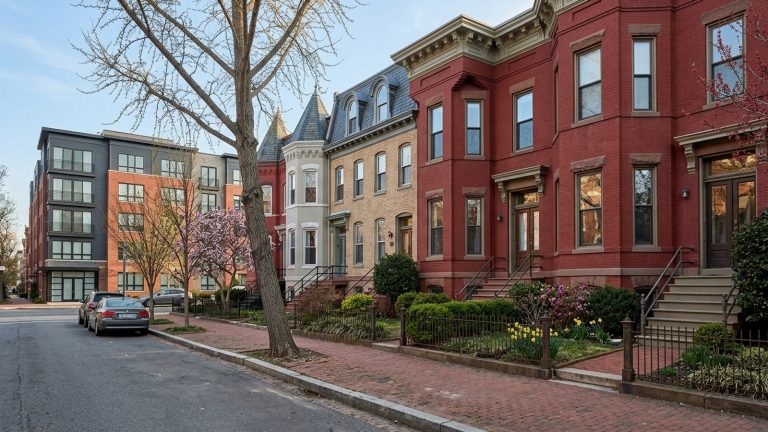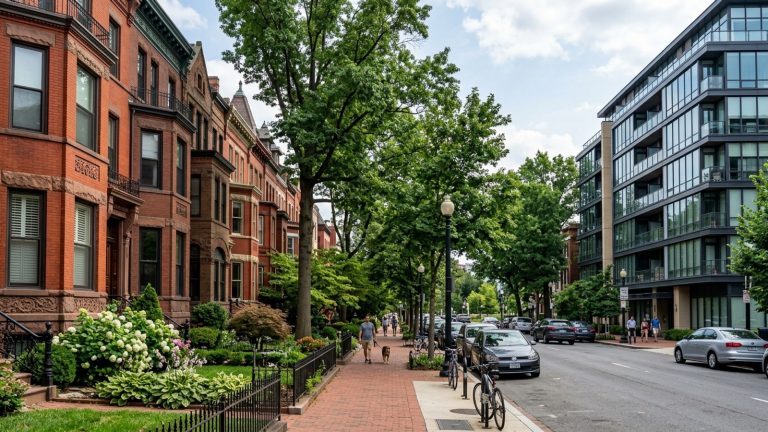

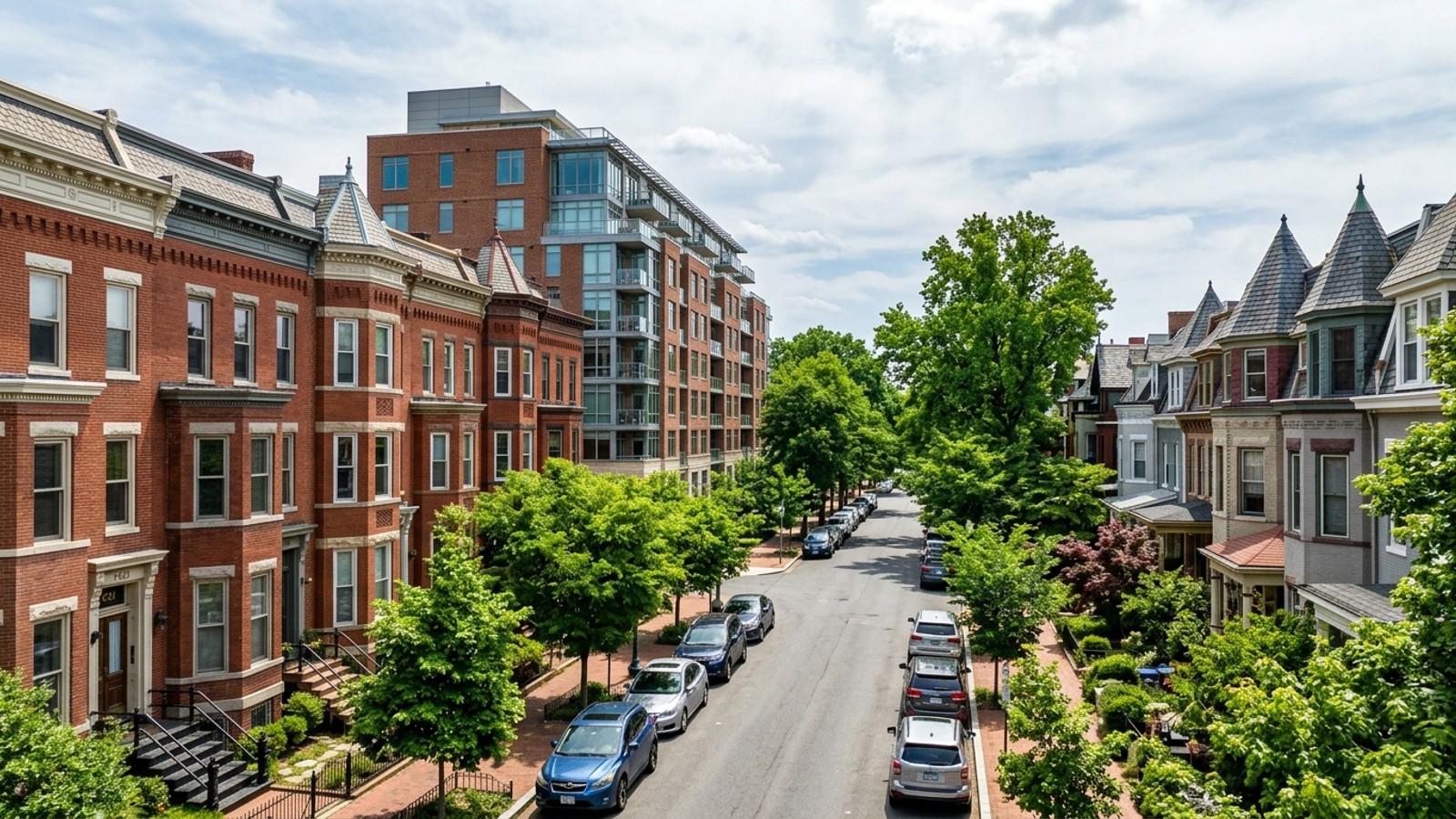
Logan Circle sits just blocks from downtown Washington, DC, anchored by the historic traffic circle at the intersection of 13th and P Streets NW. You’ll find a mix of Victorian rowhouses and newer condo developments here, and the draw for most buyers weighing the pros and cons of living in Logan Circle, DC is the same: immediate access to the 14th Street commercial corridor without sacrificing the feel of an actual neighborhood.
Before you start touring properties, you should understand what you’re walking into. The mid-2026 median home price hovers around $814,700, and the market has its own rhythms around inventory, property taxes, and transit. The walkability is real – but so is the competition for a limited number of homes.
Location and Geography of Logan Circle, DC
The neighborhood covers roughly 0.22 square miles in the northwest quadrant of Washington, DC. The 2020 Census recorded a population of 14,403 across the combined tracts covering the area – that works out to about 64,878 people per square mile, which gives you a clear picture of what “urban density” actually means here. Other estimates that define the core neighborhood more narrowly put the population closer to 10,016 residents.
County Designations for the District
If you’re coming from a state where you’d automatically know your county for tax records and property filings, this part trips people up. Washington, DC functions as a county-equivalent entity, meaning the District of Columbia serves as both the city and the county for all administrative purposes.
There’s no separate county body to deal with. Property records, tax assessments, and local government services all run through the DC government – full stop.
Proximity to Job Centers and Metro Lines
Logan Circle puts you within easy reach of professional hubs like Foggy Bottom and cultural venues near the Kennedy Center. Most buyers I talk to assume there’s a dedicated Metro stop here – there isn’t. You’re looking at a 10 to 15-minute walk to Dupont Circle, U Street, or McPherson Square stations, which between them cover all six Metro lines serving the region.
That said, most people find it a non-issue once they’re actually living here.
Local ZIP Codes
The primary ZIP codes are 20001, 20005, and 20009. Depending on where you draw the neighborhood lines, 20036 sometimes gets pulled in as well. This matters more than it sounds – you’ll need the right ZIP when setting up utilities, comparing auto insurance rates, or filtering property searches online.
Daily Life in Logan Circle, DC
The circle itself is worth knowing about: it’s the only major circle in the city entirely composed of residential properties. One block away, 14th Street delivers a dense run of restaurants, bars, and boutiques. That combination – quiet residential streets feeding directly into a walkable commercial strip – is what most buyers are actually paying for.
The tradeoffs are real, though. Higher housing costs, limited street parking, and smaller lot sizes come with the territory. If you’re expecting a yard, most of the condo inventory will disappoint you, and association fees need to be part of your budget math from day one.
Weighing the Pros and Cons
The case for Logan Circle is straightforward: grocery stores, fitness centers, and restaurants are within a few blocks, and you can handle most daily errands on foot or by bike. You don’t need a car the way you would in other parts of the metro area.
The case against is equally straightforward. Smaller spaces, shared walls, and monthly HOA fees are the norm rather than the exception in a market where condos make up a large share of available inventory.
Public Schools Serving the Area
The District of Columbia Public Schools (DCPS) system serves the neighborhood. For younger students, the local options include Ross Elementary School and Seaton Elementary School. Ross Elementary holds an A grade from Niche and carries a 9:1 student-teacher ratio. For high school, Benjamin Banneker High School also holds an A Niche grade and operates with a 16:1 student-teacher ratio.
Cost of Living in Logan Circle, DC
Housing is going to be your biggest number. In mid-2026, the median sale price sat at approximately $814,717 – down a minor 2.1% year-over-year. Homes are spending a median of 53 days on the market, and the average sale-to-list ratio is 99.5%. With roughly 171 homes in available inventory and 6.9 months of supply, you have options, but you still need to be ready to move when the right property surfaces.
Home Prices and Property Taxes
About 23% of homes sold here close above asking price. You’ll find a mix of higher-priced historic rowhouses and a range of condo options – the spread is wider than the median suggests.
On the tax side, the 2026 residential property tax rate for Class 1 properties in DC is $0.85 per $100 of assessed value. The city assesses real property at 100% of estimated market value, which translates to an effective rate of roughly 0.56% to 0.61% – well below the national average of about 0.91% to 1.07%.
Renting an Apartment Downtown
RentCafe reports the average rent for an apartment in Logan Circle at $2,536 per month. Studios averaging 462 square feet rent for about $1,952. One-bedroom units averaging 654 square feet run around $2,540.
The numbers climb from there. Two-bedroom units averaging 1,005 square feet rent for $3,673, and three-bedroom units averaging 1,490 square feet come in at approximately $4,182. Some sources report higher averages – $2,624 to $3,242 – depending on how they draw the neighborhood boundaries.
Crime Data and Neighborhood Layout
Any honest conversation about Logan Circle includes crime data, and the honest answer is that the data doesn’t all point the same direction. AreaVibes reports crime rates 122% higher than the national average, with violent crime 33% higher, though it also notes the area is safer than 62% of DC neighborhoods. Homes.com gives the neighborhood a crime score of 4, putting it on par with the average U.S. neighborhood. The Metropolitan Police Department reported double-digit decreases in local property and violent crime through the first half of 2026, with package theft and vandalism ranking as the most commonly reported issues.
Read the sources, but don’t let any single number make the decision for you.
Housing Styles Along the Circle
The residential streets radiating from the historic circle are lined with Victorian rowhouses, a significant number of which have been converted into multi-unit condos. The blocks immediately around 13th and P Streets NW tend to feel quieter than the main commercial avenues.
Properties directly facing the circle command a premium. You’re paying for the address and the facade – and yes, many of them have been fully modernized inside while keeping their historic exteriors.
Living Near the 14th Street Corridor
14th Street is the commercial spine of the neighborhood. Closer to it means more foot traffic, street noise, and immediate access to retail and dining. Buyers who prioritize walkability tend to focus on the blocks between 14th and 15th Streets. Those who want a slightly quieter environment look east toward 13th and 12th Streets.
It’s a meaningful difference. Worth spending time on both sides before you settle on a search area.
Dining and Entertainment Options
The density of amenities here is one of the things that makes Logan Circle genuinely different from most of the metro area. You can go weeks without needing to drive anywhere for food, coffee, or a night out. For a lot of buyers, that’s not a minor convenience – it’s the whole point.
Restaurants Along 14th Street
The dining options along 14th Street run from casual cafes to higher-end restaurants, with dozens of choices on the blocks between N Street and U Street. Bakeries, coffee shops, and international restaurants are all walkable from most addresses in the neighborhood. It’s a destination for people across the city, not just residents.
Local Events and Activities
The neighborhood gives you access to cultural venues near the Kennedy Center and the U Street corridor, plus local art galleries and independent theaters in the surrounding blocks. Regular farmers markets and seasonal neighborhood gatherings round out the calendar. The Dupont Circle and McPherson Square areas also host community events throughout the year.
Where to Stay While Scouting the Area
If you’re flying in to tour properties, stay in the neighborhood rather than defaulting to something downtown near the Mall. You’ll get a much better read on commute times, evening noise levels, and the general feel of the streets you’d actually be living on.
Hotels in Downtown Logan Circle, DC
There are boutique hotels in downtown Logan Circle, DC located directly on or just off 14th Street. They put you in the middle of things – easy walking distance to open houses, property showings, and the dining and retail you’d be evaluating anyway. The foot traffic and street activity you experience from a hotel here is roughly what you’d experience as a resident.
Nearby Lodging Options
If you’d prefer a larger, more traditional hotel, the adjacent neighborhoods of Dupont Circle and Thomas Circle have options. The walk back into Logan Circle from either area is short enough that you’ll also be testing the neighborhood connectivity firsthand – which is worth something.
Frequently Asked Questions
What is the average cost to buy a historic rowhouse versus a condo in Logan Circle?
The median sale price for all home types in Logan Circle is roughly $814,717. The available market data doesn’t break that down separately for historic rowhouses versus condos, but both are represented in the current inventory.
How quickly do homes typically go under contract in the Logan Circle real estate market?
Homes spend a median of 53 days on the market. About 23% of properties sell above their asking price.
How does buying a home in Logan Circle compare to neighboring Dupont Circle or Shaw?
Specific price comparisons for Dupont Circle or Shaw aren’t available in the data here. What I can tell you is that Logan Circle carries a median home price of about $814,717, and residents are a 10 to 15-minute walk from the Dupont Circle Metro station.
What public schools serve the Logan Circle area?
The neighborhood is served by District of Columbia Public Schools (DCPS). Local options include Ross Elementary School, Seaton Elementary School, and Benjamin Banneker High School.