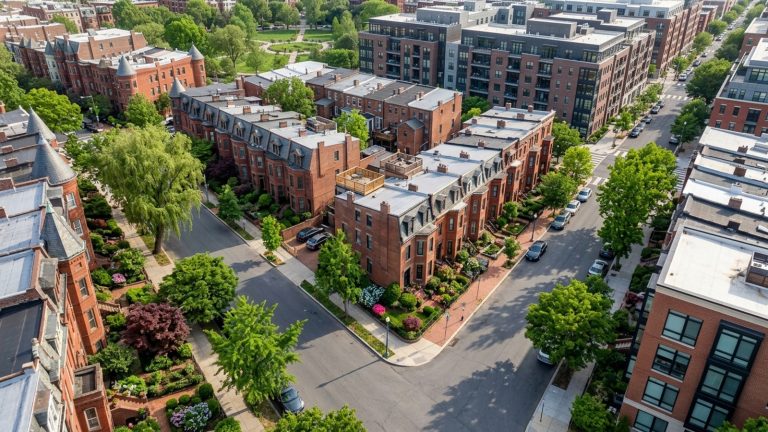

Logan Circle sits in the heart of Northwest Washington, DC, defined by its blend of historic residential blocks and dense commercial avenues. The neighborhood boundaries generally stretch from 15th Street to 10th Street NW, with M Street to the south and S Street to the north. Buyers looking at this area often weigh the quiet, tree-lined side streets against the immediate proximity to the 14th Street corridor.
The cost of housing here reflects the central location and high density of amenities. Most residents do not rely on a car for daily errands, as grocery stores, restaurants, and transit options are concentrated within a few blocks.
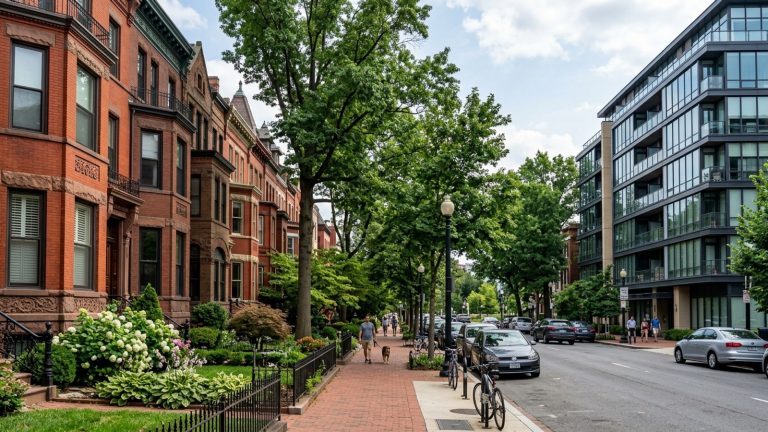
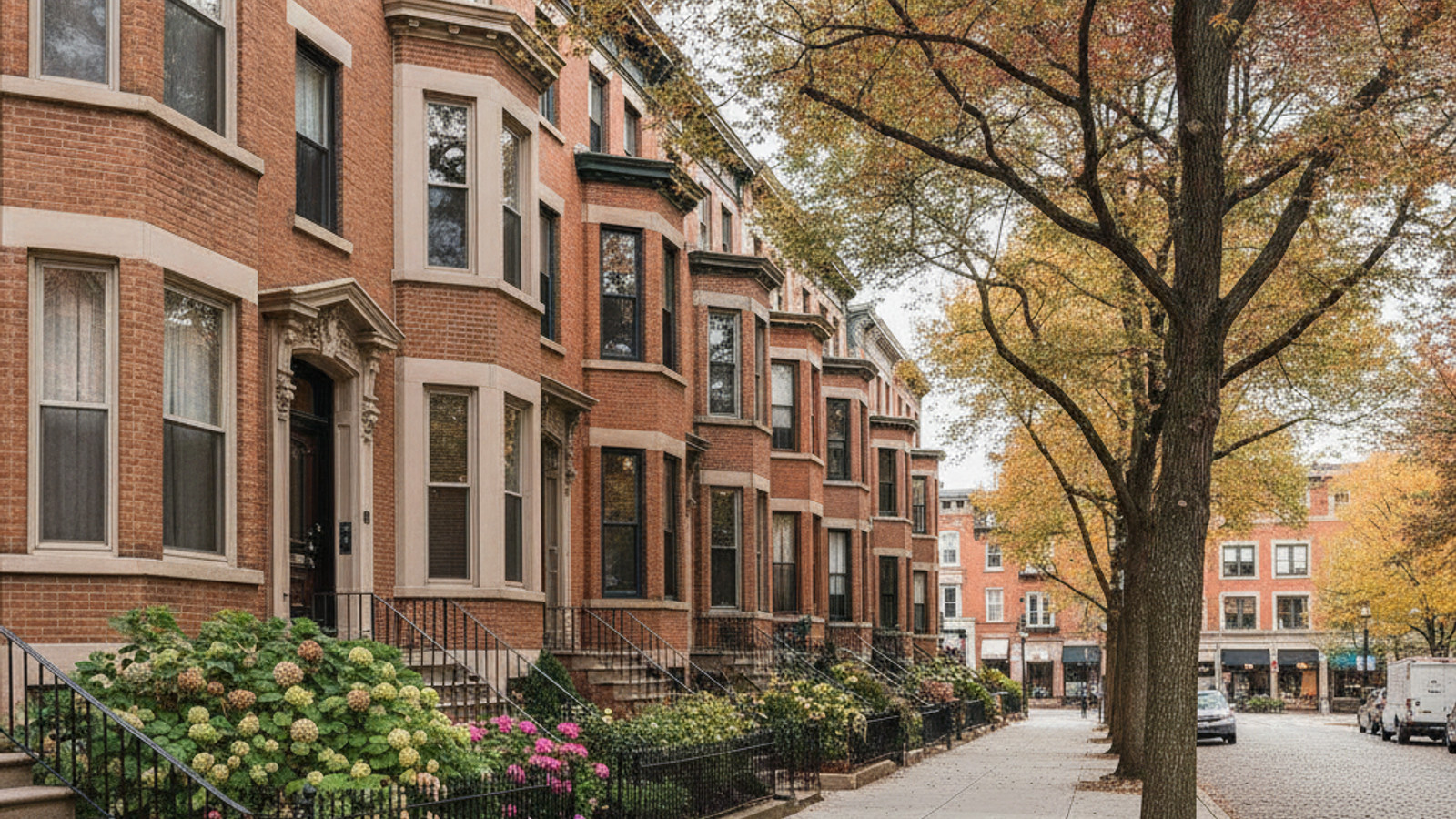
The neighborhood offers a distinct split in daily experiences depending on which street you choose. The blocks directly off 14th Street NW keep you in the center of the commercial action, with immediate access to nightlife and dining. Moving just two blocks east toward 11th Street NW shifts the environment entirely, replacing storefronts with continuous rows of historic brick facades.
Current Home Prices and Property Types
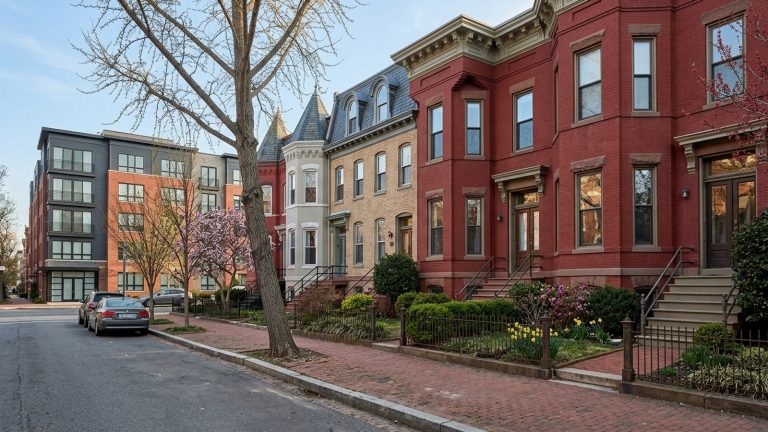
The median home sale price in the area sits between $725,000 and $860,000 based on May 2026 data. Buyers will primarily find a mix of older Victorian rowhouses and newer condominium buildings. This stark split in property types explains the wide gap in average pricing across the neighborhood.
Condos make up the bulk of the available inventory, with prices typically landing in the low-to-mid $600,000s for a standard one-bedroom or two-bedroom unit. These buildings cluster along 14th Street NW and Rhode Island Avenue. Many of these developments offer modern conveniences, such as concierge services, rooftop decks, and small fitness centers.
Historic rowhouses command a much higher premium, often selling between $1,000,000 and $1,500,000 or more depending on square footage and updates. These multi-story homes feature distinct architectural details like bay windows, exposed brick, and deep front gardens. Homeowners in the District of Columbia pay the Class 1 residential property tax rate, which is $0.85 per $100 of assessed value.
Buyers purchasing a condo should factor monthly association fees into their overall housing budget. These fees cover exterior maintenance, trash removal, and the upkeep of shared spaces like lobbies and elevators. Older buildings often have higher monthly dues to cover aging infrastructure, while newer developments charge a premium for extensive amenities.
Metro Access and Daily Commutes
Most commuters living in Logan Circle, Washington, DC walk to one of three nearby Metro stations. The Mt. Vernon Square/7th St-Convention Center and Shaw-Howard University stations provide access to the Green and Yellow lines. On the western side of the neighborhood, the Dupont Circle station connects riders to the Red line.
A typical Metro ride to Capitol Hill takes about 10 minutes once you board the train. Dedicated bike lanes run along 14th Street and 15th Street, connecting the neighborhood to the National Mall and surrounding business districts. Reaching downtown DC employment centers is often faster on foot or by bicycle than taking the train.
Several major bus lines also cut through the area, providing north-south transit along 14th Street and 11th Street. The 52 and 54 bus routes run frequently, offering an alternative to the Metro for trips toward the National Mall or up to Columbia Heights. These surface transit options provide connections between the underground train stations.
Capital Bikeshare docks are scattered throughout the neighborhood, offering a reliable alternative to owning a personal bicycle. Residents who commute by car often face traffic congestion during peak hours, especially around the main traffic circle. Street parking is limited, and many condo buildings charge an additional monthly fee for a reserved garage space.
Groceries, Dining, and Entertainment Along 14th Street
The 14th Street corridor serves as the primary commercial spine for the neighborhood. Residents have immediate access to major grocery stores, including a Whole Foods Market on P Street NW and a Trader Joe’s directly on 14th Street NW. This concentration of food access makes completing weekly errands possible without leaving the immediate area.
Dozens of restaurants, cafes, and bars line the blocks between Thomas Circle and U Street. The dining options range from casual corner spots to upscale dinner venues, drawing patrons from across the city. This corridor stays active well into the evening, providing a constant flow of foot traffic along the main avenues.
During the day, the neighborhood supports a strong coffee shop culture. Independent cafes and bakeries serve as casual meeting points and remote workspaces for residents. This daytime activity ensures the commercial blocks remain populated and active well before the dinner service begins at local restaurants.
Local performance venues add to the entertainment options within walking distance. The Studio Theater hosts contemporary plays, while the Black Cat remains a staple for live music and independent bands. These venues sit right alongside boutique shops and retail storefronts, creating a dense, mixed-use environment.
Green Spaces and the Historic Traffic Circle
The neighborhood takes its name from the large traffic roundabout at the intersection of 13th Street, P Street, Rhode Island Avenue, and Vermont Avenue. At the center sits a large equestrian statue of Civil War General John Logan, surrounded by paved paths and open grass. This park serves as the primary outdoor gathering space for the immediate blocks.
Residents frequently use the circle for dog walking, reading, and casual recreation during the warmer months. The mature tree canopy provides extensive shade, making it a comfortable spot even during the humid DC summers. The surrounding Victorian homes face directly onto the park, maintaining the historic character of the original 19th-century design.
Beyond the main circle, the residential side streets feature wide sidewalks and continuous rows of mature trees. Several smaller community centers and pocket parks sit within a ten-minute walk, offering playgrounds and outdoor basketball courts. These spaces provide a break from the concrete and asphalt of the nearby commercial strips.
Residents also benefit from the close proximity to Dupont Circle, located just a short walk to the west. This neighboring park provides additional green space, a year-round farmers market, and a different set of community events. The ability to easily walk between these two distinct public squares expands the outdoor options for local homeowners.
Local Public School Boundaries
Addresses within the neighborhood boundary primarily feed into Garrison Elementary School for early education. From there, the standard public school feeder pattern routes students to Cardozo Education Campus for middle and high school. Both facilities are located within a short distance of the main residential blocks.
The District of Columbia also operates a robust public charter school network alongside the traditional boundary system. Families can apply to these specialized programs through the My School DC lottery system. This lottery allows residents to seek out specific curriculums or language immersion programs outside their immediate neighborhood zone.
Buyers looking at specific addresses should always verify the current boundary lines directly with DC Public Schools. The borders can shift, and verifying your exact street address ensures you know the default enrollment options before making an offer.
Most students living in the area can walk to their boundary schools or take a short bus ride. The dense urban layout means that school commutes are typically brief, avoiding the long highway drives common in suburban districts. Parents should review the safe passage routes mapped out by the city to find the best walking paths to each campus.
Frequently Asked Questions
What is the crime rate in Logan Circle DC?
The DC Metropolitan Police Department categorizes this area within the Third District, which sees a mix of property and violent crime typical of dense urban environments. Property crimes, such as package theft and auto break-ins, account for the vast majority of reported incidents here. Buyers should review the city’s online crime map for specific block-by-block statistics from 2026.
Is Logan Circle walkable?
The neighborhood scores well for pedestrian access, with flat, paved sidewalks connecting all major amenities. You can walk from the residential side streets to Whole Foods, the 14th Street corridor, and multiple Metro stations in under 15 minutes. Most daily tasks do not require a car.
What kind of neighborhood is Logan Circle in DC?
It is a high-density, mixed-use area that balances historic architecture with modern commercial development. The side streets feature quiet rows of 19th-century homes, while the main avenues offer constant restaurant and retail activity. It appeals to buyers who want immediate access to downtown amenities without maintaining a personal vehicle.