
If you are looking into moving to Washington DC, you’ve almost certainly circled these two neighborhoods on your map. Logan Circle and the U Street Corridor aren’t just neighbors; they are arguably the two most dynamic centers of gravity in the District right now.
Choosing between them can be confusing because they blend together so seamlessly. If you are walking north up 14th Street, you might cross from the high-end retail of Logan Circle into the jazz-club energy of U Street without even realizing you’ve crossed a border. However, for a resident, the daily experience is distinct. Logan Circle is the sophisticated, historic “it” neighborhood, while U Street is the energetic, cultural heartbeat known historically as “Black Broadway.”
Deciding where to sign a lease or buy a condo often comes down to two specific factors: your tolerance for noise and your budget for buying. Let’s break down the real differences.
Lifestyle & Vibe: Historic Charm vs. Electric Energy
While these neighborhoods share a border, the atmosphere changes the moment you step off the main avenues.
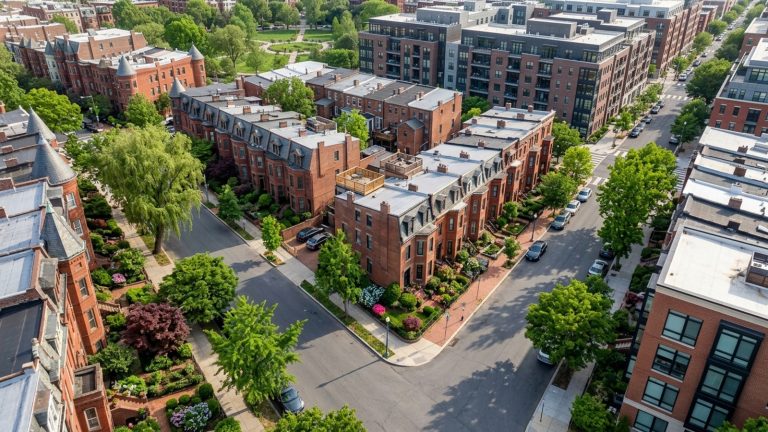
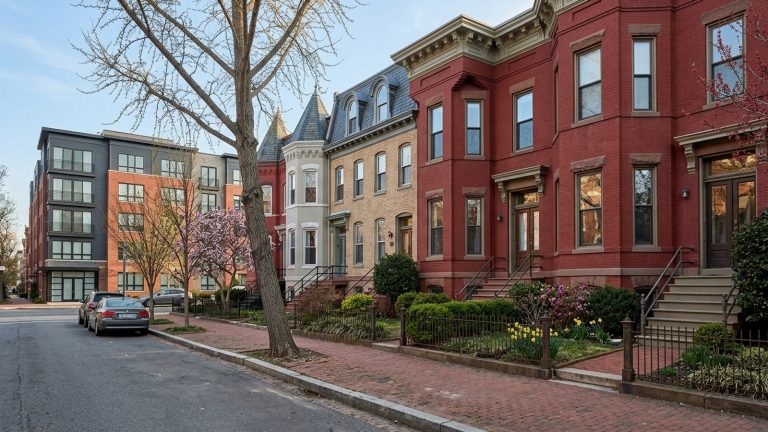
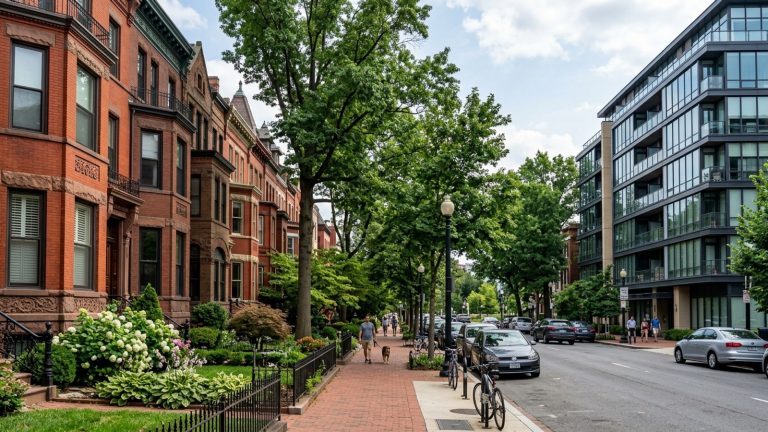
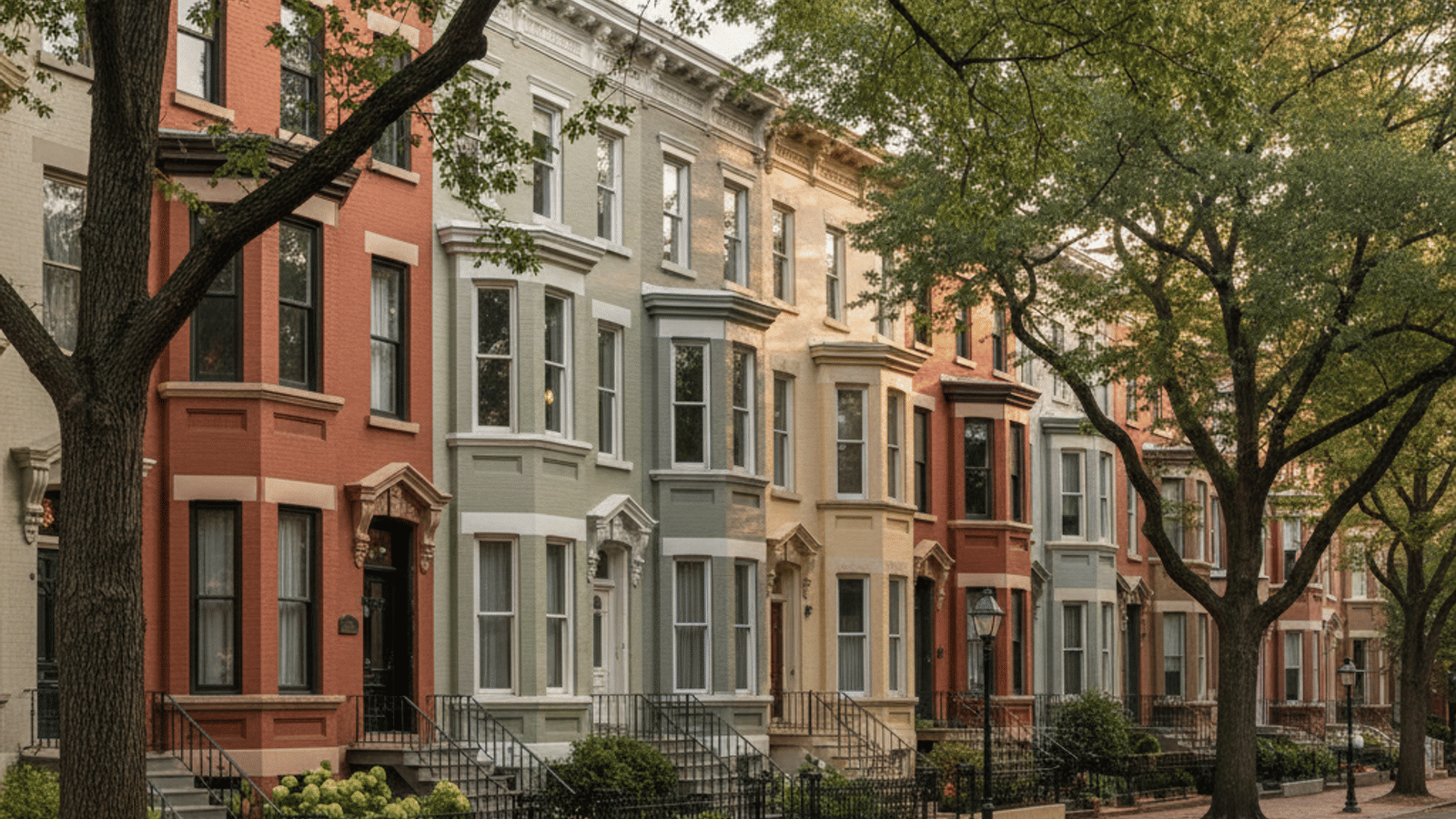
Logan Circle tends to feel more polished and chic. It is famous for its namesake traffic circle—the only one in the city that remains purely residential—where you will see residents picnicking, walking dogs, and reading on benches. The side streets are lined with imposing, immaculate Victorian rowhouses. It’s a place where the vibe is “Sunday morning brunch” all week long. The crowd here is often a mix of long-term residents and young professionals who want to be near the action but not necessarily in the noise.
U Street, on the other hand, is gritty, creative, and loud in the best way possible. This area has deep roots in jazz history and African American culture, anchored by landmarks like the African American Civil War Memorial and the Lincoln Theatre. The energy here is undeniable. The streets stay busy late into the night, and there is a sense of constant motion. It appeals to residents who want to feel the pulse of the city the moment they walk out their front door.
The “14th Street” Connection
It is impossible to talk about these two without mentioning 14th Street. Think of this corridor as the spine connecting them. The southern end (Logan’s turf) is dominated by high-end interior design shops like West Elm and upscale dining. As you move north past T Street (U Street’s turf), the retail shifts toward vintage shops, fast-casual eateries, and music venues.
Cost of Living: Renting and Buying Breakdown
When I sit down with clients, this is where the conversation usually gets interesting. There is a fascinating disconnect between the rental market and the purchase market in these two areas.
The Buying Market
If you are planning on buying a home in DC, Logan Circle is significantly more expensive. It is an established, premier market. As of 2026, the median sold price for homes in Logan Circle hovers between $825K and $850K. You are paying a premium for the Victorian architecture and the address prestige.
U Street offers a much more approachable entry point, especially for first-time buyers looking for condos. The median sold price here sits closer to $610K–$650K. The inventory is different, too; while Logan has grand rowhomes, U Street offers a mix of historic shells, new “industrial-chic” lofts, and classic pre-war buildings that tend to be slightly smaller but more affordable.
The Rental Market
Surprisingly, rents are comparable. You might expect U Street to be cheaper, but high demand for its nightlife and Metro access keeps prices up. In both neighborhoods, an average one-bedroom apartment generally runs between $2,500 and $2,700 per month.
You can find deals in U Street if you look for older walk-up buildings above storefronts. However, if you are looking at the modern luxury buildings with rooftop pools and concierges, the pricing is virtually identical whether you are at 14th & P (Logan) or 14th & V (U Street).
Dining, Nightlife, and Culture
This is usually the tie-breaker for potential residents. Do you prefer a reservations-required dinner or a spontaneous night of live music?
Logan Circle is the city’s dining room. It is a “see-and-be-seen” environment. The crown jewel is undoubtedly Le Diplomate, the French brasserie that is practically a DC institution. The scene here revolves around upscale steakhouses, buzzing wine bars, and patios that are packed from happy hour until closing. Residents here generally have a Whole Foods Market (on P Street) and a Trader Joe’s within walking distance, making the culinary lifestyle easy to maintain.
U Street is the entertainment hub. This is where you go for culture and volume. It is home to legendary venues like the 9:30 Club and the Howard Theatre. The dining scene is more eclectic and casual, famous for Ben’s Chili Bowl and the late-night “jumbo slice” pizza spots that feed the crowds after the bars close. While Logan Circle has national retailers like Sephora and Amazon Fresh, U Street retains a streak of independence with streetwear boutiques and vintage stores.
Commute & Transit Access
If you need to commute to the Pentagon, National Airport, or Downtown, your choice might be made for you based on rail access.
U Street wins on Metro convenience. The U Street/African-American Civil War Memorial/Cardozo station (serving the Green and Yellow Lines) is right in the center of the neighborhood. Having a direct rail shot to the airport or a single-seat ride to L’Enfant Plaza is a massive perk for professionals.
Logan Circle is a “Walker’s Paradise” with a Walk Score of roughly 98, but it lacks its own dedicated Metro station. Residents here usually walk 10–15 minutes to catch the train at U Street, Dupont Circle, or McPherson Square. However, bus access is phenomenal, with the 52 and 54 lines running constantly up and down 14th Street.
A quick note on cars: Parking is notoriously difficult in both neighborhoods. Logan Circle’s residential density makes street parking a daily battle, while U Street’s nightlife restrictions can make it hard to find a spot on evenings and weekends.
Safety, Noise, and Livability
When comparing neighborhood livability, we have to look beyond just the amenities and talk about the daily environment.
Noise Levels U Street is loud. There is no getting around it. Between the bass from the clubs, the street performers, and the crowds on Friday and Saturday nights, it is a high-decibel neighborhood. Logan Circle, by contrast, drops to a whisper once you move one or two blocks away from 14th Street. The side streets feel distinctively residential and calm.
Safety Trends Recent data has favored Logan Circle regarding safety. The area has seen roughly 30% drop in violent crime year-over-year. It tends to feel very “neighborly” after dark.
U Street deals with the challenges that come with high foot traffic and nightlife. Because the streets are packed at 2 AM, there can be more altercations or petty crime. Specifically, theft-from-auto incidents are more common here due to the density of cars parked by visitors visiting the clubs.
The Verdict: Which Neighborhood Suits You?
Both of these neighborhoods offer an incredible urban experience, but they suit different gears of life.
- Choose Logan Circle if: You want a polished, walkable lifestyle and quiet evenings. It is the right move if you have a higher budget for buying and prefer sipping wine on a patio over standing in line for a concert.
- Choose U Street if: You prioritize Metro access and want to be in the center of the music scene. It is the better choice if you are looking for a slightly more affordable condo purchase and enjoy the energy of a city that stays up late.
Frequently Asked Questions
Generally, yes. Recent statistics show that Logan Circle has experienced a significant drop in violent crime (around 30%). While U Street is generally safe during the day, the high density of nightlife crowds late at night can lead to more frequent petty crime and altercations compared to the quieter residential blocks of Logan.
Parking is difficult in both areas, but U Street is often more frustrating for residents due to nightlife visitors taking up spots in the evenings. Logan Circle has extremely tight parking due to density, but it doesn’t have the same influx of transient traffic fighting for residential spots at 10 PM on a Saturday.
It is surprisingly similar. While purchasing a home is much more expensive in Logan Circle, average rents for one-bedroom apartments in both neighborhoods hover between $2,500 and $2,700. You are more likely to find a “deal” in an older building in U Street, but luxury building pricing is standard across both corridors.