
If you are looking into moving to Washington DC and asking locals where the action is, Logan Circle is almost always the first answer. For years, this neighborhood has served as the unofficial headquarters for the city’s young professional crowd. It sits right at the intersection of historic charm and modern hustle, located primarily around the junction of 14th and P Streets NW.
But that popularity comes with a price tag. In 2026, Logan Circle remains one of the city’s most expensive zip codes. So, is the premium worth it? If you are a career-driven millennial or Gen Z professional deciding if you should sign that lease, here is the honest breakdown of life in DC’s trendiest neighborhood.
The Verdict: Is Logan Circle the Best Fit for You?
Let’s cut to the chase: For many young professionals, Logan Circle is the “gold standard” of DC living. If your priority is being in the center of the energy, walking to work, and having the city’s best dining at your doorstep, this is likely where you want to be. It is a neighborhood designed for extroverts and those who thrive on social connectivity.
However, it is not for everyone. The cost of living here is significantly higher than in neighboring areas, and the lack of a direct Metro station within the neighborhood boundaries can be a dealbreaker for some commuters.
This area is generally best for professionals who work downtown and can afford to pay for convenience. If you want a quiet, slow-paced environment, you might find the energy here a bit overwhelming. But if you want to be where the decisions are made and the drinks are poured, Logan Circle is hard to beat.
The Vibe: Where Historic Meets Hype
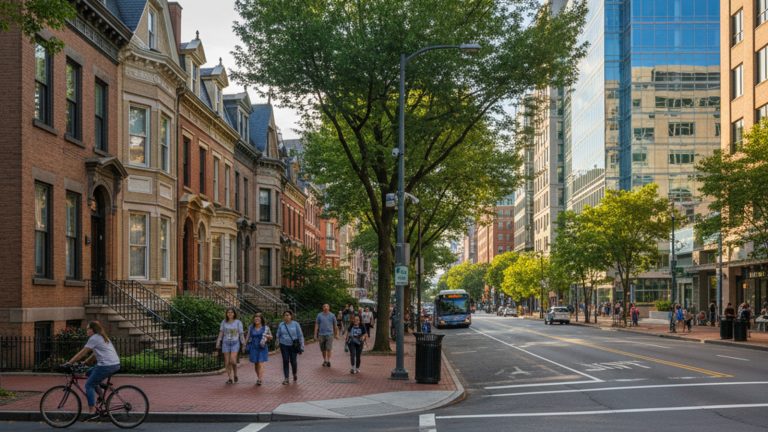
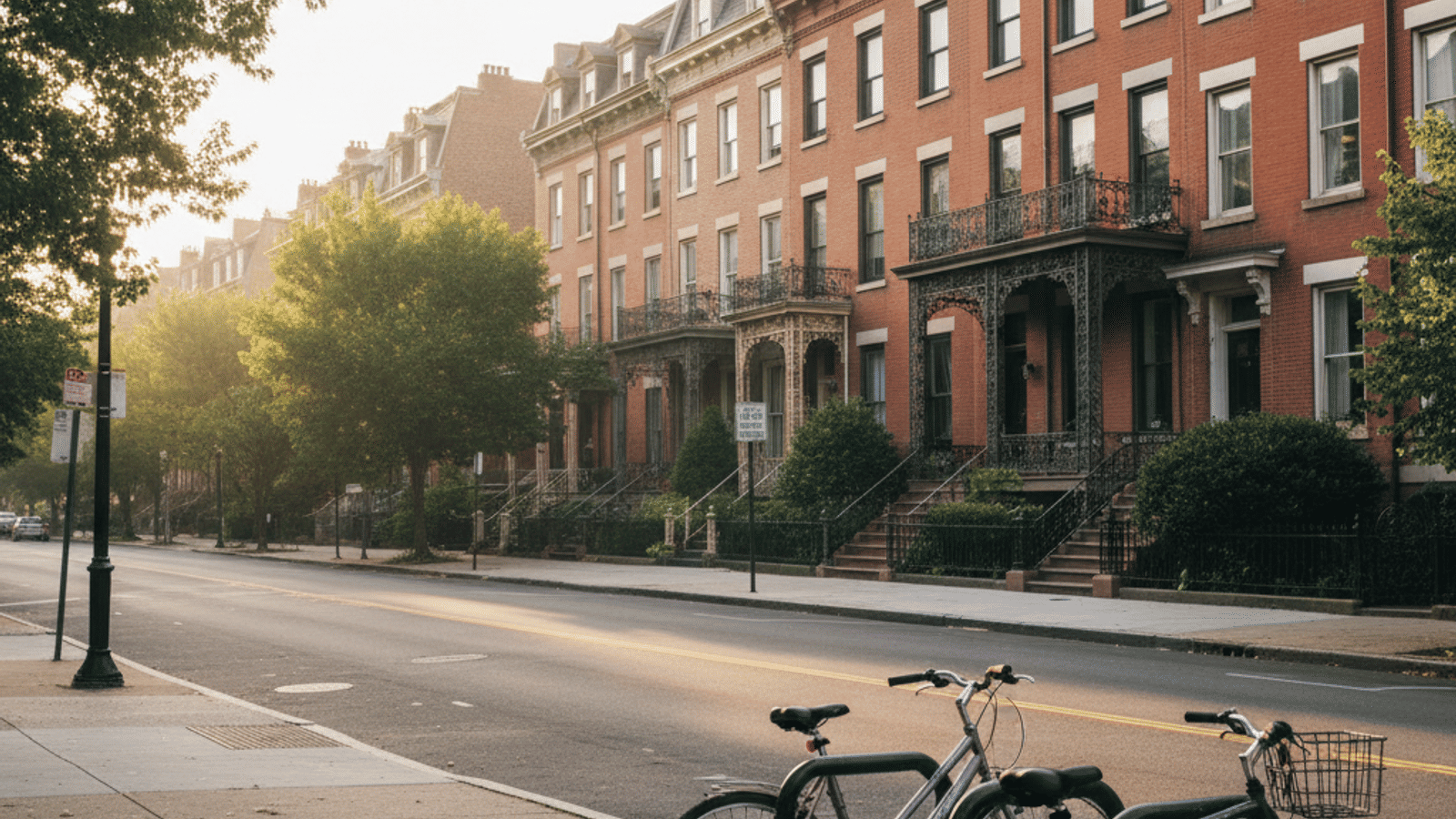
Logan Circle has a distinct atmosphere that blends the old-school capital aesthetic with modern flair. Visually, it is stunning. You have streets lined with beautiful, historic Victorian row houses that look like they belong in a movie set, contrasting sharply with the sleek glass condos rising along 14th Street.
The Circle itself acts as the neighborhood’s communal front yard. On any given evening or weekend, you will see residents picnicking, reading on benches, or catching up with neighbors. It is also incredibly dog-friendly; if you have a pup, the Circle is essentially the social hub for dog owners in the area.
Just a block away, the 14th Street Corridor offers a completely different vibe. This is the main artery for dining, high-end retail, and the “see and be seen” culture. The demographic here is heavily skewed toward young professionals, lobbyists, and political staffers. It is a place where gym clothes are designer, and happy hour is practically a competitive sport.
Cost of Living: Rent and Home Prices in 2026
Living in one of the best neighborhoods in DC requires a healthy budget. As of early 2026, you should expect to pay a premium for the location alone. Competition for updated units is fierce, and “deals” are rare.
If you are looking at the rental market, prepare your monthly budget accordingly. An average updated studio apartment in a managed building usually runs between $1,900 and $2,100 per month. If you need a one-bedroom, you are likely looking at $2,500 to $2,700 per month. These numbers can fluctuate based on amenities, but they set a realistic baseline for the area.
For those looking to buy, the market is a mix of multi-million dollar row homes and modern condos. The median home sale price hovers around $850,000. While that number is skewed by large luxury townhomes, entry-level condos for young professionals generally start around $300,000 for small studios, with decent one-bedrooms often commanding $500,000 or more.
Beyond housing, the everyday cost of living in DC hits hard here. Your grocery runs to Whole Foods or Trader Joe’s, premium gym memberships, and frequent dining out on 14th Street add up quickly. It is a lifestyle neighborhood, and the expenses reflect that.
Commuting: The “No Metro Station” Reality
One of the biggest quirks of Logan Circle is that it does not technically have its own Metro station. For newcomers relying on a DC Metro guide, this looks like a red flag. In reality, it is rarely an issue for the people who live here.
Residents typically walk to nearby stations that ring the neighborhood. McPherson Square (Blue, Orange, and Silver lines), Mt Vernon Square (Green and Yellow lines), and Dupont Circle (Red line) are all about a 10 to 15-minute walk away. You have access to every line in the system; you just have to walk a few blocks to get there.
For many young professionals, the Metro is secondary because of the “walk-to-work” perk. If your office is on K Street or Downtown, your commute is often just a 15 to 20-minute walk. For longer trips, locals rely heavily on the 52 and 54 bus lines that run up and down 14th Street, or they grab a bike from a Capital Bikeshare dock. It is a very easy neighborhood for living in DC without a car.
Amenities & Social Scene: The 14th Street Corridor
The amenities in Logan Circle are tailored specifically to the young professional demographic. The crown jewel of the social scene might surprise you—it’s a gym. VIDA Fitness on P Street is iconic here. With its rooftop pool and lounge, it functions more like a social club than a place to just lift weights. It is a major cultural touchpoint where networking happens between sets.
For food and drink, the options are endless. Le Diplomate remains a landmark French bistro where getting a table is a status symbol. You also have spots like Pearl Dive for seafood and dozens of rooftop bars that pack out during warmer months.
Practical amenities are also solid. You have a Whole Foods on P Street and a Trader Joe’s on 14th Street, making grocery shopping incredibly convenient. During the workday, the coffee culture is strong, with plenty of spaces like Slipstream or The Coffee Bar filled with remote workers and freelancers.
Safety and Urban Living Considerations
When discussing safety, it is important to remember that Logan Circle is a dense urban environment. The general vibe feels safe largely because it is so busy—there are always “eyes on the street” thanks to the heavy foot traffic and outdoor dining scenes.
Statistically, violent crime rates here tend to be lower than the city average, sitting around 6 to 7 incidents per 1,000 residents. However, property crime is a common annoyance. Package theft and car break-ins happen frequently, which is something to keep in mind if you plan to park on the street.
Noise is another factor to consider. Living directly on 14th Street means dealing with ambulance sirens, nightlife crowds, and traffic noise well into the night. If you value silence, you are better off looking for a unit on one of the side streets like Vermont or Rhode Island Avenue, which are significantly quieter while still being steps from the action.
Comparison: Logan Circle vs. Nearby Neighborhoods
If you are still on the fence, it helps to compare Logan to its neighbors.
Logan Circle vs. Dupont Circle: Dupont Circle is more historic and established. It feels a bit more “old money” and has the massive benefit of sitting directly on the Red Line Metro. However, Logan feels trendier and currently has the edge on the dining and restaurant scene.
Logan Circle vs. Shaw: Shaw is rapidly developing and feels a bit grittier and more eclectic. It has direct access to the Green Line and great nightlife, but Logan feels more “finished” and polished. Shaw is often where you go for a wild night out; Logan is where you go for a sophisticated dinner.
Logan Circle vs. U Street: The U Street Corridor is the center of nightlife and history. It is louder, more intense, and vibrant. Logan Circle offers a slightly more upscale, calmer home base, but since they are walking distance from each other, you can easily live in Logan and walk to U Street for concerts and clubs.
FAQs
Do I need a car living in Logan Circle?
No, and most residents prefer not to have one. Parking is notoriously difficult and expensive. Between the walkability, access to nearby Metro stations, and rideshare options, a car is usually more of a burden than a benefit.
Is Logan Circle expensive for renters?
Yes, it is one of the pricier markets in DC. As of 2026, you are paying for the proximity to downtown and the high density of luxury amenities. Expect rents to be at the top end of the city’s average.
How far is the nearest Metro station from Logan Circle?
While there isn’t a station inside the neighborhood, you are surrounded by them. Depending on where you live in Logan, the walk to McPherson Square, Dupont Circle, or U Street stations takes about 10 to 15 minutes.