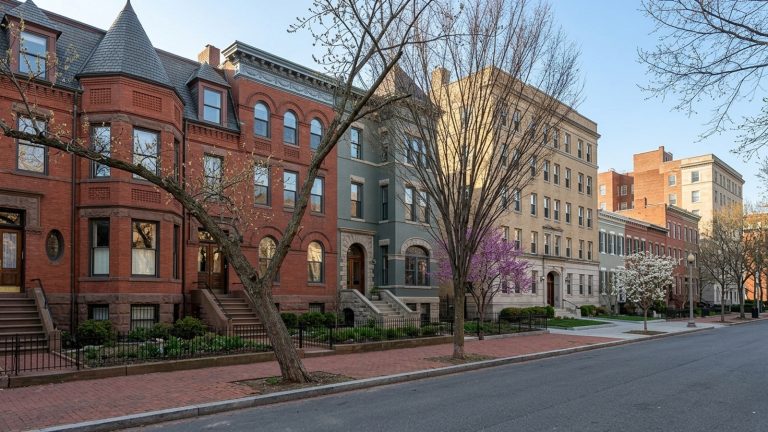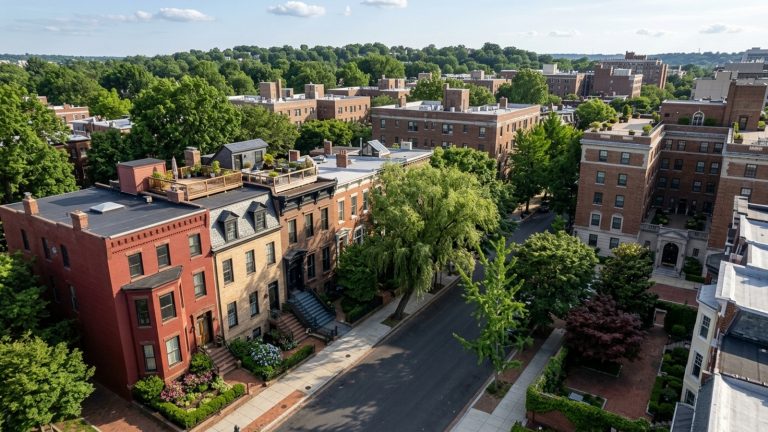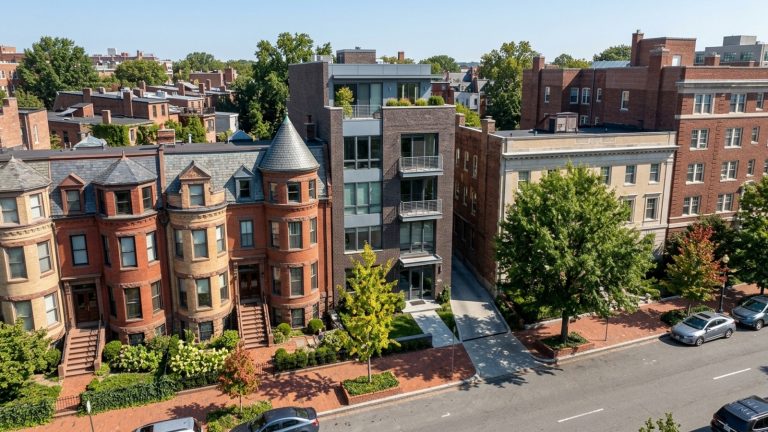

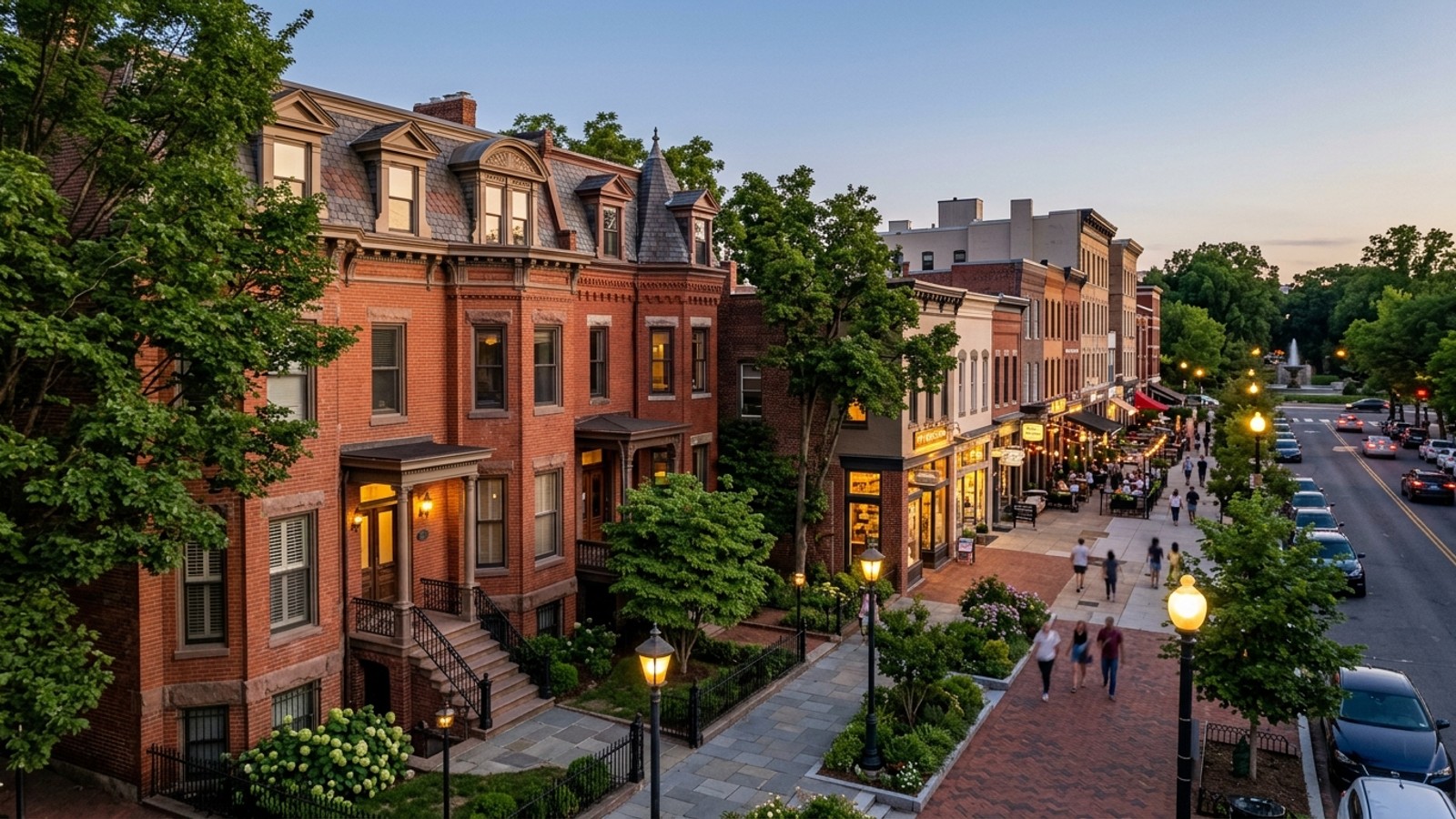
If you’re looking at property, you already know the reputation associated with living in Dupont Circle, DC. Median home prices sit around $540,000, homes are spending roughly 54 days on the market, and buyers keep showing up – because the lifestyle here is genuinely hard to replicate elsewhere in Washington, D.C. Historic architecture, serious cultural institutions, and a restaurant and bar scene dense enough that you rarely need to leave the immediate area. That combination is the whole pitch.
The concentration of dining and entertainment within a compact footprint is the thing that surprises people when they first walk it. From Connecticut Avenue’s main commercial run to the established LGBTQ history along 17th Street NW, nearly everything you’d want for an evening out is within a short walk of where you’d be living.
The Neighborhood Hub: Starting at the Fountain
Everything in Dupont Circle radiates from one point – the Dupont Circle Fountain, formally the Rear Admiral Samuel Francis Dupont Memorial Fountain. It was dedicated in 1921, designed by Henry Bacon, and sculpted by Daniel Chester French. The traffic circle connects Massachusetts Avenue, Connecticut Avenue, New Hampshire Avenue, P Street, and 19th Street NW, so it functions as a literal and social hub for the commercial corridors branching off in every direction.
The National Park Service maintains the central park, which has permanent chess tables and benches that see use well into the evening. Most of the neighborhood’s popular nightlife destinations cluster within a five-block radius of this fountain. That’s a small radius. Residents here don’t commute to their social lives.
Cultural Institutions Before the Evening Starts
Spend enough time in this neighborhood and you’ll notice how naturally the day flows into the night. The Phillips Collection at 1600 21st Street NW is the anchor on that front. Founded by Duncan Phillips in 1921 as America’s first museum of modern art, it holds works by Renoir, Rothko, van Gogh, Picasso, O’Keeffe, and Jacob Lawrence. An afternoon there lines up easily with an early dinner reservation a few blocks away.
Several galleries in the neighborhood also host evening events – First Friday gallery walks and museum late nights among them – which tend to push foot traffic directly toward the dining corridors afterward. The cultural and restaurant scenes here are genuinely connected, not just geographically adjacent.
Nearby green spaces including Mitchell Park, Sonny Bono Memorial Park, P Street Beach, and Kalorama Park round out the daytime picture. Warmer months, you’ll see plenty of people picking up takeout and eating outside.
The Two Main Commercial Corridors
Connecticut Avenue NW is the main shopping street – Brooks Brothers, H&M, and Gap sit alongside local boutiques, and Kramerbooks, the well-known independent bookstore, stays open late and runs its own cafe. A lot of residents use Kramerbooks as a natural anchor point, browsing before or after dinner. The avenue stays active from morning until late at night.
Then there’s 17th Street NW, which is the real dining corridor. This is where you’ll find the streateries, the outdoor setups that keep sidewalks moving, and establishments like Floriana, Dupont Italian Kitchen, and Trio Bistro that have been part of the community long enough to have regulars. Historically, 17th Street is also the center of LGBTQ life and culture in the neighborhood – that identity runs deep here, and it shapes the character of the street in ways that matter to a lot of buyers.
The intersection of 17th Street NW with P and R Streets packs in more dining options per block than most neighborhoods manage across an entire district.
Free, Unusual, and Easy to Miss
Not everything here requires a reservation or a tab. The Spanish Steps on 22nd Street between S Street and Decatur Place are a legitimate local find – quiet, scenic, and tucked away from the commercial noise. People use them as a rest stop during evening walks, and they’re worth knowing about before you end up discovering them six months after moving in.
Dupont Underground is the other one worth mentioning. It operates in a former underground trolley station beneath the neighborhood, hosting art installations, comedy shows, and events that don’t fit neatly into the bar or club category. The raw, industrial setting contrasts sharply with the polished restaurants above ground. It’s one of the more unusual evening destinations in the city, and it gives the neighborhood a layer that’s genuinely hard to find elsewhere.
The central park’s chess tables are free and draw players late into the evening. Watching or joining a match is a staple local activity – understated, but real.
Seasonal Events and Weekend Crowds
The plaza around the fountain is the neighborhood’s main gathering point for organized events. The High Heel Race on 17th Street during the Halloween season is a major neighborhood tradition that fills the dining corridor with spectators. The Dupont Circle Holiday Market transforms the area in winter – people browse the vendor booths and then move into nearby cafes.
The Capital Pride parade routes through the neighborhood in summer, a tradition that grew from Gay Pride Day organized in June 1975. That event draws large crowds to the local nightlife venues and reflects the area’s LGBTQ history in a tangible way.
Weekend evenings on 17th Street and Connecticut Avenue are busy. If you want a table at Floriana on a Saturday, book ahead. On major event days, walking or taking the Metro is the practical choice – traffic and parking become genuinely inconvenient.
Getting Around and Getting Out
The Dupont Circle Metro station serves the Red Line and is the primary transit hub for the area. It has a Q Street exit located near the Phillips Collection, which makes it straightforward to reach the neighborhood’s nightlife from other parts of the city – and to get downtown during the week.
Buyers who consider Dupont Circle often look at Georgetown, Kalorama, Adams Morgan, Logan Circle, and Foggy Bottom in the same search. Adams Morgan, just to the north, has its own denser nightlife corridor along 18th Street. Logan Circle to the east runs a popular restaurant scene along 14th Street. The proximity to those areas is part of the appeal – you’re not limited to one neighborhood’s options when you live here.
What a Saturday Actually Looks Like
Kramerbooks on Connecticut Avenue in the morning, then the Phillips Collection to see the modern art. Afternoon at the central fountain. Dinner at Dupont Italian Kitchen or Trio Bistro on 17th Street, with a good sidewalk view of the neighborhood shifting into evening mode. Cap it with a show at Dupont Underground or drinks at a nearby lounge.
That’s a full day without a car, without a long commute between stops, and without leaving a five-block radius for most of it. With 105 active listings currently available and homes selling at roughly 98.5% of list price, buyers are clearly doing the math on that lifestyle.
Frequently Asked Questions
Does proximity to the Connecticut Avenue restaurant corridor increase property values in Dupont Circle?
Yes, homes near the main commercial corridors see strong demand. The median sale price in the neighborhood sits around $540,000, and properties close to the dining and shopping on Connecticut Avenue attract buyers due to the walkability.
Which streets in Dupont Circle offer a quiet residential feel while still being walkable to 17th Street restaurants?
Streets near the Spanish Steps on 22nd Street between S Street and Decatur Place provide a quieter atmosphere. You can enjoy a more relaxed environment there while remaining just a short walk from the active streateries on 17th Street NW.
How can buyers check for late-night noise issues before purchasing a condo near Dupont Circle’s nightlife?
Visit the property at different times of day, and make sure at least one of those visits is on a weekend evening. Walking the blocks around the Dupont Circle Fountain and the 17th Street corridor at night will give you a clear read on the ambient noise from nearby venues.
How do I find out if a nearby commercial space in Dupont Circle is zoned for a future bar or nightclub?
You can review the District of Columbia’s zoning maps and pending liquor license applications. Neighborhood advisory commissions also hold public meetings where new nightlife venues along Connecticut Avenue and 17th Street NW are discussed.
Do condo HOAs in central Dupont Circle typically have strict noise ordinances or soundproofing requirements?
Many condo associations in the area enforce specific rules around quiet hours and flooring materials to minimize sound transfer. Review the HOA bylaws before you make an offer – especially in buildings that sit directly on the busier nightlife corridors.
How does buying a home near Dupont Circle’s nightlife compare to the Logan Circle or 14th Street corridors?
Dupont Circle has an established scene with deep historical roots, particularly the LGBTQ culture along 17th Street NW. Logan Circle offers a newer, densely packed restaurant row along 14th Street. Both areas have comparable walkability to dining and entertainment – the differences are more about character than convenience.