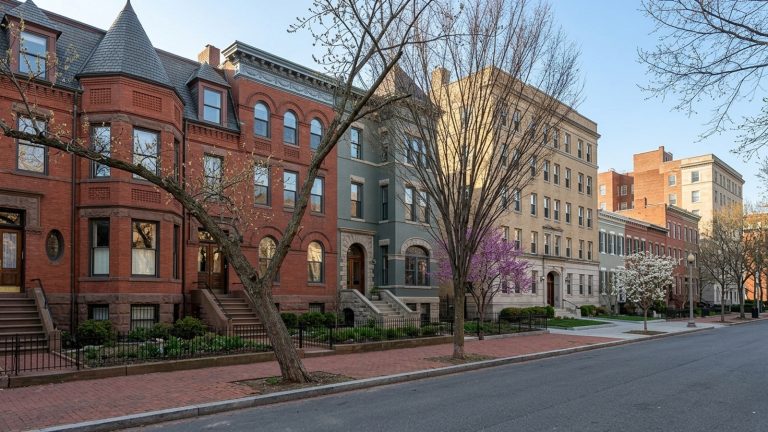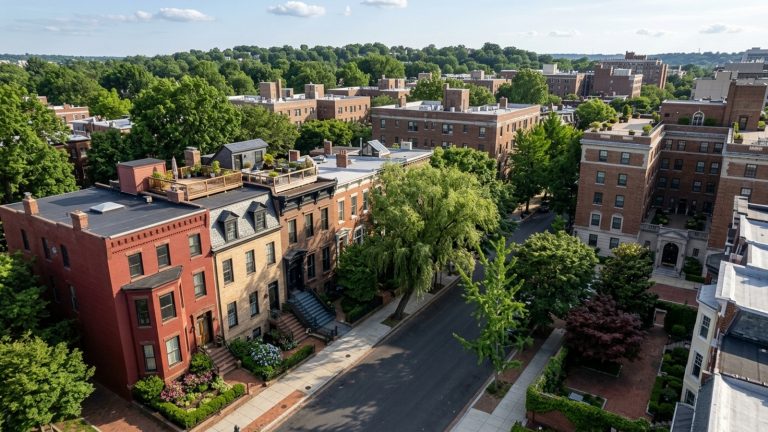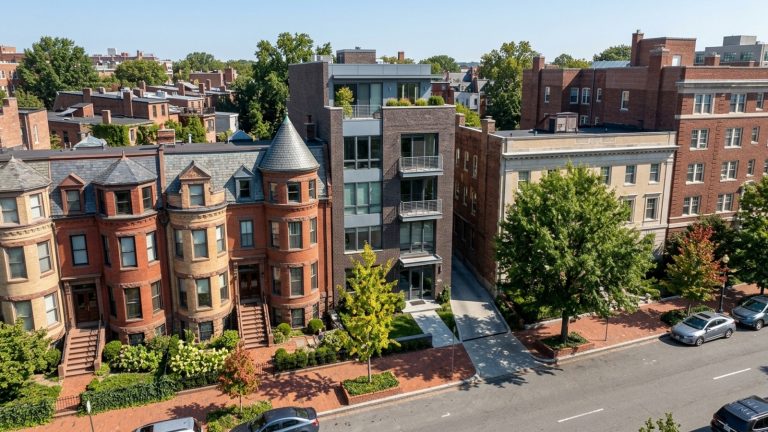

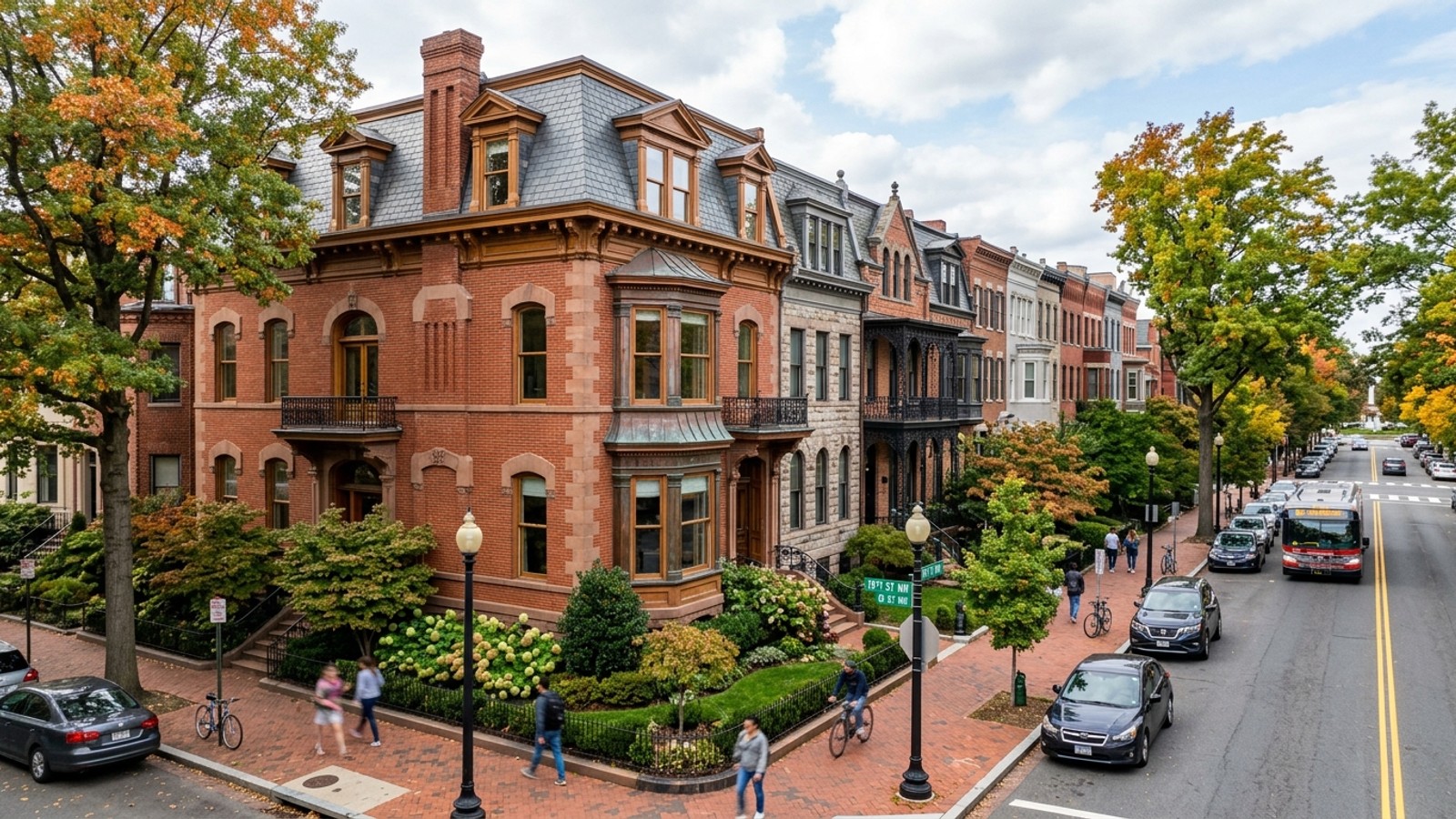
Dupont Circle is one of those Washington, DC neighborhoods that barely needs an introduction. Historic rowhouses, a recognizable central traffic circle, immediate access to downtown – buyers and renters have been drawn here for decades, and that hasn’t changed. Buyers considering living in Dupont Circle, DC will find roughly 105 active listings as of mid-2026, ranging from updated co-ops to full multi-story historic properties.
Where is Dupont Circle, DC, Located?
The neighborhood sits in the northwest quadrant of Washington, DC, radiating outward from its central traffic circle. That circle’s centerpiece – a double-tiered white marble fountain installed in 1920 – replaced an earlier statue of Rear Admiral Samuel Francis Du Pont.
One thing that catches buyers off guard: DC doesn’t operate with a county system the way Virginia or Maryland do. If you’re moving from outside the region, it’s worth understanding how local districts and governance actually function before you get to the closing table.
Advisory Neighborhood Commission and Districts
Dupont Circle falls under ANC 2B – the Advisory Neighborhood Commission for this part of the city. The core of the neighborhood is also officially recognized as the Dupont Circle Historic District, and those boundaries matter. They determine your local representation and, critically, what you can and can’t do to a building’s exterior.
Getting Around
The Dupont Circle Metro Station on the Red Line puts you three minutes from Metro Center by subway. The distance to downtown is about one mile, which makes walking or biking a genuine daily option for a lot of residents – not just something you do when the weather is nice.
Primary ZIP codes are 20036 and 20009, with the neighborhood falling mainly under 20036. Depending on how broadly you draw the boundaries, neighboring codes 20005, 20006, and 20008 also come into play.
What It Is Like Living in Dupont Circle, DC
The Dupont Circle Fountain isn’t just a pretty landmark – it’s the social anchor of the whole neighborhood. It was designed by Henry Bacon and Daniel Chester French, the same architects behind the Lincoln Memorial, and it functions as the primary gathering space for the 6,082 households that make up this part of the city. At a population density of about 52 people per acre, you’re in a genuinely dense urban environment.
The historic district designation does real work here. It preserves the late 19th-century architecture – the Victorian rowhouses, the mature street trees – and it keeps the streetscape from drifting into generic mid-rise territory. Most residents walk to everything. Grocery stores, pharmacies, coffee shops: if it’s a daily errand, it’s probably within a few blocks.
The honest trade-off is this: housing costs run high, and the commercial avenues stay busy well into the evening. If you want quiet, you want to pay close attention to which block you’re on.
Cost of Living and Housing in Dupont Circle, DC
The median sale price sits at roughly $540,000 as of mid-2026, with a median price per square foot around $650. Homes are averaging 54 days on market before going under contract, and recent data shows 77 homes sold in a single month – with properties generally landing at about 98.5% of list price. That last number tells you the market isn’t giving much away.
The wide price range you’ll see in listings comes down to property type. Studio condos, co-ops, and large historic rowhouses are all part of the same inventory pool, so individual prices swing considerably depending on what you’re actually buying.
Property Taxes
Washington, DC, taxes owner-occupied residential property (Class 1) at $0.85 per $100 of assessed value, stepping up to $1.00 for assessed values above $2.558 million. That works out to an effective rate of roughly 0.56% to 0.63%. That’s a low rate by national standards, but given where property values are in Dupont Circle, the actual tax bill still lands above the national median.
Renting
If you’re renting before you buy – which is a reasonable way to test a neighborhood – expect to pay somewhere in the range of $2,477 to $2,511 per month on average, per Zumper and RentCafe. That’s about 27% above the national average. One-bedroom units run between $2,500 and $2,809 depending on the building; studios typically come in at $1,975 to $2,027.
Dupont Circle, DC, Safety and Neighborhood Streets
The DC Metropolitan Police Department tracks crime data across the city. General neighborhood-level data puts Dupont Circle’s crime score in line with the average U.S. neighborhood. Worth knowing: citywide violent crime in Washington, DC, dropped by approximately 35% in 2024. That said, the busier stretches of Connecticut Avenue see more petty theft and nightlife-related incidents than the quieter residential blocks do – that’s a consistent pattern in dense commercial corridors, and Dupont Circle is no exception.
When you’re walking blocks, pay attention to how far a given property sits from the main commercial avenues. The difference in evening foot traffic between a side street and Connecticut Avenue itself is not subtle.
The neighborhood is served by District of Columbia Public Schools (DCPS), which assigns students based on residential boundaries. Schools serving this area include Ross Elementary School, School Without Walls @ Francis-Stevens, and Jackson Reed High School.
Things to Do in Dupont Circle: Dining and Amenities
Connecticut Avenue is the main commercial artery, and it handles most of the neighborhood’s retail, dining, and daily services. Groceries, pharmacies, coffee – you’re not driving for any of it.
The dining scene runs from fast-casual lunch spots aimed at the office crowd to proper sit-down dinner restaurants. The neighborhood draws visitors from across the region for its bars and nightlife, which is part of what keeps the avenues active late into the evening. Retail covers independent bookstores through national clothing brands, and the pedestrian-friendly layout means you can knock out multiple errands on foot without much planning.
Hotels Near Dupont Circle for Pre-Move Visits
If you’re coming to DC specifically to look at properties, staying in Dupont Circle is worth the effort. You’ll get an honest read on what the commute actually feels like, what the evening noise levels are, and how the neighborhood functions on a Tuesday morning versus a Saturday night – all of which matters when you’re deciding whether to buy here.
Several hotels operate along Connecticut Avenue and the surrounding streets – a mix of larger corporate properties and smaller boutique options in historic buildings. Booking near the Metro station gives you easy access to the rest of the city during your search.
Frequently Asked Questions
What architectural and zoning restrictions will I face if I want to renovate a historic rowhome in Dupont Circle, DC?
The core of the neighborhood is officially recognized within the Dupont Circle Historic District, which means exterior renovations require approval before work begins. The historic preservation rules dictate what modifications and materials are allowable – so before you get attached to a specific renovation vision, find out exactly what the district permits.
Are the older multi-family buildings in Dupont Circle mostly condos or co-ops, and how does that affect the buying process?
Both exist here. The key difference is that buying into a co-op involves a board approval process and financing requirements that don’t apply to a standard condo purchase. If you haven’t bought a co-op before, make sure your agent and lender have experience with the process – it’s not complicated, but it has its own timeline and rules.
Is residential street parking realistic in Dupont Circle, or should I only look at homes with a dedicated parking spot?
At 52 people per acre with active commercial corridors running through the neighborhood, street parking is genuinely difficult. If you own a car and plan to use it regularly, prioritize listings that come with a dedicated space.
How much do monthly condo or co-op fees typically run for real estate in Dupont Circle?
It varies significantly by building – age, amenities, and whether it’s a condo or co-op all factor in. The short answer is: get the fee information early for any building you’re seriously considering, and work it into your total housing cost alongside the neighborhood’s roughly $540,000 median sale price.
How does buying a home in Dupont Circle compare to nearby Logan Circle in terms of price per square foot?
Specific Logan Circle figures are outside the scope of what we can compare directly here. What the current data does show is that Dupont Circle commands a premium tied to its central location and historic district status, with a median sale price per square foot around $650.
How quickly do updated single-family rowhouses typically go under contract in the current Dupont Circle market?
The neighborhood-wide median is 54 days on market. Fully updated historic rowhouses tend to move faster than that broader average – so if a well-renovated rowhome hits your criteria, don’t sit on it.